- 21
- Apr.
- 2026

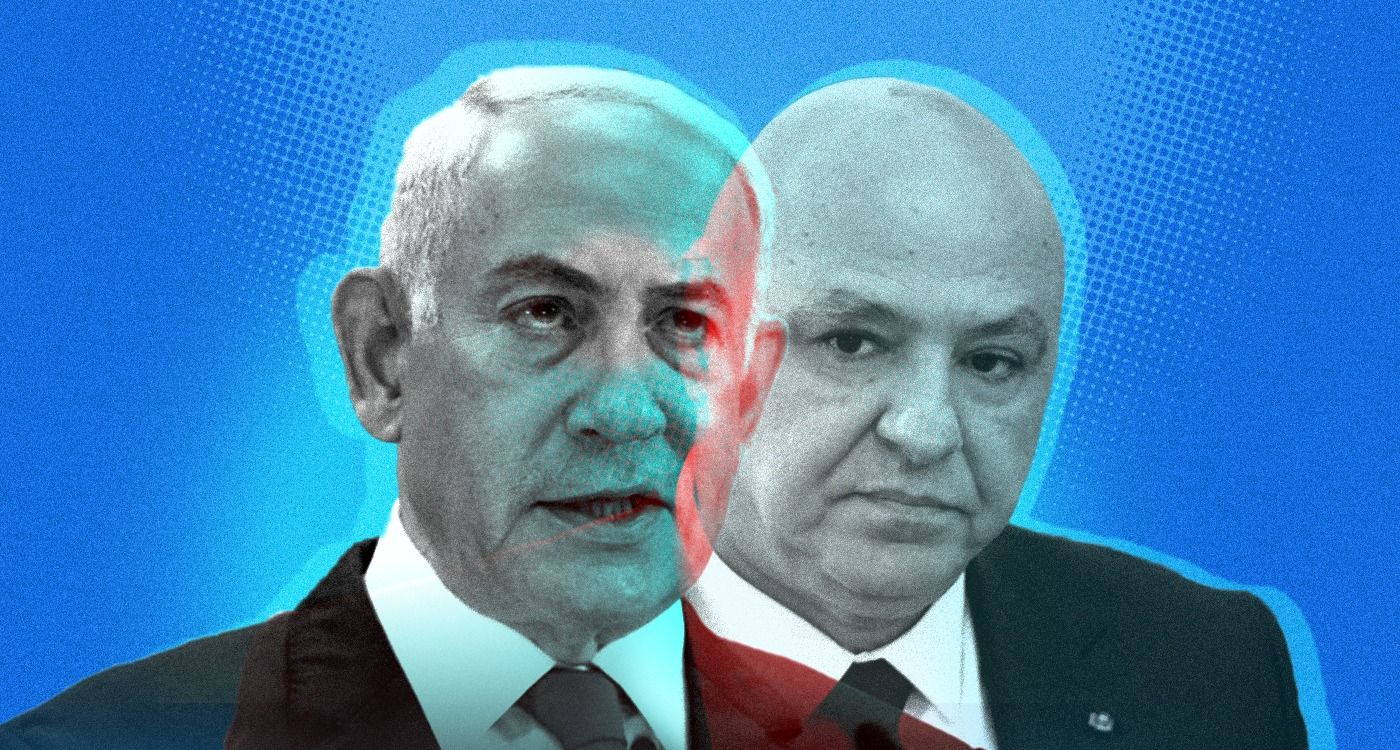
Lebanese President Joseph Aoun is expected to meet Israeli Prime Minister Benjamin Netanyahu at the White House in the coming weeks, according to President Trump, who said he would invite both leaders. However, Aoun appears poised to follow a political path that will be rejected by Israel.
Lebanon has vilified Israel for so long that a Lebanese leader merely shaking hands with an Israeli counterpart is treated as the end of the world. This prospect forced Aoun to address the nation and justify direct talks with Israel.
Their goal, he said, was to restore the status quo that prevailed between Israel’s withdrawal from Lebanon on May 25, 2000, and the onset of the multi-front regional conflict on October 7, 2023. During this time, a de-facto truce governed the tense border. Such an outcome would mark a significant victory for Hezbollah but would be unacceptable to Israel. For Jerusalem, its long-standing policy of “land for peace” is no longer viable. After defeating the Egyptian, Jordanian, and Syrian armies in the June 1967 War, Israel began offering territories captured in the conflict in return for Arab recognition of the Jewish state and normalized relations. It took the Arabs more than twenty years to accept the offer, which became known as “land for peace.”
At the 1991 Madrid Conference, Arab states declared that if Israel withdrew from the territories captured in 1967—the West Bank, Gaza Strip, Golan Heights, and southern Lebanon (occupied in 1978)—all 21 member states of the Arab League would normalize relations with Israel. Egypt, the 22nd member, had already signed a separate peace treaty with Israel in 1979.
The Madrid process split into separate tracks, with the Israel-Palestinian one producing the Oslo Accords, again based on land-for-peace. Israel began handing over territory to the Palestine Liberation Organization (PLO), which was unable to deliver peace as Hamas suicide bombings killed Israeli civilians. The process collapsed in its early stages, becoming the de facto, permanent autonomy arrangement still in place in the West Bank today.
Jordan, having ceded the West Bank to the PLO, no longer had a territorial dispute with Israel and signed a peace treaty with Jerusalem in 1994. Syria, which effectively controlled Lebanon, proved far more difficult. Syrian leader Hafez al-Assad relished the international spotlight, played a cunning game, and constantly moved the goalposts. No breakthrough was ever reached with Israel.
Because Syria occupied Lebanon, the Lebanese track was similarly stalled. Unlike the relatively quiet Golan front, however, southern Lebanon remained an active war zone, which Israel eventually concluded was not worth occupying.
In 1997, Netanyahu offered Beirut a full Israeli withdrawal with one condition: Lebanon would take responsibility for any attack on Israel launched from its territory. Damascus rejected the deal, as an Israeli pullout would have undermined Hezbollah’s raison d’être and Syria’s pretext for occupying Lebanon.
In 2000, Israeli Prime Minister Ehud Barak withdrew unilaterally from Lebanon. The UN verified the border and certified to the Security Council that Israel had fully complied with Resolution 425. Jerusalem wished Lebanon well and expected both sides to live peacefully on their respective sides of the frontier, even without a peace treaty.
Hezbollah immediately claimed victory, but one that did not bring peace. The militia had never been built for peace and, within days of Israel’s withdrawal, began manufacturing pretexts to retain its weapons, inflating minor border disputes into existential threats.
In 2006, Hezbollah launched a cross-border raid on Israel, purportedly to free three Lebanese prisoners, and instead sparked a major war. In 2022, it threatened war with Israel over maritime boundary disputes. On October 8, 2023, it opened a new front “in support of Gaza.” And on March 2, 2026, it re-entered the war in support of Iran.
The twenty-three years since Israel’s unilateral withdrawal from Lebanon taught Jerusalem that its land-for-peace formula must be reversed. Israel would now demand peace first, whether from the Palestinians in Gaza or from Lebanon on its northern border, before conceding territory.
President Aoun, the Lebanese state, and especially Hezbollah appear not to have received that message. In his speech, Aoun laid out a sequence of conditions: first a permanent ceasefire, then Israeli withdrawal, followed by the return of refugees and foreign-funded reconstruction. Only after these demands are met would Lebanon declare the Lebanese Armed Forces (LAF) the country’s sole legitimate armed force.
Aoun’s blueprint is likely to trigger Israeli rejection. Jerusalem still tasted the bitterness of trusting Beirut with a quiet border after 2000, 2006, and the 2024 Cessation of Hostilities Agreement. Each time, Lebanon formally committed to disarming Hezbollah while the militia rearmed to the teeth.
Zionism, a curse word for many Arabs, is actually a simple idea. After the Holocaust, Jews vowed never again to entrust their fate to others. That is why they fought to build their own sovereign state, whose central mission is to guarantee Jewish security in Israel and around the world.
Israel’s long experience in Lebanon has taught it that there are no reliable partners on the other side of the border. Therefore Israel will secure its own border with its own hands. That plan requires a ten-kilometer-wide, depopulated buffer zone, inside Lebanon, and the unconditional policing of Lebanese territory against a militia Beirut is either unwilling or unable to control.
As long as Aoun clings to his blueprint, the upcoming meeting is likely to produce a symbolic photo-op rather than progress toward peace. So far, the scheduled talks suggest that Lebanon and Israel will be talking past one another rather than to each other. This is exactly what Lebanon’s adversaries, in particular Iran and Hezbollah, want.

Comments