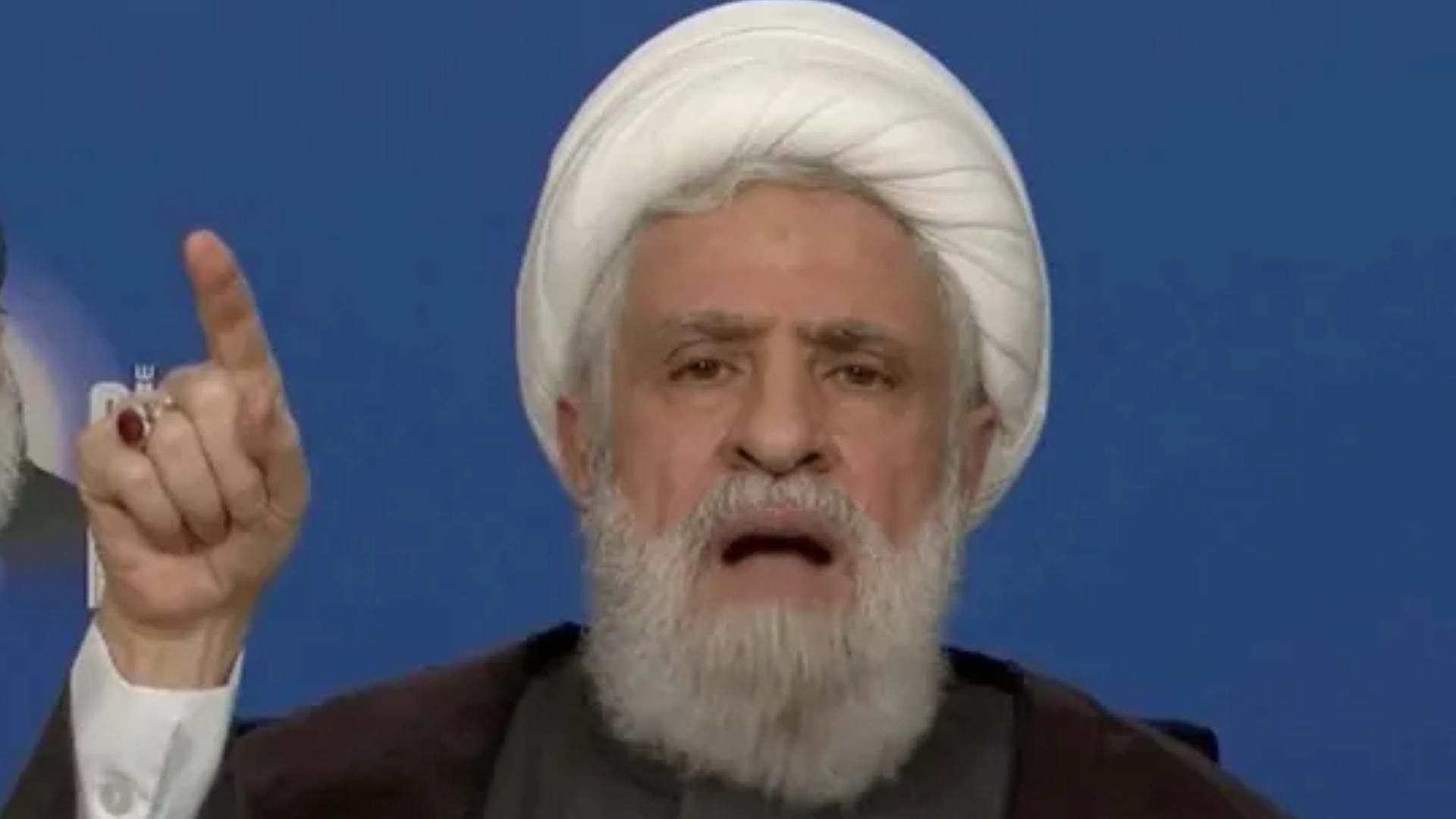
In a notable shift in tone, Hezbollah’s Secretary General Naim Qassem signaled for the first time openness to indirect negotiations with Israel, framing diplomacy as a viable path—while firmly rejecting any form of direct talks.
“We support diplomacy that stops the aggression and enforces agreements,” Qassem said in a statement on Monday, endorsing indirect negotiations that he said have already produced results, including the maritime agreement and the ceasefire, “while preserving Lebanon’s rights.”
In an obvious attempt to align itself with its Shiite ally, Speaker Nabih Berri, he dismissed direct negotiations as “a free concession with no gains,” arguing they serve Israeli Prime Minister Benjamin Netanyahu’s effort to project victory and could benefit Donald Trump politically.
Qassem outlined what he described as four key pillars for navigating the current phase: “the continuation of resistance, internal consensus, benefiting from a U.S.–Iran agreement, and any international or regional efforts that pressure the enemy.” His remarks suggest Hezbollah is positioning itself within a broader diplomatic framework, while maintaining its strategic alignment with regional dynamics.
At the domestic level, Qassem called on Lebanese authorities to preserve national unity, assert sovereignty, and strengthen the Lebanese Armed Forces to defend the country and protect citizens. He also urged the government to address economic and social challenges, fully implement the 1989 Taif Agreement, and uphold the constitution to ensure effective governance. “Despite their limitations, state institutions must continue building sovereignty,” he said, adding that Hezbollah remains ready to support these efforts “within the framework of unity and independence.”
Despite the diplomatic opening, Qassem rejected the notion that a truce is in place. “There is no ceasefire in Lebanon, but ongoing Israeli-American aggression,” he said, dismissing any reference to a “buffer zone” or “yellow line.”



Comments