- Home
- Middle East
- Trump Says Deal Is Days Away, Iran Accuses Him of ‘Lies’
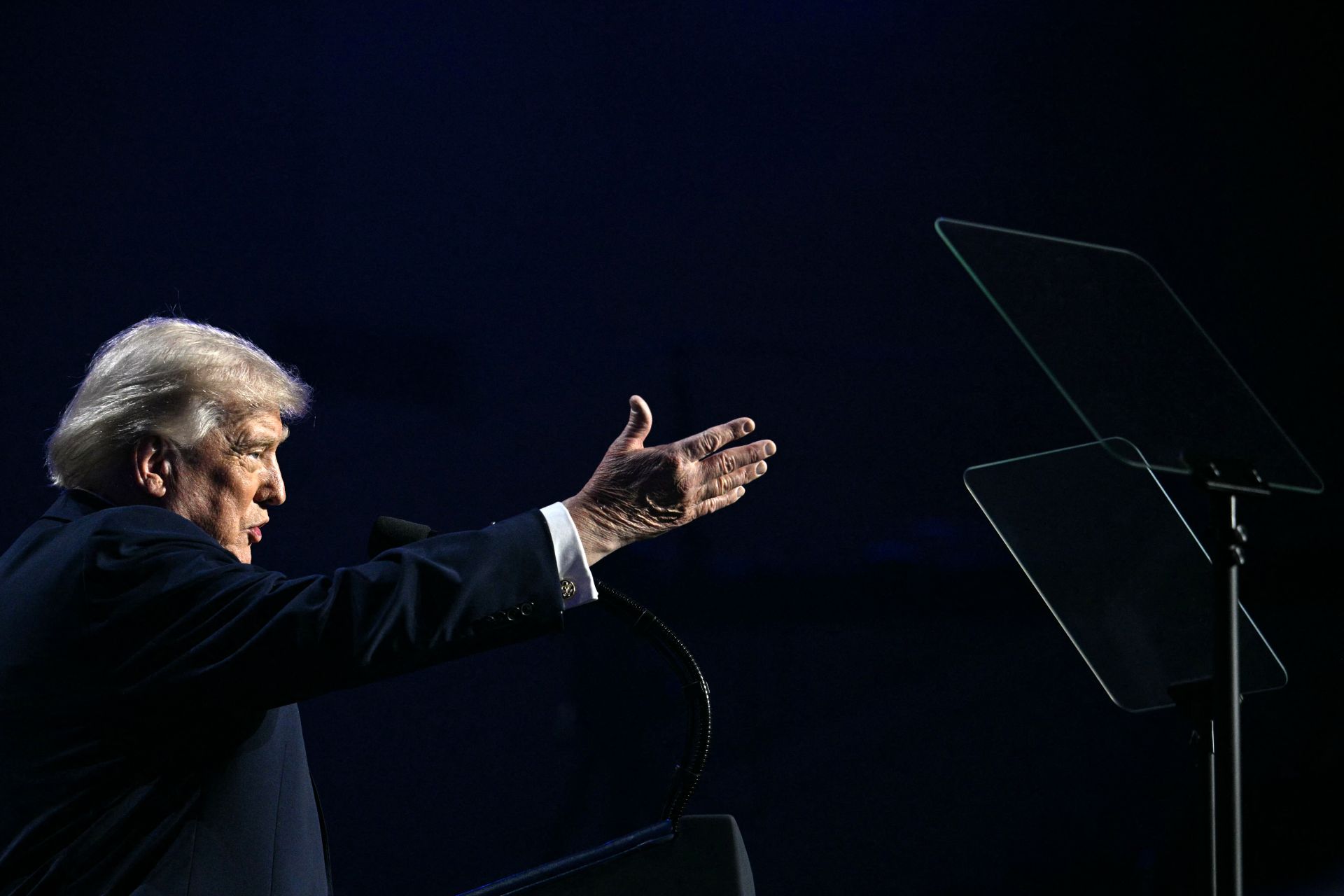
U.S. President Donald Trump addresses a Turning Point USA event entitled "Build the Red Wall" at Dream City Church in Phoenix, Arizona, on April 17, 2026. ©JIM WATSON / AFP
U.S. President Donald Trump said that a deal with Iran could be reached “within days” and that negotiations have “no sticking points,” while Iranian officials on Saturday rejected his claims and said key issues remain unresolved.
Trump said talks with Iran could resume as early as this weekend, possibly in Islamabad, and expressed confidence that an agreement to end the war is close.
However, U.S. and Iranian officials indicated that major differences persist, particularly on Iran’s nuclear program, regional activities, and control over the Strait of Hormuz.
Iran rejects U.S. claims on uranium and regional role
Trump outlined what he described as key elements of a potential agreement, including U.S. involvement in removing Iran’s stockpile of enriched uranium and a halt to Tehran’s support for regional armed groups.
“We’re going to go in with Iran… and bring it back to the United States,” Trump said, referring to uranium he described as “nuclear dust” stored in underground facilities.
Foreign Ministry spokesman Esmaeil Baqaei said Iran’s enriched uranium “will not be transferred anywhere,” directly contradicting the U.S. president’s claims. Iranian officials also did not confirm any willingness to end support for groups such as Hezbollah or Hamas, issues that have long been among the most difficult points in negotiations.
At the same time, Trump dismissed reports of a possible financial component to the deal, denying that Washington would release billions in frozen Iranian assets, despite separate reporting suggesting such proposals were under discussion.
Iran closes the Strait of Hormuz again
Iran's military declared the Strait of Hormuz closed again on Saturday, its military command said, hours after reopening it and with more than a dozen commercial ships passing through the vital waterway.
In a statement carried by Iranian state media, the country’s central military command said the strategic waterway had “reverted to its previous state” and would remain under “strict management and control of the armed forces.”
The announcement came as maritime tracking sites showed several ships making a dash through the narrow waterway, hugging close to Iranian territorial waters as instructed by Tehran and, for some, broadcasting their identity as Indian or Chinese in an apparent attempt to show their neutrality.
Officials said the decision was taken in response to the ongoing U.S. naval blockade of Iranian ports, which Tehran described as a violation of prior understandings linked to the reopening of the strait.
The military warned that until the United States restores full freedom of navigation for vessels traveling to and from Iran, access through the strait would remain tightly restricted.
The same sites showed that late on Friday, a number of ships began heading for the strait before suddenly turning back amid the uncertainty.
Military pressure continues during negotiations
The United States has maintained its naval blockade of Iran as talks continue.
U.S. defense officials said the aircraft carrier USS Gerald R. Ford has returned to the region, joining the USS Abraham Lincoln, while a third carrier, the USS George H. W. Bush, is heading toward the Middle East.
Trump said the pressure would remain in place until a final agreement is reached.
Ceasefire provides space, but no final deal yet
There are just four days remaining before the end of the two-week ceasefire in the U.S.-Israeli war with Iran, launched by Washington and its ally on February 28.
Islamabad's powerful military chief, Field Marshal Asim Munir, on Saturday finished a three-day visit to Iran aimed at securing the peace deal, during which he met Iran's top leadership.
While Munir was in Iran, Pakistani Prime Minister Shehbaz Sharif visited Saudi Arabia, Qatar, and Turkey to push the peace process.
Islamabad has emerged as the lead mediator during the conflict, hosting a marathon round of direct peace talks last weekend attended by U.S. Vice President JD Vance.
A second round of talks is expected in the Pakistani capital this coming week, with envoys hoping to end the war that was started by the U.S. and Israel on February 28.
With AFP
Read more


Comments