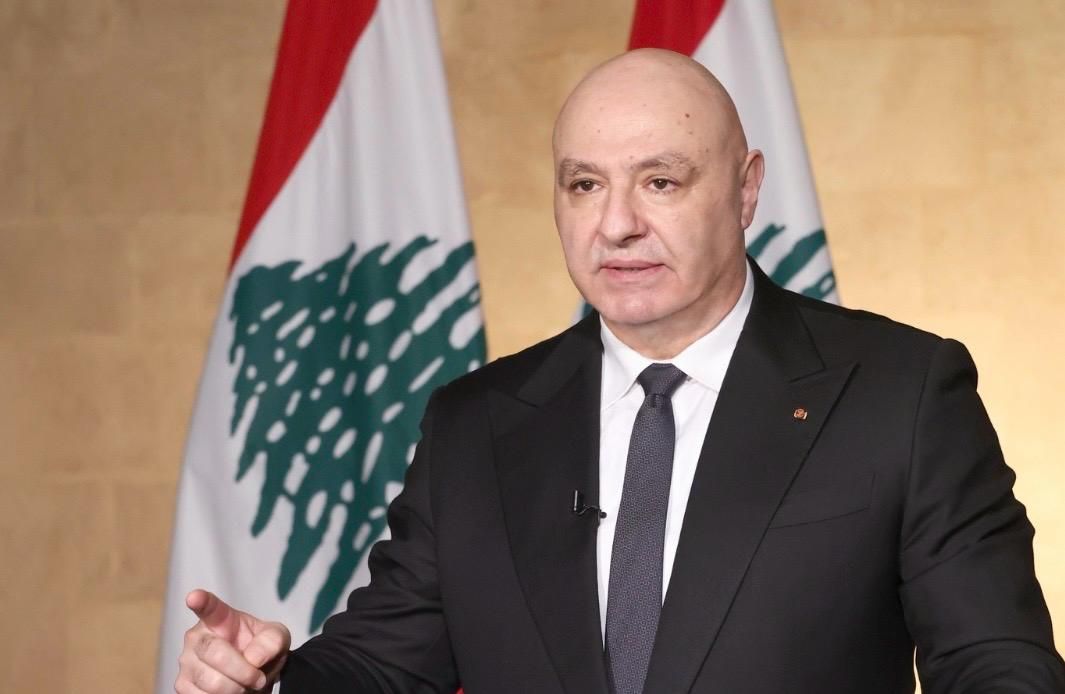
A tentative shift began to take shape today as Presidents Donald Trump, Joseph Aoun, and Prime Minister Benjamin Netanyahu expressed their visions for what comes next in Lebanon following the announcement of a ceasefire and the launch of direct talks.
While the pause in fighting has created space for diplomacy, each leader made clear that the coming days will be decisive, with negotiations unfolding against the wider backdrop of U.S.-Iran tensions and regional recalibration.
President Donald Trump
From Washington, President Donald Trump positioned the United States as both the driving force behind the ceasefire and the key actor shaping what comes next. He made clear that Israel’s air campaign in Lebanon has been halted under U.S. pressure, declaring that further strikes are “prohibited” by the U.S. for now.
At the same time, he drew a line between the Lebanon track and the broader negotiations underway with Iran, signaling that they are being handled on parallel fronts.
Trump’s focus remained firmly on Tehran, where he expressed confidence that an agreement could be reached within days following expected weekend talks. He reiterated that the United States will maintain its blockade of the Strait of Hormuz until a final deal is secured and claimed that Iran has agreed to suspend its nuclear program without receiving financial concessions.
In a move that appeared to complement this effort, Iranian Foreign Minister Abbas Araghchi announced that in line with the ceasefire in Lebanon, commercial shipping through the Strait would remain open during the ceasefire period.
President Joseph Aoun
President Joseph Aoun cast the ceasefire as a rare opening that Lebanon cannot afford to miss. He described the ongoing talks as “delicate and crucial,” emphasizing that national unity will be essential as the country moves into a phase where international attention is sharply focused on Lebanon. For Aoun, the ceasefire is less about ending hostilities and more about unlocking a broader process, one that aims to secure Israeli withdrawal from the south, resolve long-standing border disputes, and bring detainees home.
Throughout his remarks, Aoun sought to reassure a war-weary public that the state is reasserting control after years of fragmentation. He pointed to the Lebanese Armed Forces as the backbone of this effort, expected to deploy to the south and ensure that weapons remain solely in the hands of legitimate institutions.
At the same time, he pushed back against narratives that negotiations signal weakness, insisting instead that Lebanon is now acting from a position of agency, “no longer a tool or battleground for others.” His tone frequently returned to the human cost of the conflict, underscoring that the losses endured in recent years must translate into a more stable future, and failure to capitalize on this moment could carry even more dire consequences.
Prime Minister Benjamin Netanyahu
In Jerusalem, Prime Minister Benjamin Netanyahu struck a more measured tone, signaling a willingness to test the diplomatic track without stepping back from Israel’s broader military objectives. He confirmed that, at Washington’s urging, Israel is prepared to give negotiations “an opportunity,” framing the ceasefire as a chance to explore a more comprehensive political and security arrangement with Lebanon.
But even as he acknowledged that opening, Netanyahu was careful to temper expectations, stressing that Israel’s campaign is far from over and that future actions remain on the table.
That dual approach was reinforced by developments on the ground. As talks begin to take shape, the Israeli military has moved to establish a new presence in the Mount Hermon area along the Lebanon–Syria frontier, signaling that while diplomacy is underway, Israel is continuing to consolidate its strategic positioning.
The move underscores Netanyahu’s broader message that dismantling Hezbollah will be a long-term effort rather than an immediate outcome of negotiations. At the same time, he pointed to a notable breakthrough: for the first time in more than four decades, Israeli and Lebanese officials have engaged in direct talks. It is a development that hints at a shifting dynamic, even as deep mistrust and unresolved security concerns continue to define the relationship.


Comments