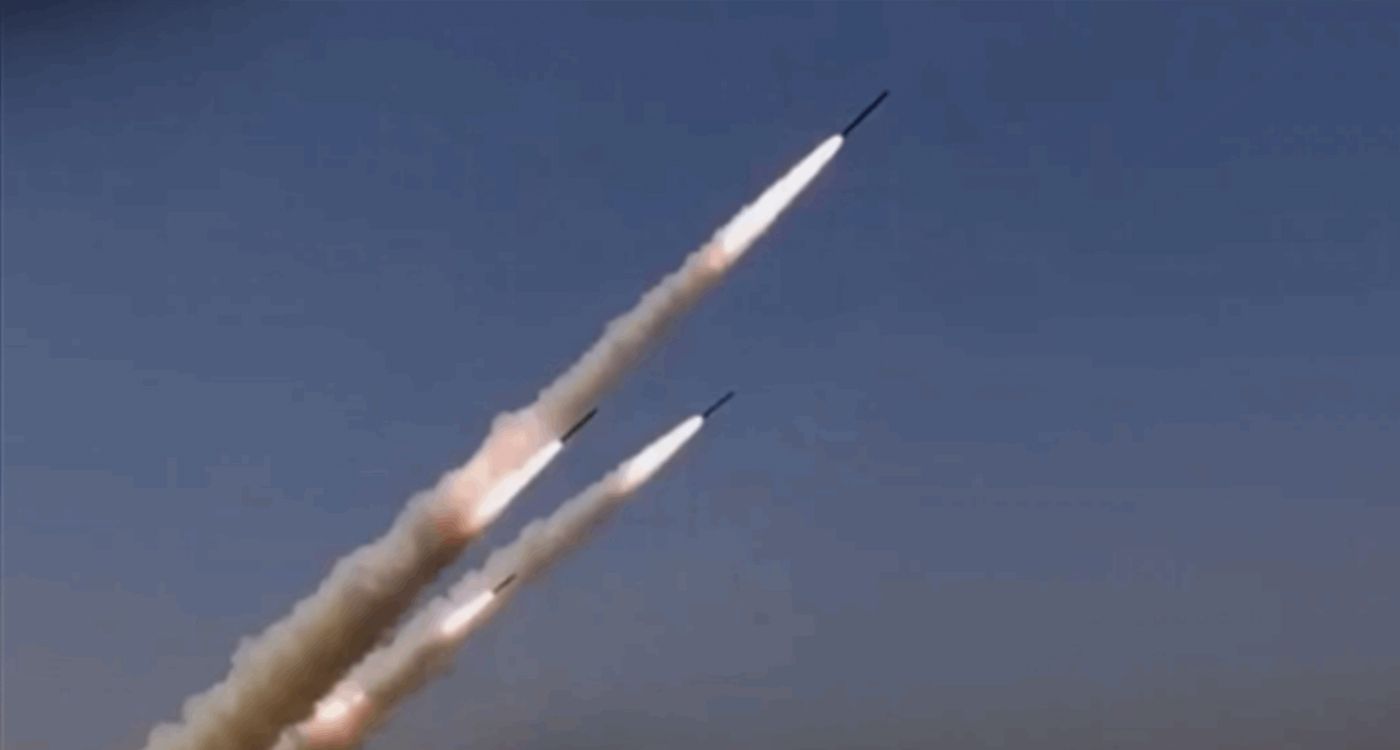
After a brief lull in fire following the April 8 ceasefire with Iran, Hezbollah has resumed attacks on Israeli territory, according to an assessment by the Alma Research and Education Center.
According to the report, a total of 1,310 Hezbollah attack waves targeting Israel have been recorded since March 2, with an average of around 30 attacks per day. The assessment states that 12 Israeli soldiers and 3 civilians have been killed in the northern arena since the beginning of the fighting.
The analysis said rocket and missile fire continues to dominate Hezbollah’s activity, accounting for approximately 71.9% of attacks, while unmanned aerial vehicles (UAVs) represent about 27.6%, with a smaller number of anti-tank missile strikes. It described this pattern as a reliance on wide-area weapons designed to maintain sustained pressure on Israel’s northern population centers.
Geographically, the report said most attacks remain concentrated near the border, with 70.8% of incidents occurring within 0–5 km of the frontier, while 27.2% struck areas 5-40 km inside Israel, extending toward the Haifa region. Only a small number of attacks reportedly reached longer distances.
The think tank also noted limited attempts to extend strike ranges, including a surface-to-surface missile launched toward central Israel on April 10, which was intercepted. It added that recent impacts in civilian areas, including Kiryat Shmona, Nahariya, and Deir al-Asad, underscore what it described as Hezbollah’s continued operational reach.
Lebanon Reports Housing Destruction
In a separate development, the Lebanese National Council for Scientific Research has published updated assessments on housing damage in Lebanon, based on satellite mapping and field analysis shared on X.
According to the data, approximately 37,836 housing units were destroyed or damaged between March 2 and April 7, 2026, with the governorate of Nabatieh recording the highest level of destruction (7,065 units), while Hermel was the least affected (45 units). The analysis highlights concentrated damage across southern Lebanon and the southern suburbs of Beirut, as well as the districts of Nabatieh, Bint Jbeil, and Tyre (Sour).
The group also published a broader historical assessment covering the period since the outbreak of hostilities in 2023 through the escalation phases of 2024 and 2026, estimating a total of approximately 230,436 housing units destroyed or damaged across Lebanon.
CNRS-L/NCNE said it continues to carry out “evidence-based monitoring,” using satellite imagery and geospatial analysis to track the evolving impact of the conflict across different regions.



Comments