- 07
- Apr.
- 2026

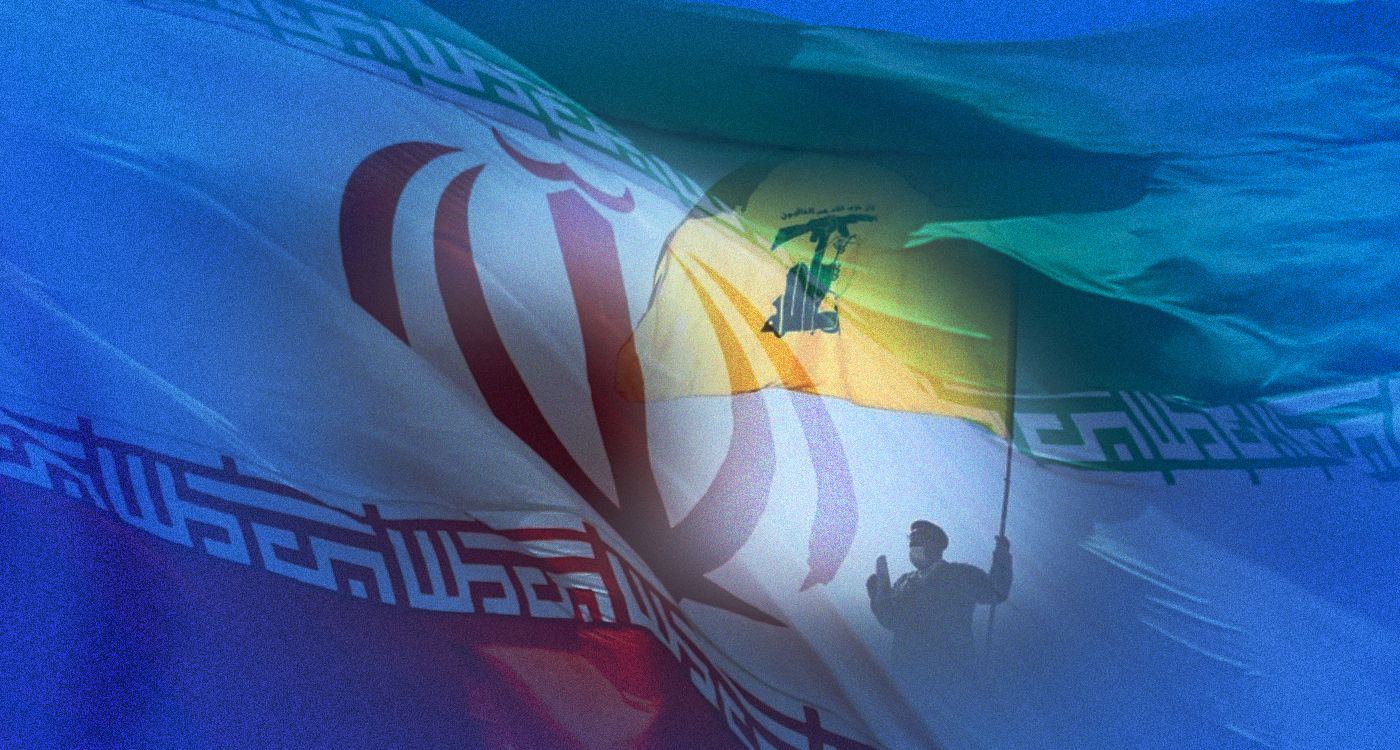
A false claim, now common in Western media and academia, portrays Hezbollah as having emerged in response to Israel’s 1982 invasion and subsequent occupation of Lebanon. In reality, Hezbollah arose in the wake of Iran’s 1979 Islamic Revolution as part of an effort to establish an Islamic state in a Lebanon fractured by warring militias.
Since Hezbollah first captured Western attention with its secretive operations and spectacular attacks, the West has produced a vast body of literature describing the group and its rise—often portraying it sympathetically as the movement of the impoverished, the downtrodden, and the victims of Israeli wars and invasions of Lebanon. This narrative is false.
From its beginnings, Hezbollah served as an extension of Iran’s revolution, a reality reflected in its early slogans such as “No East Beirut, No West Beirut—an Islamic Republic.” Broadcasting from the eastern Lebanon village of Nabi Sheet, Hezbollah’s radio station frequently aired anthems from the Iranian revolution, chants praising Ayatollah Ruhollah Khomeini, and reports on the Iran‑Iraq War.
So focused was Hezbollah on Iran’s war against Iraq that most of its first dozen major attacks were aimed at forcing the West to distance itself from Saddam Hussein. Hezbollah even attempted to assassinate Kuwait’s emir in 1985, then one of Iraq’s main financial backers, and carried out attacks against the U.S. and French embassies in the Gulf state.
Hezbollah was largely absent from Lebanon’s “resistance” against Israel at the time. Only one of the group’s early attacks—a 1983 car bombing in Tyre—targeted Israeli forces. Instead, the Amal Movement, Syrian Social Nationalist Party, and Communist Party conducted most of the major suicide bombings against Israeli troops in Lebanon. The first retaliation to Hezbollah did not come from Israel, but from the U.S., which attempted a proxy assassination of Shia cleric Mohammad Hussein Fadlallah in 1985, striking his mosque in Beirut’s southern suburbs.
Hezbollah did not recognize Lebanon as a legitimate entity, let alone seek its “liberation from Israel” until 1992, a decade after its founding. At the time, the militia was engaged in a months-long debate over whether it should run candidates in Lebanon’s parliamentary elections, which the civil war had suspended for nearly twenty years.
When Hezbollah finally decided to participate, its platform revolved around the single issue of “resistance” against Israel. Syria, which held hegemony over Lebanon, ultimately reserved the right to such military activity exclusively for Hezbollah. By then, all other militias had surrendered their arms under the 1989 Taif Agreement, which brought an end to the civil war.
Hezbollah’s primary goal was not to defend Lebanon or liberate its land, but to preserve its own arms. After Taif, which Hezbollah opposed, “resistance” against Israel became the best pretext for doing so. This was not a Hezbollah innovation. The first Islamist to justify such a formula was Muslim Brotherhood founder Hassan al-Banna. When Egyptian security forces raided his militia’s arms depot in 1949, he argued that the weapons were not meant for use against the government but to liberate Palestine.
Only when the Lebanese state began asserting its authority did Hezbollah begin to make concessions. In 1992, the militia handed over to the Lebanese Armed Forces (LAF) its largest barracks atop Sheikh Abdullah Hill, which it had seized and controlled since 1982.
When Israel launched major military campaigns in Lebanon in 1993 and 1996, Hezbollah was so unprepared that it had to borrow Katyusha rocket operations from pro-Syrian Palestinian groups such as the Popular Front for the Liberation of Palestine (PFLP). The group also rebranded itself from the “Islamic Revolution in Lebanon” to the “Islamic Resistance in Lebanon,” or more simply, the “Lebanese resistance.” Observers began claiming that the Iranian proxy was “Lebanonizing”—an assumption that would prove disastrously wrong.
Hezbollah also rewrote its own history to obscure its origins in Iran’s Islamic Revolution. As part of its effort to project a more indigenous image, it invented the myth that it had been formed in 1982 in response to the Israeli invasion, a fairytale that Western media and academia have since repeated uncritically.
With post-civil war Lebanon stabilizing, Israel saw little reason to maintain a security zone in the south. It repeatedly offered Beirut a withdrawal in exchange for a simple Lebanese commitment that Hezbollah would not establish positions on the border within striking distance of Israeli towns. But with Damascus controlling Beirut, Lebanon turned down the offer. Ending the Israeli occupation would have removed the primary justification for both the Syrian presence in Lebanon and Hezbollah’s continued armament.
In 2000, Israel withdrew unilaterally, and the UN certified that it had complied with Security Council Resolution 425. Needing occupied land to sustain its “resistance” narrative, Hezbollah manufactured the Shebaa Farms controversy—minor border dispute over a sliver of land that Israel had captured from Syria, not Lebanon, in 1967.
In 2005, a nationwide protest movement forced the Syrian regime’s military and security apparatus out of Lebanon, ending nearly 30 years of occupation. Hezbollah confronted efforts by pro-Western parties to assert Lebanese state sovereignty, sending armed men to seize control of western Beirut in May 2008 and cementing its veto power within the government. Since then, the pro-Iranian militia has functioned as the de facto state, while Lebanon’s official institutions have remained largely powerless.
Hezbollah has skillfully manipulated Western perception by granting friendly journalists and academics access that was denied to more objective local and foreign experts. Even as it has started wars on behalf of Tehran, the Iranian proxy has helped shape a narrative portraying it as an indigenous Lebanese movement rather than what it truly is. Yet this fabrication has somehow become unquestioned conventional wisdom.

Comments