- Home
- Middle East
- Trump Threatens More Strikes on Iran’s Main Oil Export Hub

US President Donald Trump speaks to reporters before boarding Air Force One as he departs Joint Base Andrews in Maryland on March 13, 2026. ©SAUL LOEB / AFP
U.S. President Donald Trump threatened additional strikes on Iran’s key oil export hub at Kharg Island as the war between Iran and the U.S.–Israeli alliance entered its third week, underscoring the growing risk of a prolonged conflict that is already disrupting global energy markets and destabilizing the Gulf region.
Speaking to NBC News, Trump said the United States had “totally demolished” most of the infrastructure on Kharg Island during recent strikes but warned that further attacks could follow.
“We may hit it a few more times just for fun,” the president said, while also suggesting that Iran appeared open to negotiations but that the terms currently under discussion were “not good enough yet.”
Kharg Island at the Center of the Energy War
Kharg Island, located roughly 24 kilometers off Iran’s coastline in the Persian Gulf, is Iran’s primary oil export terminal and one of the most strategically important energy facilities in the Middle East.
According to U.S. Central Command, American forces struck more than 90 sites on the island, including naval mine storage facilities, missile storage bunkers, and other military targets.
Washington has maintained that the strikes were directed solely at military infrastructure, not the oil export facilities themselves.
Iran, however, has played down the scale of the damage and warned it would respond if its energy infrastructure were targeted.
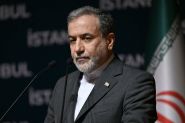
Iranian Foreign Minister Abbas Araghchi said Tehran would retaliate against any attacks on its oil facilities, while the Iranian Defense Ministry announced that nine ballistic missiles and 33 drones had been launched toward the United Arab Emirates.
Gulf Energy Infrastructure Under Pressure
The conflict has increasingly expanded into the wider Gulf region, placing critical global energy infrastructure at risk.
A drone strike on Saturday disrupted operations in Fujairah, a major energy hub in the United Arab Emirates and one of the world’s largest ship-refueling centers.
Industry sources said some oil-loading operations were suspended following the attack.
While the Fujairah Media Office reported that a drone had been intercepted, debris from the interception caused a fire at an oil facility that civil defense teams were still attempting to extinguish late Saturday.
Fujairah plays a crucial role in global energy markets, serving as an outlet for roughly one million barrels per day of the UAE’s Murban crude, equivalent to about one percent of global oil demand.
Strait of Hormuz at the Heart of the Crisis
At the same time, Iran has continued to threaten shipping through the Strait of Hormuz, the strategic waterway through which roughly one-fifth of the world’s oil and gas supplies normally pass.
The threat of Iranian attacks has nearly halted maritime traffic through the strait, sending global oil prices sharply higher and contributing to what analysts describe as the largest disruption in oil supply in modern history.
Trump urged allied nations to deploy naval forces to secure the passage.
“The countries of the world that receive oil through the Hormuz Strait must take care of that passage, and we will help, a lot,” Trump wrote on social media.
He also called on China, France, Japan, South Korea, and the United Kingdom to send warships to the region, though none of those governments immediately confirmed plans to do so.
Regional Tensions Escalate
Iran has warned that it would target facilities linked to the United States in the Gulf, urging civilians to evacuate ports and locations associated with American military activity.
The Islamic Revolutionary Guard Corps (IRGC) declared that any facility tied to the United States could be considered a legitimate target and called on American businesses to withdraw from the region.
Iranian warnings specifically mentioned major Gulf ports, including Jebel Ali in Dubai, Khalifa Port in Abu Dhabi, and the Fujairah port, which Tehran said were being used to support operations against Iran.
The United States also warned its citizens in Iraq to leave the country after a missile strike hit the U.S. embassy in Baghdad overnight Friday.
UAE Balances Self-Defense and Diplomacy
The United Arab Emirates denied that the attacks on Kharg Island had been launched from its territory but emphasized that it retained the right to defend itself.
At the same time, Emirati officials signaled continued efforts to avoid further escalation.
Anwar Gargash, diplomatic adviser to the UAE president, said the country was still seeking a diplomatic solution.
“The UAE continues to prioritize reason and logic, exercise restraint, and search for a path out of the crisis for Iran and the region,” Gargash wrote on X.
He added that Abu Dhabi had attempted to mediate between Washington and Tehran until the final moments before the war began.
Mounting Casualties
Since the United States and Israel launched airstrikes against Iran on February 28, the conflict has killed more than 2,000 people, most of them inside Iran, according to figures reported by governments and state media.
One of the deadliest recent incidents occurred in the central Iranian city of Isfahan, where an airstrike hit a factory producing refrigerators and heating equipment, killing at least 15 people, according to Iran’s semi-official Fars news agency.
The agency blamed the attack on what it described as the “American-Zionist enemy.”
The Israeli military did not immediately comment on the report.
Questions Surround Iran’s New Supreme Leader
The conflict has also been marked by uncertainty surrounding Iran’s new supreme leader, Mojtaba Khamenei, who succeeded his father, Ali Khamenei, after the elder leader was killed during the opening phase of the U.S.–Israeli campaign.
Mojtaba Khamenei has not appeared publicly since his appointment, fueling speculation about his health.
U.S. Defense Secretary Pete Hegseth suggested that Khamenei may have been more seriously wounded than Iran has acknowledged.
Iranian Foreign Minister Abbas Araghchi dismissed those claims, saying there was “no problem with the new supreme leader.”
“He sent his message yesterday and will perform his duties,” Araghchi said in an interview with MS Now.
Trump, however, said during his NBC interview that he had heard rumors suggesting Khamenei might not be alive.
“So far nobody’s been able to show him,” Trump said, though he acknowledged the claim remained unconfirmed.
War Shows No Sign of Ending
Despite growing international pressure to de-escalate, both sides appear to be preparing for a prolonged confrontation.
Iran has rejected the possibility of a ceasefire while U.S. and Israeli airstrikes continue, while Washington has so far rebuffed diplomatic efforts by Middle Eastern allies to launch negotiations aimed at ending the war.
With energy markets destabilized, regional tensions rising, and military operations continuing across multiple fronts, the conflict is increasingly shaping into a broader struggle over strategic energy routes and regional influence in the Gulf.
Read more


Comments