- 13
- Mar
- 2026

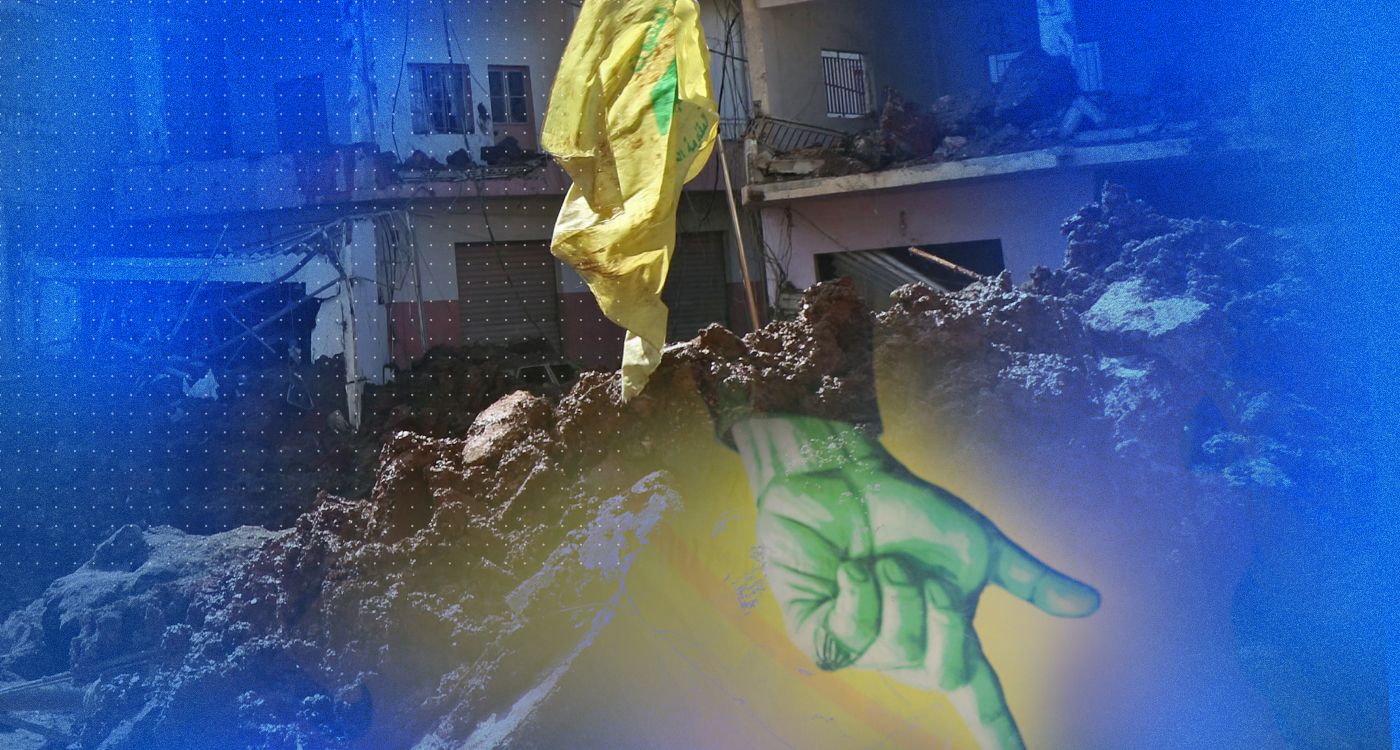
After Israel’s war against Hezbollah ended in November 2024, many expected the group’s losses—including the killing of its leader Hassan Nasrallah—to weaken its influence in Lebanon. Hopes rose that the Lebanese state could reclaim sovereignty and extend its control across the country. Yet subsequent developments revealed that these assessments were, to a large extent, premature.
The reality that gradually unfolded proved far more complex. It is true that Hezbollah emerged from the war heavily burdened by losses, and that its military capabilities were severely damaged. Jerusalem says it destroyed roughly 80 percent of Hezbollah’s arsenal, leaving the group in a significantly weaker position vis-à-vis Israel and no longer the formidable military threat it once posed.
While Hezbollah’s capacities to confront Israel may have weakened, its grip on Lebanon’s internal landscape remains largely intact. Despite the blows it sustained, Hezbollah continues to maintain a sophisticated security, financial, and social-services network that enables it to preserve substantial influence on the ground. The organization still exerts significant control over key aspects of political life and retains decisive influence over the Shia community’s political direction.
In the fifteen months following the November 2024 ceasefire, developments on the ground underscored this reality. Hezbollah’s security and organizational apparatus has continued to exercise the upper hand in many areas, while Lebanon’s official military and security institutions have largely acquiesced to this state of affairs.
This balance of power was reinforced yet again when Hezbollah decided to open a new military front in support of the Iranian regime following the assassination of Ali Khamenei. The move served as a stark reminder that the Lebanese state remains largely a bystander in its own country when it comes to decisions of war and peace.
Despite repeated statements from Lebanon’s political leadership and military establishment claiming progress toward restoring sovereignty and reasserting state authority, recent developments on the ground point to a different conclusion. The power to decide matters of war and peace still lies outside Lebanon’s formal institutions and rests, in practice, with Hezbollah.
The party’s influence is not limited to Shia-majority areas; it extends across other parts of Lebanon as well. This was made evident following a series of strikes targeting figures linked to the group outside its traditional strongholds. On March 8, Israel targeted Iranian Islamic Revolutionary Guard Corps (IRGC) commanders at a hotel in Beirut’s Raouche district. In the aftermath of the strike, Hezbollah operatives swiftly imposed a security cordon around the site, preventing official Lebanese military and security forces from entering. Only after Hezbollah personnel had completed their own sweep of the location were state authorities allowed access.
Hezbollah effectively takes precedence over state institutions in matters of security, incident management, and control of the operational environment. The scenes outside the Raouche hotel reopen a fundamental question about the true limits of state authority in Lebanon and the widening gap between official political rhetoric and practical realities.
The current war must not end as previous conflicts have, leaving Hezbollah's military, security, and financial structures intact. Reproducing the same status quo would only postpone the next crisis rather than resolve it.
State authority must extend across all Lebanese territory without exception, without parallel spheres of influence or autonomous security structures. The presence of a military and security force operating outside the framework of the state effectively leaves Lebanon functioning as an open arena for the conflicts of others.
Hezbollah’s entrenched influence remains one of the main obstacles to any viable path toward peace between Lebanon and Israel. It is hard to imagine Lebanon achieving long-term stability while the authority to decide matters of war and peace lies outside its official institutions.
For the country to escape the turbulence of regional conflict and become a stable state, Hezbollah’s power structures must first be dismantled, and the state’s exclusive monopoly on force must be restored. Only then could Lebanon begin to explore new political horizons, through broad regional arrangements or potentially even the Abraham Accords.

Comments