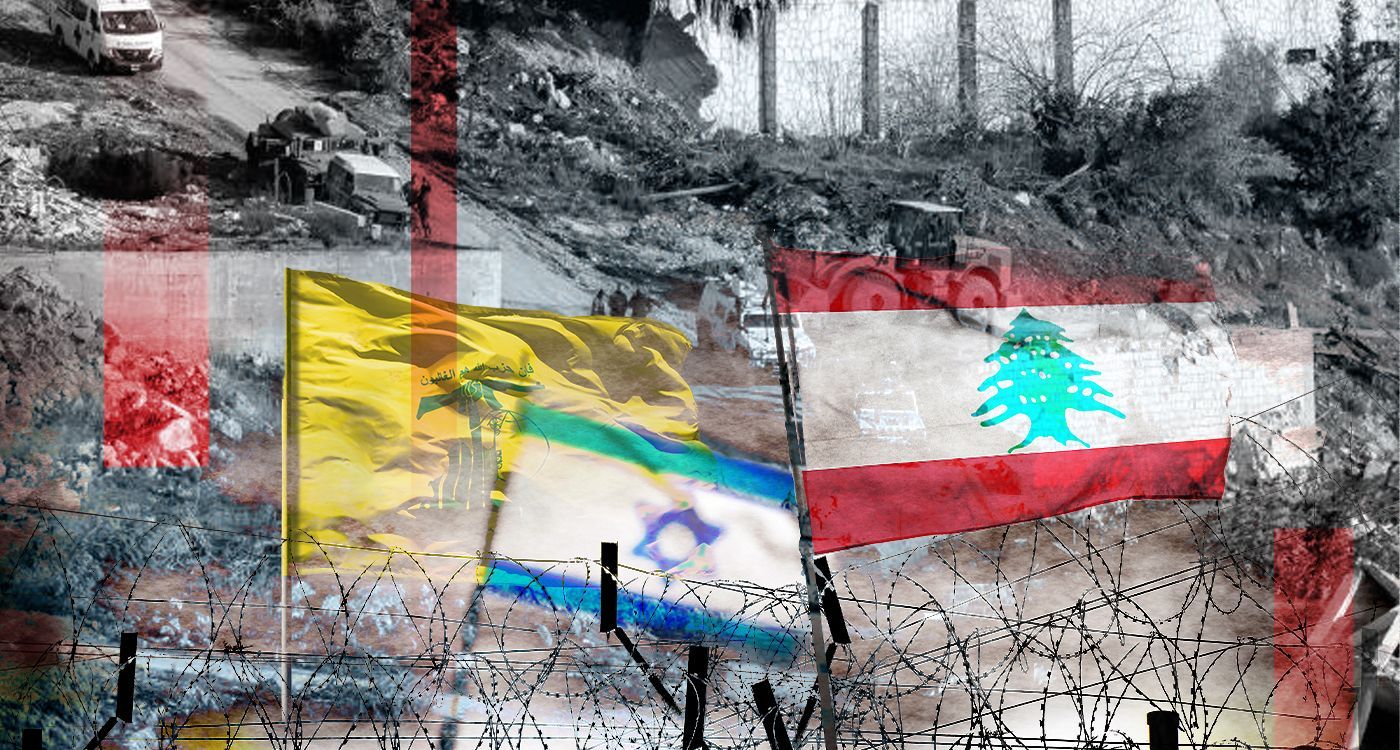
On the morning of Monday March 2, Hezbollah opened fire against Israel, reigniting the Israel-Hezbollah front in support of Iran.
Israel Strikes Targets in Lebanon
The Lebanese Health Ministry’s casualties toll for the week totaled at least 486 people killed and at least 1313 people injured since last Monday’s escalation.
Lebanese authorities also stated that at least 759,000 people have self-reported as displaced within Lebanon.
The Israeli army announced that it had hit over 600 targets across Lebanon over the course of the week, and declared that over 190 “terrorists” affiliated with Hezbollah, Hamas, and the Islamic Jihad, were killed.
Most of Israel’s strikes were contained to Hezbollah strongholds in southern Lebanon, the Bekaa Valley, and Beirut’s southern suburbs.
However, additional attacks took place elsewhere in the country. On March 4, Israel struck the Comfort Hotel in Hazimeh—a predominantly Christian area near Beirut—aiming to target an Iranian diplomat. Israel also struck the Ramada Hotel in the Raouche neighborhood of Beirut on March 8, marking Israel’s first attack within Beirut’s municipal boundaries, targeting 5 IRGC commanders.
On March 5, an Israeli attack hit the Beddawi Palestinian Camp in Tripoli, in northern Lebanon, killing Hamas commander Wassim Atallah.
Over the course of the week, Israel and Hezbollah engaged in occasional clashes on the ground.
On March 7, Israeli forces attempted a ground landing in Nabi Sheet in the Bekaa Valley to search for the body of Ron Arad, an Israeli soldier classified as missing in action in Lebanon in 1986. In violent clashes in the town, the Israeli army killed 41 in intense fire.
Israel has reoccupied “strategic positions” in southern Lebanon along its border in areas such as Khiam, Kafr Kila, and Aitaroun. Israeli forces have clashed with Hezbollah militants in these spots, including near Houla where 2 Israeli soldiers were killed by an anti-tank weapon.
Lebanese State Reacts
The Lebanese cabinet convened for an emergency meeting on Monday March 2 following Hezbollah’s attacks on Israel. The Lebanese government announced that possession of non-state arms is illegal, marking a shift in the state’s approach towards armed groups such as Hezbollah, Hamas, and the Islamic Jihad.
On March 3, the Lebanese army arrested 27 Hezbollah members at a checkpoint for “illegally possessing weapons and ammunition,” marking a more direct intervention against Hezbollah’s military presence.
Hezbollah Secretary General Naim Qassem justified Hezbollah’s opening of fire against Israel, stating in a speech on March 4 that “as long as the occupation exists, the resistance and its weapons retain a legitimate right.” He also said that “Israel opened the war” and that its counterattack was not a response but rather prepared aggression.
Prime Minister Nawaf Salam has deemed Hezbollah’s attacks as “irresponsible” and criticized the organization’s escalation against Israel. President Joseph Aoun called for a ceasefire, and in an unprecedented move on March 9, called for talks with Israel mediated by a third party to achieve a resolution to the conflict with Hezbollah.
Hezbollah Strikes Israel
Hezbollah has targeted sites across Israel, including many military installations such as the Haifa naval base and missile defense site, Ramat David airbase, Meron air surveillance base, Camp Yitzhak, and the Home Front Command in central Israel’s Ramla.
Northern Israel has seen regular missile and drone activity originating from Lebanese territory, with northern towns in the Galilee region, the Golan Heights, Haifa, and the Galilee Panhandle being threatened by projectiles, most of which was intercepted.
Syria Watches Closely
On March 3, Syria deployed troops near its border with Lebanon to monitor the area as violence erupted between Hezbollah and Israel.
Task forces were monitored with reconnaissance, tracking cross-border activity, and combating any Hezbollah use of Syrian territory.
Overnight on March 10, the Syrian Arab News Agency (SANA) reported that artillery shells were fired on Syrian territory near Sarghaya originating from Lebanon. The Syrian army said that Hezbollah militants in Lebanon were responsible for the attacks.
The Syrian army said that it is communicating with the Lebanese army to determine an appropriate response.

Comments