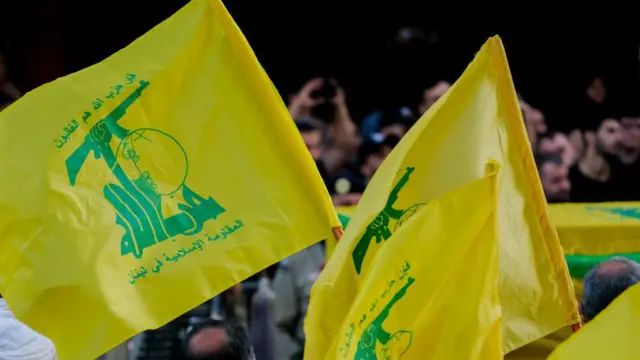
Lebanon’s fragile security situation came back into sharp focus Saturday after Israeli air and naval strikes killed at least 14 people and wounded dozens of others in eastern Lebanon’s Bekaa Valley, prompting renewed condemnation and government criticism from Hezbollah MPs.
Rami Abu Hamdan, a member of parliament affiliated with Hezbollah, said the Lebanese authorities must “fundamentally change” their approach to defending the country, arguing that official condemnations were no longer sufficient in the face of repeated Israeli attacks.
Abu Hamdan said responsibility now lay with the Lebanese state to ensure civilian safety and national sovereignty. He urged the government to take practical steps rather than limit itself to diplomatic protests, suggesting that continued political maneuvering without tangible action was costing lives.
His comments came amid mounting pressure on Beirut to prevent Lebanon from being drawn deeper into the widening regional confrontation tied to escalating tensions between Israel and Iran.
President Aoun condemns strikes, cites sovereignty violations
President Joseph Aoun denounced the attacks, describing them as a clear violation of Lebanon’s sovereignty and international commitments.
In a statement, Aoun said the strikes undermined Lebanon’s diplomatic efforts, particularly with the United States and other international partners, to stabilize the situation and halt hostilities. He also accused Israel of disregarding UN Security Council Resolution 1701, which ended the 2006 war and governs the current ceasefire framework.
Aoun called on countries involved in maintaining regional stability to intervene urgently to stop the attacks and prevent further escalation.
Growing fears of broader conflict
The violence unfolded as Lebanese officials intensified contacts with international partners and Hezbollah leadership in an effort to keep the country out of a potential wider war involving Iran, Israel, and the United States.
Political sources cited by Lebanese media warned that military readiness on both the Israeli and U.S. sides appears near completion, raising concerns that February may mark the final window for diplomacy before more decisive action in March.
Despite public calls for restraint, Lebanon remains vulnerable to spillover from regional power struggles, with mounting casualties highlighting the risks of being pulled further into a conflict largely shaped beyond its borders.
A fragile ceasefire
The wave of Israeli airstrikes across Lebanon’s eastern Bekaa Valley this week was described as one of the most serious escalations since the November 2024 ceasefire.
Israel’s military said the facilities struck in Baalbek were Hezbollah headquarters used to plan and carry out attacks against Israel, accusing the group of systematically repositioning military assets among civilian areas.
Israeli daily Maariv reported that the strikes specifically targeted long-range Hezbollah missiles fitted with warheads and prepared for immediate operational deployment.



Comments