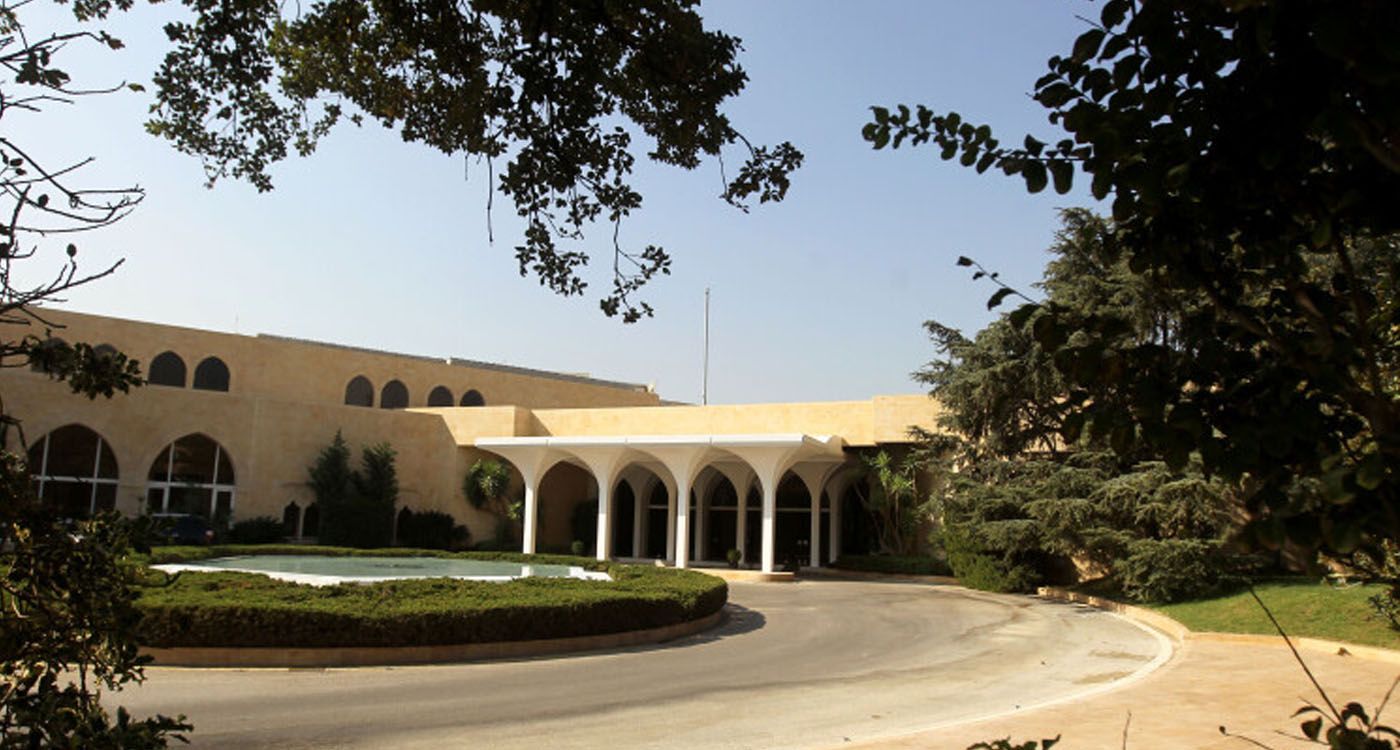
The Lebanese Cabinet met on Monday at the Baabda Palace to deliberate an army plan to restrict weapons north of the Litani River, according to Nidaa al-Watan, directly addressing Hezbollah’s stockpile.
General Rodolphe Haykal, head of the Lebanese Armed Forces, stated that this phase of Hezbollah disarmament will last roughly four to eight months.
Prior to the meeting, Prime Minister Nawaf Salam expressed his openness to expanding the Lebanese state’s role regarding the Israel-Lebanon ceasefire mechanism, referring to the second phase of disarmament beyond the Litani, to oversee disarmament.
In January, Salam claimed that the region south of the Litani is under the Lebanese state’s full and operational control, despite the presence of some remaining weapons linked to Hezbollah. As part of the second phase of the November 2024 ceasefire, Lebanese officials propose expanding disarmament processes beyond the country’s far south.
As Lebanon prepares for the upcoming French-Saudi-led conference on March 5 in Paris, it would be in a position to secure more enthusiastic support for the state and the army should the country demonstrate progress on arms control.
Lebanon is in a critical period, in discussions with several countries and international organizations regarding the status of its trajectory. Last week, a delegation from the IMF visited Lebanon to assess their progress with fiscal reforms, and the head of the Lebanese army Rodolphe Haykal made visits to the U.S. and Saudi Arabia to discuss financial and military support amid efforts to expand operational capacity in Lebanon.
However, Lebanese officials walk a tight line in maintaining its international partnerships without sowing further domestic divisions. U.S. officials, for example, have grown more broadly impatient of Lebanese hedging on the disarmament issue, exemplified by Senator Lindsay Graham’s frustration with Haykal’s hesitance to label Hezbollah as a terrorist organization.
The U.S. also began enacting more targeted sanctions against Hezbollah institutions, such as the al-Qard al-Hassan gold exchange, and individuals who may obstruct the 2026 parliamentary elections in Lebanon. These developments indicate the growing impatience international partners such as the U.S. have towards a more cautious Lebanese approach towards disarmament and reforms.
Hezbollah faces pressure regarding the meeting of cabinet members. They would appear weak to their base if they too quickly accept disarmament. However, the organization contends with active U.S.-Iran nuclear talks taking place this week in Geneva, and Iran would have to green-light an escalatory response to a disarmament measure north of the Litani which would jeopardize talks with the U.S.
As questions linger on whether Hezbollah is in a position to take up arms, Hezbollah Secretary-General Naim Qassem stated that the group does not want a war with Israel but will remain ready to defend itself, which may result in some resistance against disarmament north of the Litani. Qassem stated on Monday that efforts to disarm Hezbollah would be a “grave mistake.”
According to Nidaa al-Watan, Speaker of Parliament Nabih Berri holds an important role in a cabinet decision on disarmament. As Hezbollah has seen growing isolation, including a growing rift between it and Berri’s Amal party, he sees reason for the Lebanese state to act, with delays possibly triggering international backlash or risk renewed Israeli escalation. Acting on this pressure, Berri stated today that the 2026 parliamentary elections must be held on time and without technical delay.



Comments