- Home
- Middle East
- Iran Court Sentences 14 Protesters to Death in Online Proceedings
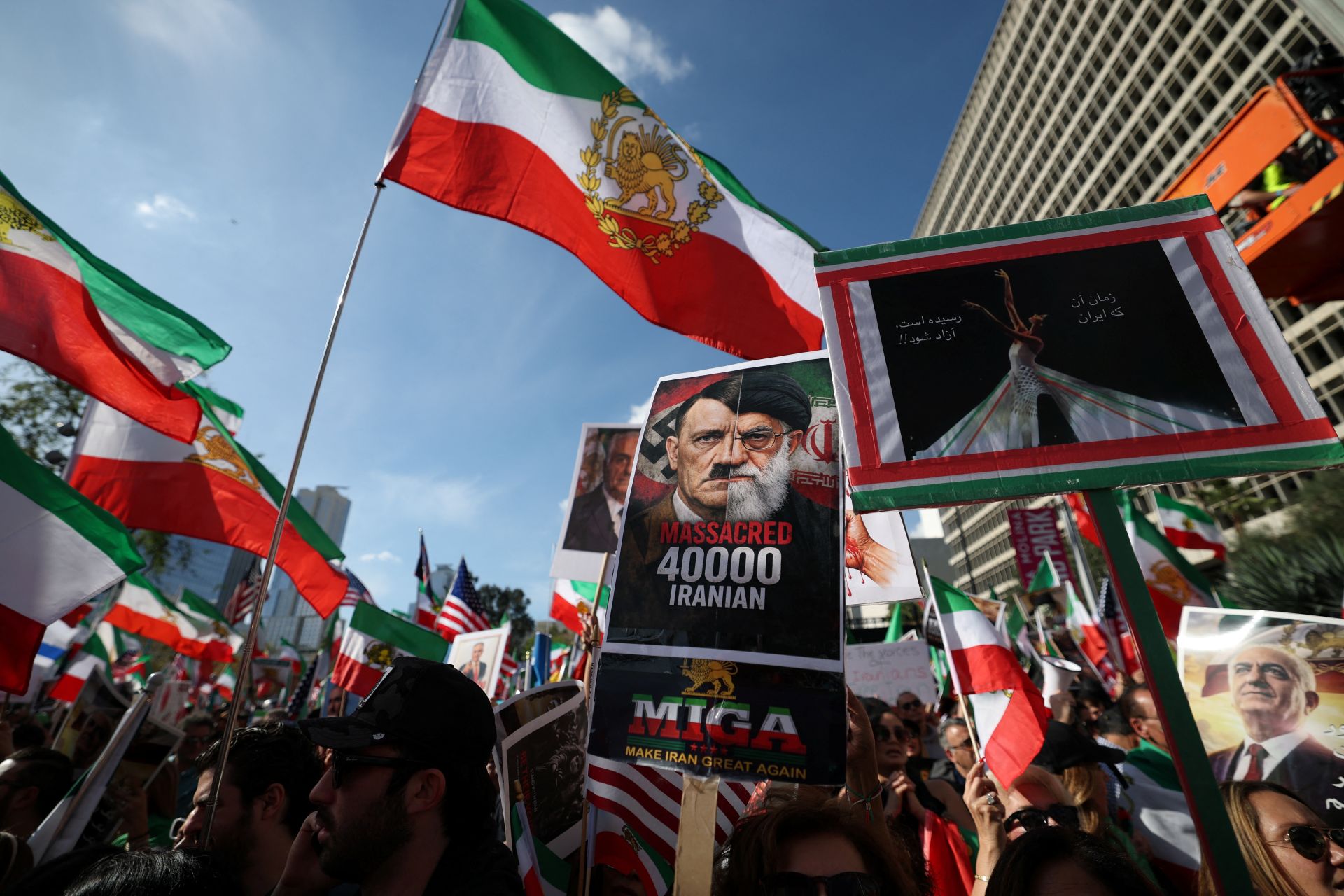
Demonstrators rally in solidarity with the Iranian protest movement in Los Angeles on February 14, 2026. ©PATRICK T. FALLON / AFP
According to sources who spoke to Iran International, an Iranian court has handed down death sentences to 14 individuals accused of participating in last month’s anti-government protests in proceedings conducted online.
The virtual hearings were overseen by Judge Abolghasem Salavati, head of Branch 15 of Iran’s Revolutionary Court, a tribunal long associated with high-profile political cases. According to the sources, Salavati heard the cases in grouped sessions, with 14 defendants tried simultaneously via remote proceedings. Details of the specific charges were not immediately made public.
The reported rulings come amid a sweeping crackdown following weeks of nationwide unrest sparked by economic grievances but which rapidly evolved into broader anti-government demonstrations. Iranian authorities have acknowledged that more than 3,000 people were killed during the unrest, including security personnel and civilians, while independent rights organizations have reported significantly higher figures.
Human rights groups have repeatedly criticized Iran’s use of Revolutionary Courts in protest-related cases, arguing that defendants are often denied due process, adequate legal representation, and transparent trials. The reported use of online group proceedings in capital cases is likely to intensify scrutiny over judicial standards and defendants’ rights.
Escalating Tensions Beyond Iran’s Borders
The death sentences were announced as political tensions extended beyond Iran’s borders.
In Tehran, lawmaker Javad Hosseinikia on Monday urged the Foreign Ministry to expel Germany’s ambassador in response to a massive rally held in Munich, where hundreds of thousands of Iranians gathered to protest the Islamic Republic during an international security conference.
“Expel the German ambassador and chargé d’affaires so they do not repeat such mistakes next time,” Hosseinikia said during a parliamentary session, also calling for action against other European states that permitted similar demonstrations.
The Munich rally, one of the largest diaspora mobilizations in recent years, coincided with a high-level global security forum attended by Western leaders. Iranian authorities have accused foreign governments of enabling unrest, repeatedly describing protests inside and outside the country as externally instigated.
Judicial Pressure and Diplomatic Fallout
The dual developments, capital sentences issued at home, and calls for diplomatic retaliation abroad, highlight the increasingly confrontational posture adopted by Tehran as it seeks to contain both domestic dissent and international pressure.
The Revolutionary Court’s rulings signal a continuation of the judiciary’s hardline response to protest activity. At the same time, parliamentary calls to expel foreign diplomats reflect a broader strategy of pushing back against European criticism and diaspora activism.
With thousands reportedly arrested in the wake of the unrest and additional cases still under review, legal observers warn that further severe sentences could follow.
International reaction is expected, particularly from European governments already at odds with Tehran over human rights concerns and nuclear diplomacy.
Read more

Comments