- Home
- Middle East
- Trump Says Decision to End Iran War Will Be “Mutual” With Netanyahu
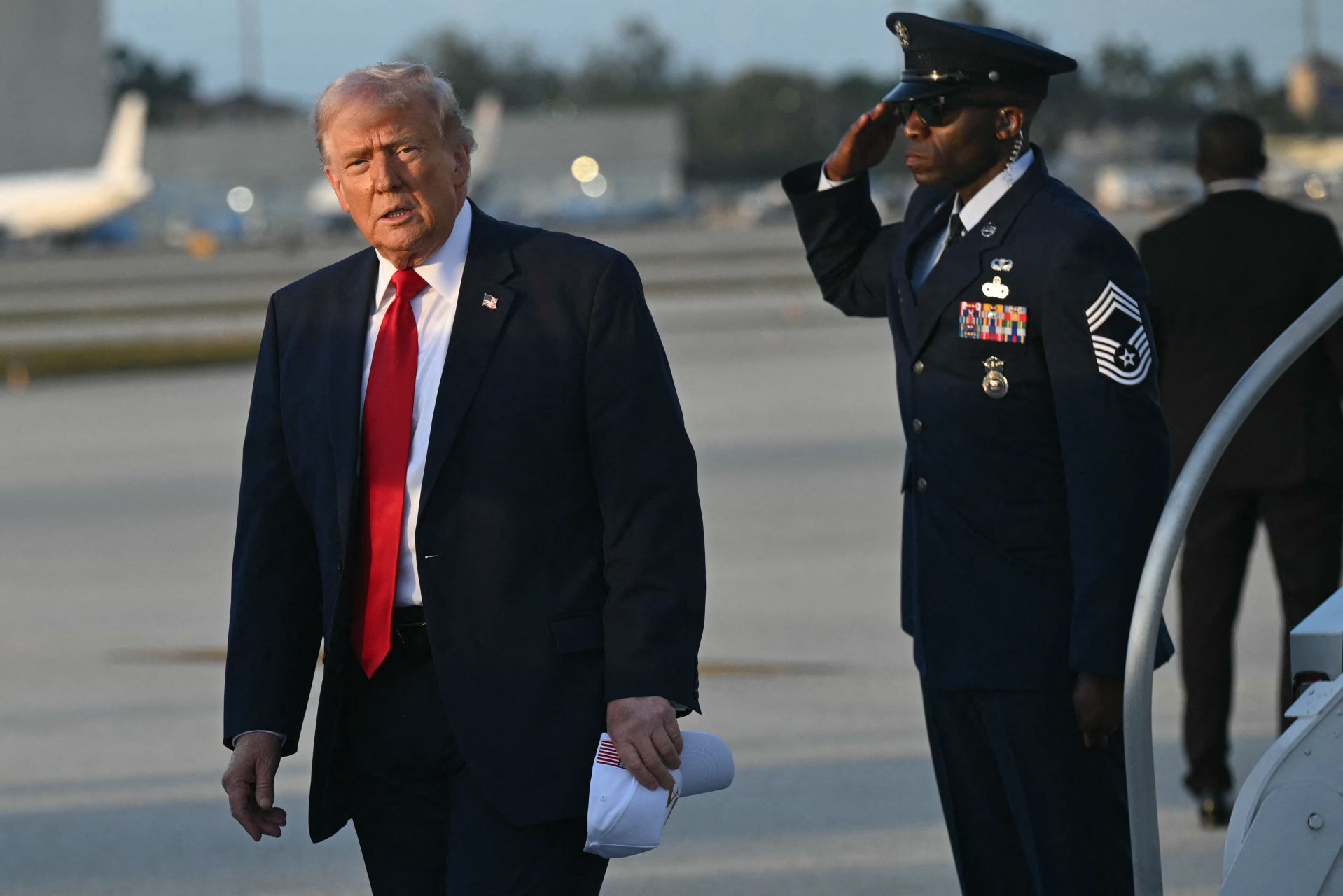
US President Donald Trump disembarks from Air Force One upon arrival at Miami International Airport in Miami, Florida, on March 7, 2026, after traveling to Dover Air Force Base for a dignified transfer solemn event for six US soldiers killed in an Iranian strike in Kuwait. ©SAUL LOEB / AFP
U.S. President Donald Trump said the decision on when to end the ongoing war with Iran will ultimately be made in coordination with Israeli Prime Minister Benjamin Netanyahu, while emphasizing that the final call will rest with the United States.
In a phone interview with The Times of Israel published Sunday, Trump described the decision-making process as a “mutual” one between Washington and Jerusalem, reflecting the close military coordination between the two allies since the start of the conflict.
“I think it’s mutual… a little bit,” Trump said, referring to discussions with Netanyahu about the timing of ending the war. “We’ve been talking. I’ll make a decision at the right time, but everything’s going to be taken into account.”
U.S. Maintains Final Authority Over War Timeline
While suggesting that Netanyahu would have input, Trump made clear that the United States would ultimately determine when the military campaign concludes.
Asked whether Israel could continue its operations against Iran if Washington chose to halt its strikes, Trump dismissed the possibility.
“I don’t think it’s going to be necessary,” he said.
The United States and Israel launched their joint military campaign against Iran on February 28, targeting military infrastructure and senior leadership in strikes that killed Iran’s Supreme Leader Ayatollah Ali Khamenei and several top officials.
According to White House press secretary Karoline Leavitt, the administration expects the war to last between four and six weeks, though Trump has avoided committing to a fixed timeline.
Iran Leadership Uncertainty Adds New Dimension to Conflict
The interview came shortly after Iranian state media reported that the Assembly of Experts had chosen Mojtaba Khamenei, the son of the late supreme leader, as Iran’s next leader.
Trump declined to comment directly on the appointment when asked, responding only, "We'll see what happens.”
However, in a separate interview with ABC News, Trump said Iran’s next leader would struggle to remain in power without U.S. approval.
“The next leader of Iran won’t last long if he doesn’t have approval from the White House,” Trump said.
Wider Regional Implications
The war with Iran has rapidly expanded into a broader regional conflict, with Iranian missile and drone strikes targeting Israel and several Gulf countries hosting U.S. military forces.
Trump suggested that the weakening of Iran could also influence armed groups in the region, including Hamas. “Many people will disarm because of this,” he said, referring to the war against Iran.
The conflict, now entering its second week, continues to reshape the balance of power across the Middle East as Washington and its allies intensify their campaign against Tehran.
Read more

Comments