- Home
- Middle East
- Iran Accuses U.S. and Israel of Seeking to Divide the Country as War Escalates
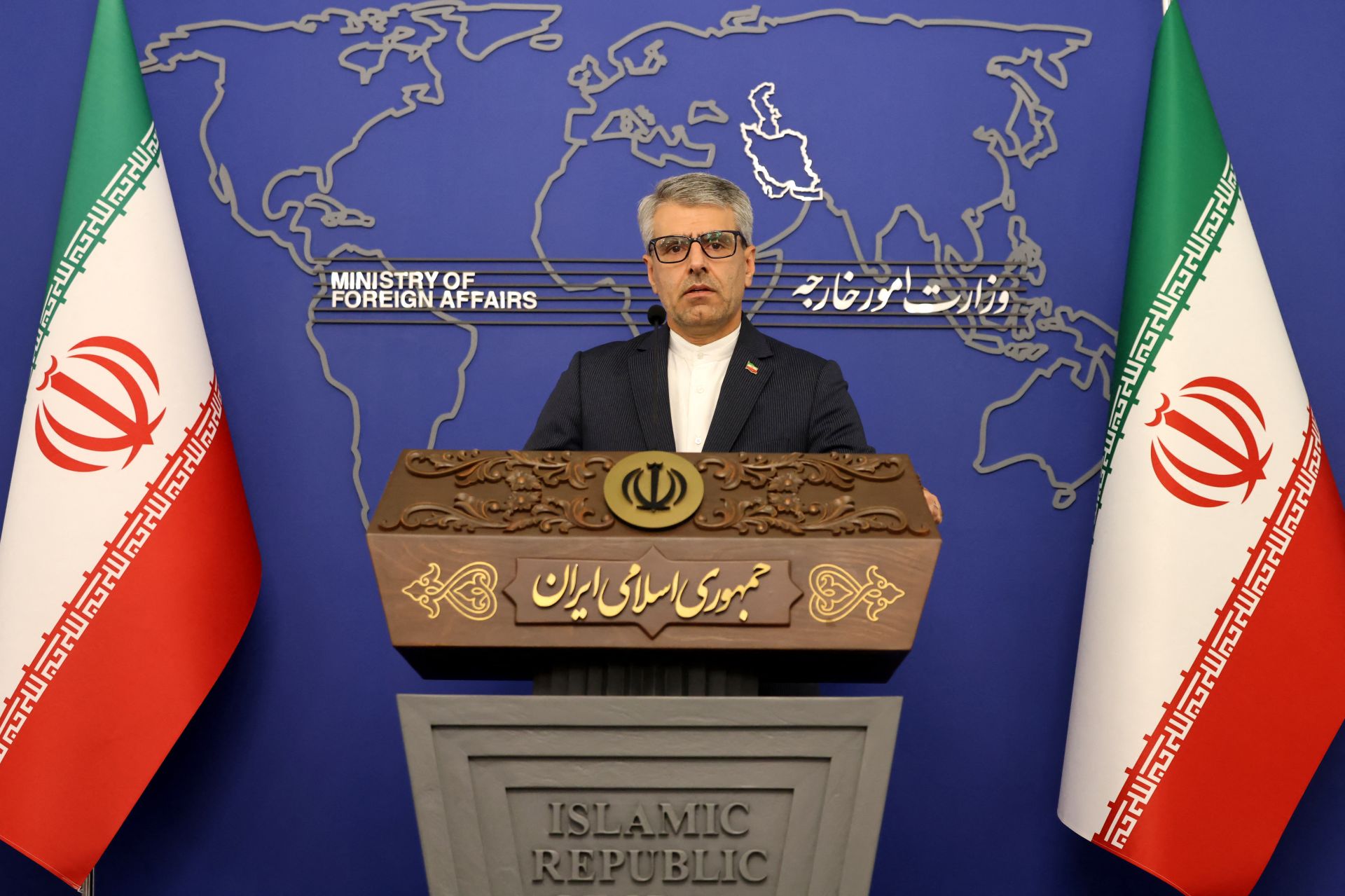
Iran's foreign ministry spokesman Esmaeil Baghaei ©Photo by ATTA KENARE / AFP
Iranian Foreign Ministry spokesperson Esmaeil Baghaei on Monday accused the United States and Israel of attempting to weaken and divide the country as the regional war continues to intensify, while insisting that Tehran’s military actions are defensive and warning that international institutions have failed to intervene.
During a press briefing, Iran’s foreign ministry spokesperson sharply criticized the ongoing U.S.-Israeli military campaign against Iran, describing the strikes as attacks that “do not distinguish between civilian and military targets.”
According to the spokesperson, Tehran believes Washington and Israel are pursuing broader strategic goals beyond the current military confrontation.
“The objective of the United States and Israel is to weaken Iran and divide the country,” the Iranian Foreign Ministry said, adding that such efforts “will not succeed.”
Iran Says War Was Imposed During Negotiations
Iranian officials also claimed that the current war was initiated while diplomatic discussions were ongoing.
“The war was imposed on us during negotiations,” the spokesperson said, accusing Washington of abruptly abandoning diplomatic channels.
Iran further accused the United States of attempting to justify the military campaign with what it described as “false pretexts.”
“Washington is trying to justify its aggression with fabricated arguments,” the statement said.
Tehran Calls for UN Security Council Intervention
The Iranian Foreign Ministry also called for urgent action from international bodies to halt the fighting.
According to the spokesperson, the United Nations and the UN Security Council have failed to fulfill their responsibilities in addressing the crisis.
“The United Nations and the Security Council have been negligent in carrying out their duties,” the statement said, urging the body to intervene to stop the war.
Iran Denies Targeting Neighboring States
Tehran also rejected accusations that it had deliberately targeted regional countries such as Turkey, Azerbaijan, or Cyprus during the conflict.
“We have not targeted Turkey, Azerbaijan, or Cyprus,” the spokesperson said.
Iran maintained that its actions are aimed solely at defending the country. “Our actions are a defense of our homeland and not an attack on any state,” the spokesperson added.
Tehran Warns Against Use of Regional Territory
Iran also warned neighboring countries against allowing their territory to be used in attacks against the Islamic Republic.
The foreign ministry accused the United States of attempting to seize control of Iranian energy resources while escalating military pressure on the country.
At the same time, Iranian officials acknowledged that some European countries had contributed to creating an atmosphere that led to the current conflict.
Iran’s Defensive Narrative
While Iranian officials insist their military actions are purely defensive and deny targeting neighboring countries, developments suggest the opposite.
In recent days, Iran and Iran-aligned forces have carried out missile and drone strikes across several Gulf countries, including Bahrain, the United Arab Emirates, and Kuwait, despite those states not conducting military operations against Iran. In addition, a drone linked to Iran or its regional allies struck a British Royal Air Force base in Akrotiri, Cyprus, earlier in the conflict, damaging a hangar and prompting European countries to deploy additional military assets to protect the island.
Cyprus’s Foreign Minister Constantinos Kombos said that explosive-laden drones that targeted British military bases on Cypriot territory recently had been launched from Lebanon by the Iranian proxy Hezbollah.
This contrast between Tehran’s diplomatic messaging and the expanding geographic scope of its attacks highlights the widening regional impact of the war.
The statements come as the war between Iran and the U.S.–Israeli alliance enters its second week, with missile and drone attacks spreading across the Middle East and energy markets reacting to fears of broader regional instability.
Read more


Comments