Despite mounting pressure on Hezbollah’s smuggling networks and Iran’s deepening financial crisis, trade flows between Tehran and Beirut surged in 2025, suggesting the two are adapting illicit channels to sustain Hezbollah’s parallel economy.
Hezbollah's position has weakened since 2024 and Iran's financial crisis has deepened, but trade between Iran and Lebanon rose from $48 million in 2024 to $81 million in 2025, according to Nidaa al-Watan, with a notable increase in Iranian exports.
Hezbollah has been changing Lebanese consumption patterns through poorer-quality Iranian goods, which are being more widely distributed in regions such as Beirut's southern suburbs. The organization has reportedly provided special "Sajjad" and "Nour" cards to its supporters to buy goods at a discount from Hezbollah-linked providers.
This is creating a parallel welfare economy within Lebanon in line with the "state within a state" model to replace reliance on the Lebanese state, fostering an ecosystem of reliance on Hezbollah despite its reach being affected by war and changing political realities. Aid and cheap goods are being used to ensure loyalty for the organization as it adapts to shifting political dynamics in Lebanon.
While trade with Iran is boosting Lebanon's economic metrics, the Lebanese market is losing out as businesses that produce and distribute goods locally are unable to compete with the lower prices of Iranian goods, losing access to markets within their own country. In regions with strong Hezbollah presence, Iranian goods often displace local Lebanese products.
Hezbollah has reportedly falling short on their payment of salaries to fighters and spearhead its own reconstruction efforts in southern Lebanon, and as Israel continues to carry out periodic strikes on Hezbollah machinery and operatives which stalls Hezbollah's reconstitution of capabilities, the cost of reconstruction and to maintain the allegiance of loyalists will continue to grow.
Alongside consumption goods and cash, industrial materials such as steel and glass constitute a large amount of Iranian exports to Lebanon which may be directed towards Hezbollah's efforts to recoup its infrastructure and support its parallel economy through Hezbollah-affiliated construction firms.
Adapting to a Changing Neighborhood
The increased trade metrics indicate that the movement of goods and cash between Iran and Hezbollah constitutes attempts to adapt and reconstruct smuggling networks amid the current geopolitical reality.
The former Syrian regime ruled by Bashar al-Assad took part in this network and facilitated the movement of assets and goods to Lebanon, but Syria is no longer as easily accessible to Hezbollah under the Ahmed al-Sharaa government.
Border enforcement along the Lebanon-Syria frontier is being strengthened as Damascus rebuilds its sovereignty over Syrian territory. Last week, Syria's Ministry of the Interior targeted terrorist cells in the Rif Dimashq governorate and captured allegedly Hezbollah-linked military hardware. Syria also instituted a ban on foreign trucks earlier this week to increase monitoring of the flow of goods and cash across its borders, prompting talks with Lebanese officials to reach a consensus on control over their shared frontier.
On Thursday, the Lebanese army also stated that it will crack down on illicit border crossings along the Beqaa Valley during momentum to harden the porous Lebanon-Syria frontier.
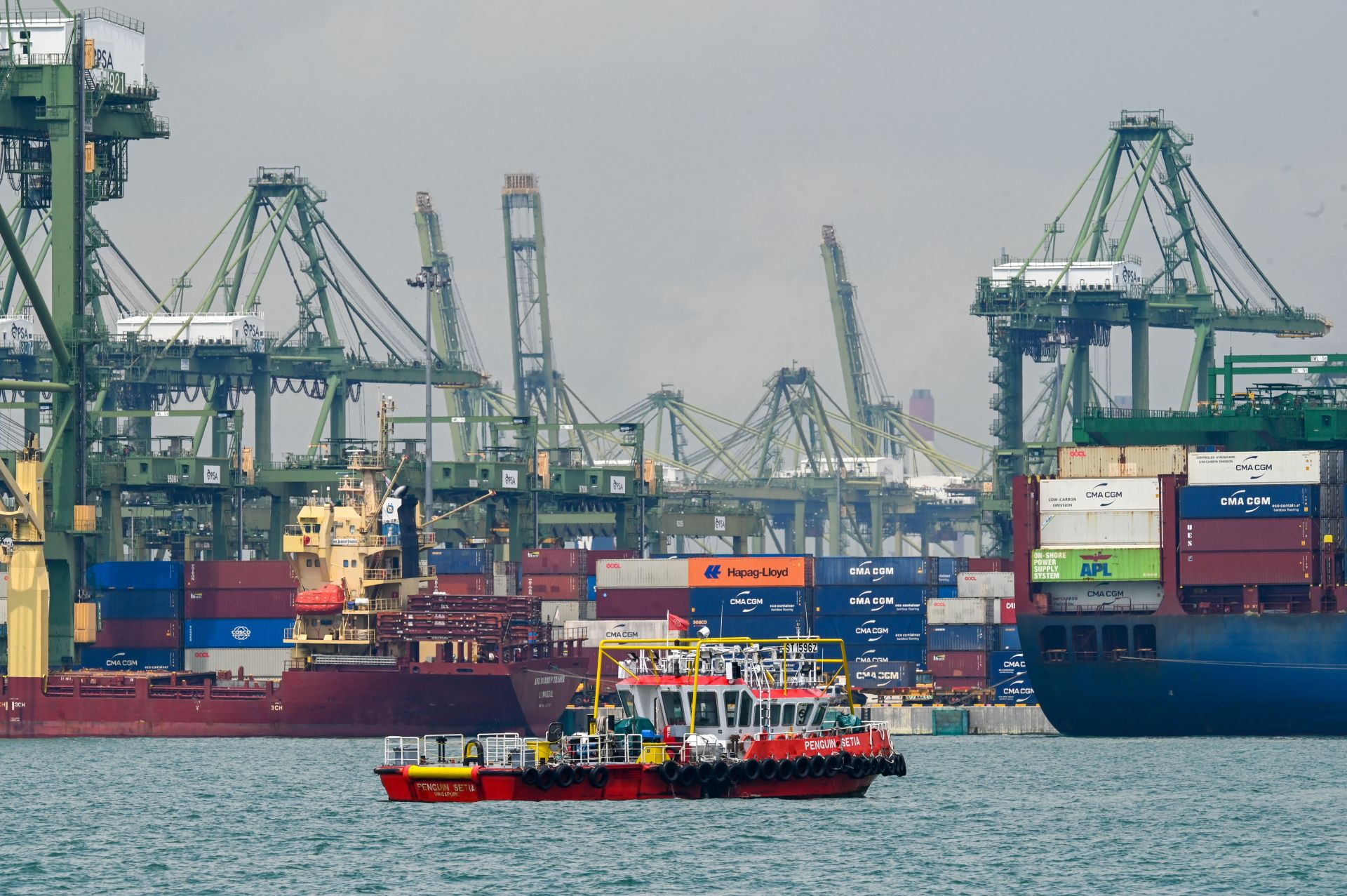
Amid these developments, Iran and Hezbollah have sought alternative methods to maintain trade flow through land borders, shipping ports, and airports with cooperating couriers and indirect shipments. Lebanese-Iranian trade passes through many of Lebanon's gateways, including ports in Beirut, Tripoli, and Sidon, as well as land crossings with Syria and the Beirut airport.
Iran Uses Lebanon to Shore up Finances
As tensions rise between Iran and the U.S. and the possibility of war looms, it is postulated that Iran is using Lebanon as a storehouse for assets and currency.
Iran is accused of smuggling suitcases of cash into Lebanon through the Beirut airport amid recent reports of Iranians travelling on diplomatic passports to carry U.S. dollars into the country, increasing the airport's role as an important node in Hezbollah's cashflow as it contends with financial losses. Hezbollah has also grown increasingly reliant on the Beirut airport after Israeli operations have disrupted networks run by the IRGC smuggling weapons, goods, and cash through Syria.
The Beirut airport's role in Hezbollah's smuggling network has positioned it as a significant flashpoint, with Israel issuing a formal complaint to the U.S.-led Lebanon ceasefire oversight mechanism.
As a higher volume of goods and money flows from Iran to Lebanon, the U.S. Treasury is concerned that Lebanon is being used as a cash dump to ease domestic inflation pressures and protect some Iranian money supply while the country's economy continues to worsen. On Tuesday, the U.S. announced sanctions against Hezbollah's gold and cash transfer apparatus, singling out al-Qard al-Hassan's gold exchange, as the U.S. seeks to limit organization's illicit cashflow.
U.S. concerns also allege that Lebanon may be a destination for shoring up resources abroad through goods and cashflow as a policy of insurance for the Iranian regime.



Comments