- 04
- Mar
- 2026
AnalysisLebanon Bans Hezbollah’s Military Activities, But Stops Short of Terrorism Label
Read : 7 minute(s) A A A
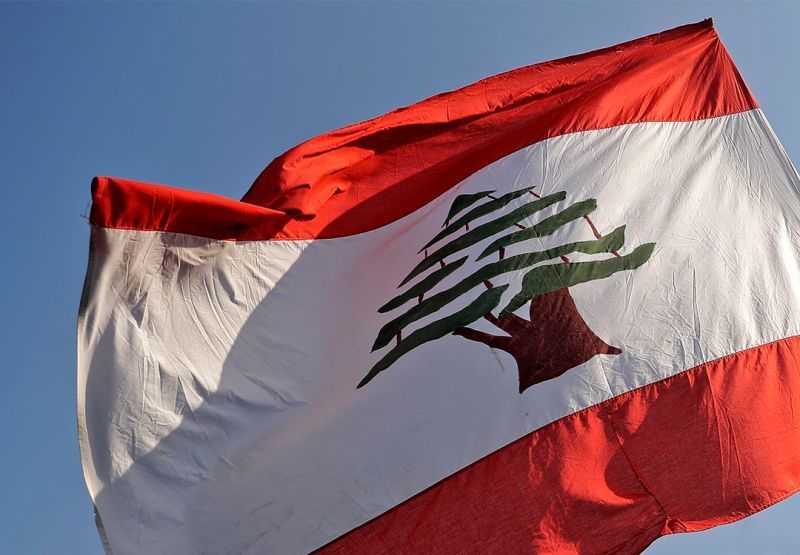
In an unprecedented move, Lebanon’s government on March 2 banned all Hezbollah’s military and security activities and instructed the Lebanese Armed Forces (LAF) to immediately move forward with its plan to disarm the militia.
The decision came hours after a Hezbollah rocket barrage into Israel, which triggered a widescale military retaliation by Jerusalem. While the cabinet’s decision marks Lebanon’s boldest step yet toward asserting sovereignty over non-state arms, it also reveals persistent political divisions. Critically, uncertainty hangs over the ability of the state to enact its decision against Hezbollah.
A “Historic” Ban
The government’s decree was definitive in its wording, declaring an “absolute rejection… of military or security actions launched from Lebanese territory” and labeling Hezbollah’s armed operations “unlawful.”
It also requires Hezbollah to “surrender its weapons to the Lebanese state and confine its activity to the political sphere.” The cabinet further instructed the LAF to “immediately and decisively” implement its plan to disarm Hezbollah north of the Litani. This builds on the army’s disarmament efforts along the border with Israel, which it said were completed in early January.
In a speech following the cabinet meeting, Prime Minister Nawaf Salam underscored the gravity of the moment. “The decision of war and peace belongs exclusively to the Lebanese state,” he said.
Salam voiced his rejection of any Hezbollah operations that “undermine Lebanon’s credibility” amid the escalating regional conflict and challenged the logic of “resistance” that the group has long used to justify its arsenal.
By labeling Hezbollah’s military actions a “direct violation of national sovereignty and the collective will of the people,” the government signaled a turning point in state authority. For the first time, the Lebanese state denied Hezbollah’s claim to defend Lebanon, instead branding its weapons as a threat to the country’s survival.
The LAF’s Dilemma
The LAF and its commander, General Rodolphe Haykal, now face their most severe test. The government’s order is clear, but the path to its implementation is anything but.
Retired LAF General Khalil Gemayel told This is Beirut that the government’s decision puts the responsibility on the army to immediately implement its disarmament plan north of the Litani, where it can rely on intelligence data to locate Hezbollah’s arms.
The LAF “must begin operations on the ground” to preserve its international credibility, he added.
But the army’s ability to disarm Hezbollah will depend on the resolve of its leadership. Sources told This is Beirut there is “hesitancy” within the LAF’s upper ranks, rooted in fears of sectarian division. In mid-February, for example, Haykal presented the government with a disarmament plan without a firm timetable, citing concerns over civil peace.
“The army is hesitant because the Lebanese state is hesitant,” a senior military source told This is Beirut.
The source pointed to the widely reported dispute between Haykal and Salam during the March 2 cabinet session, where the LAF commander argued for seeking consensus with Hezbollah before ordering the army to act.
This argument reflected a “deep divergence between [Lebanon’s] political and military authorities,” the source said. He added that Haykal, whose career was shaped in an era of Hezbollah dominance over politics, must now choose between national duty and his own political ambitions.
Lebanon’s history of stalled enforcement of state decisions and political paralysis has allowed Hezbollah to maintain its armed presence, fueling doubts about whether this time will be different.
Former U.S. diplomat Alberto Fernandez warned in an X post that Haykal may act as a “stooge of Hezbollah determined to do nothing.”
Meanwhile, Hanin Ghaddar, a senior fellow at the Washington Institute for Near East Policy, warned that the move could amount to little more than “ink on paper.”
Why No Terrorism Designation
If Lebanon is willing to criminalize Hezbollah’s military activities and strip it of its armed status, why did the government stop short of declaring the entire group a terrorist organization? The answer lies at the intersection of Lebanese law and politics.
Hisham Bou Nassif, associate professor of international relations at Claremont McKenna College, is blunt about Hezbollah’s history of violence.
“Hezbollah has definitely used terrorism… in Lebanon and beyond,” he said, pointing to the group’s assassinations of Lebanese political and intellectual figures and international attacks against Jewish targets.
Yet, Bou Nassif pointed out that Hezbollah also acts in Lebanon as a political party with a social welfare network. “The organization’s multifaceted nature makes a total designation a political minefield,” he said.
Bou Nassif said such a terrorism designation would break with Lebanon’s legal precedents. Given the country's sectarian power-sharing system, it would also carry significant political risks.
“Both Aoun and Haykal are the product of an era in Lebanon [where political processes were] completely controlled by Hezbollah,” he said.
Bou Nassif described Lebanon’s government as weak and psychologically trapped in an era when Hezbollah held political primacy.
“It takes a lot of courage to declare the organization completely unlawful... and perhaps that kind of courage is lacking,” he said.
Political Calculus and International Pressure
The government’s approach—banning Hezbollah’s military wing while leaving its political arm intact—allows the group to survive politically if it disarms. Success would mark the first real assertion of state authority over Hezbollah’s military apparatus. Failure, however, risks further eroding Lebanese state legitimacy and inviting instability or foreign intervention.
The core question, as Bou Nassif puts it, is simple: “Armies are formed to be used. And if not now, when?”
For the first time since the 1989 Taif Agreement that ended Lebanon’s civil war, the country has moved to criminalize non-state arms. Yet, as Ghaddar warns, “banning Hezbollah’s military activities doesn’t prevent them from having a say in political decisions.” Hezbollah has exploited this loophole in the past to reconstitute itself.
The coming period will determine whether the LAF acts decisively or lets the opportunity slip. A successfully instituted ban could weaken Hezbollah and restore state authority. On the other hand, inaction could deepen Lebanese divisions, erode the state’s credibility, and threaten the country’s fragile civil peace.
Lebanon’s future may hinge on whether Haykal and the LAF heed the government’s orders—and whether Hezbollah, for the first time, is forced to abandon its military role and embrace a purely political one.

Comments