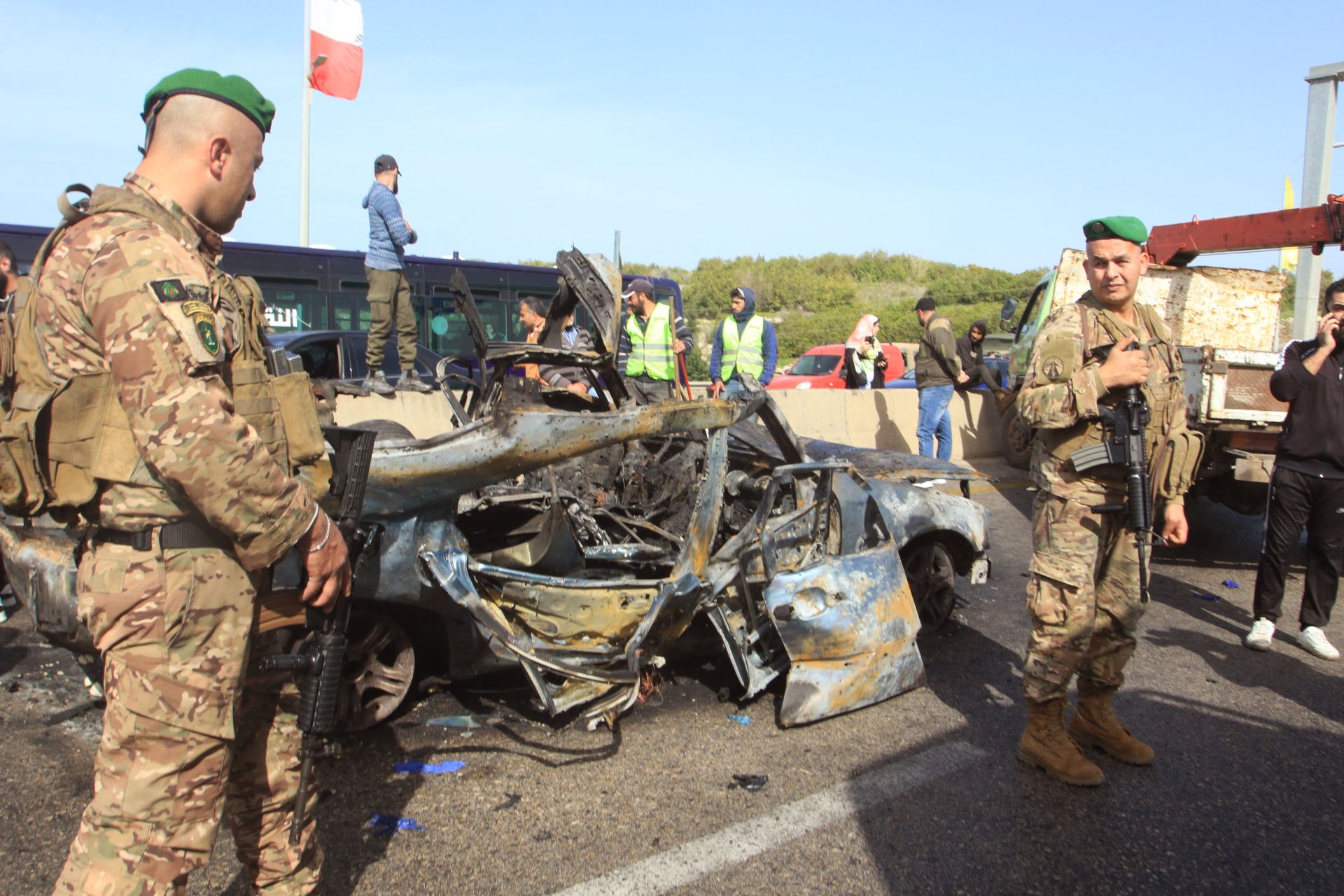
Lebanon’s government will decide next week how to proceed with the second phase of its plan to bring all weapons under state control, including arms held by Hezbollah, extending the process to areas north of the Litani River, Information Minister Paul Morcos said on Wednesday.
Speaking in Kuwait on the sidelines of an Arab meeting, Morcos said the decision would be based on a detailed briefing from the commander of the Lebanese Armed Forces, who is expected to outline the army’s operational capabilities and logistical needs for implementing the next stage of the plan.
“We have completed the first phase south of the Litani,” Morcos said. “The government will take its decision next week regarding the second phase, in light of what the army commander presents in terms of capacities and requirements.”
The move forms part of Beirut’s broader effort to consolidate state authority nationwide, in line with the U.S.-brokered ceasefire reached in November 2024 that ended weeks of fighting between Israel and Hezbollah.
In January, the Lebanese army announced it had established operational control over the area between the Litani River and the Israeli border, a long-standing Hezbollah stronghold, marking the first tangible step in a process that successive Lebanese governments have struggled to enforce.
A Sensitive Expansion Beyond the South
Extending the disarmament effort north of the Litani represents a far more politically sensitive phase. While the initial deployment in the south took place under intense international pressure and Israeli military scrutiny, areas further north include densely populated regions where Hezbollah maintains deep political, social, and security influence.
Morcos downplayed the likelihood of confrontation between the army and Hezbollah, stressing that the government’s objective is stability rather than escalation.
“The goal is to restore state authority and achieve stability,” he said. “As long as we can advance both together, that is what we will do.”
Lebanon’s cabinet had asked the army earlier this month to submit a roadmap for expanding weapons control beyond the southern zone, amid growing Western calls for concrete steps to curb Hezbollah’s military autonomy.
Israel Continues Strikes, Raises Pressure on Beirut
Despite the ceasefire, Israel has continued to carry out regular airstrikes in Lebanon, targeting what it says are Hezbollah positions and rearmament efforts. Lebanese security sources say around 400 people have been killed in Israeli strikes since the end of the war.
Israel accuses Hezbollah of attempting to rebuild its arsenal in violation of the truce. Hezbollah denies the charge and says it remains committed to the ceasefire in southern Lebanon.
The continued Israeli operations have added urgency to Lebanon’s internal debate over weapons control, as international donors and diplomatic partners increasingly link reconstruction aid to progress on security reforms.
A Long-Unresolved Question of State Sovereignty
The issue of Hezbollah’s weapons has dominated Lebanese politics for nearly two decades, with critics arguing that the group’s independent military structure undermines state sovereignty, while supporters frame its arsenal as a deterrent against Israel.
Previous attempts to resolve the matter through national dialogue collapsed amid political deadlock and regional tensions. The current push, driven by post-war realities and external pressure, marks the most serious effort in years to translate rhetoric about state authority into concrete policy.
Whether Lebanon’s overstretched army, grappling with funding shortages and institutional fatigue, can enforce such a decision remains an open question.
For now, next week’s cabinet deliberations are being closely watched as a potential turning point in Beirut’s attempt to reassert control over security across its territory and to redefine its fragile balance between state power and armed non-state actors.

Comments