- 09
- Feb.
- 2026

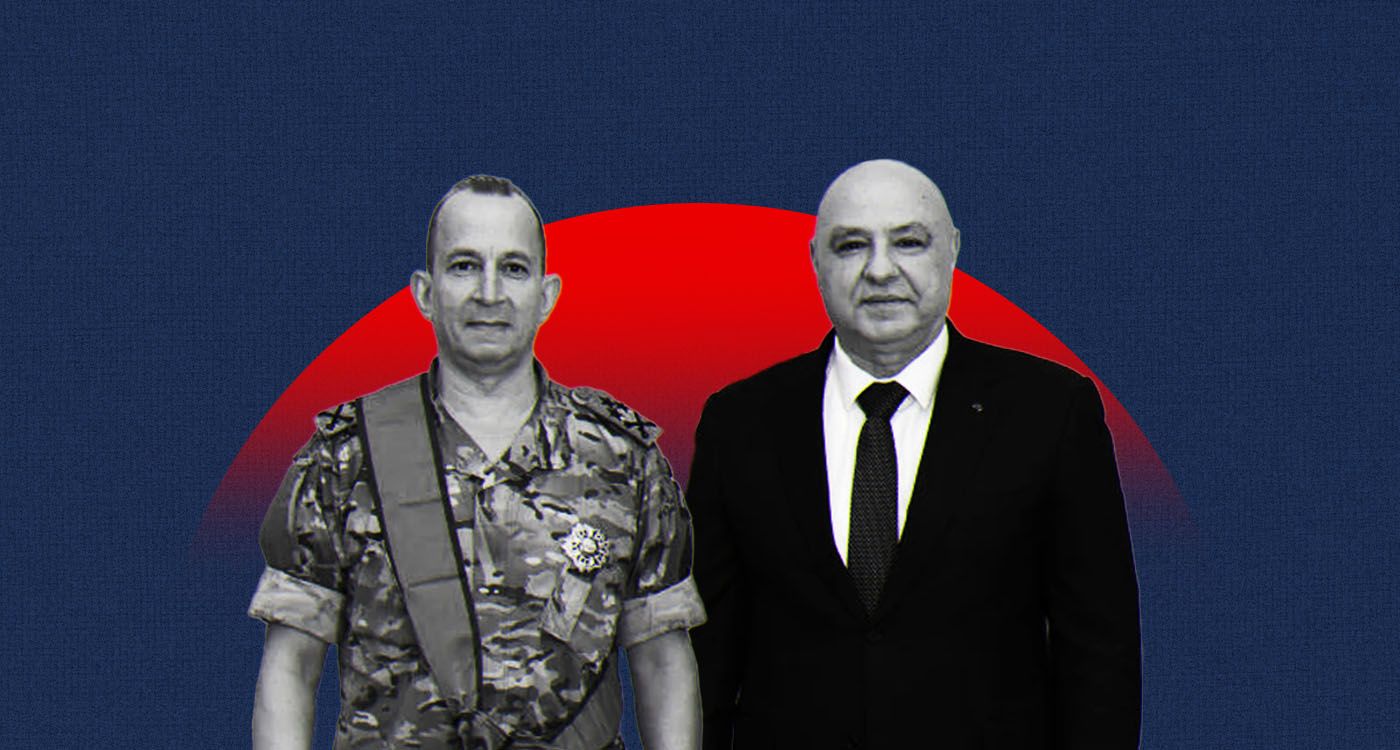
Lindsey Graham portrayed his meeting with Rodolphe Haykal, which collapsed within minutes, as a complete debacle. The U.S. senator asked the Lebanese Armed Forces (LAF) chief if Hezbollah was a terrorist organization. Haykal’s reply—“not in the Lebanese context”—prompted Graham to walk out in fury, insisting that any group responsible for murdering 241 U.S. Marines in the 1983 Beirut bombing deserves the terrorist label without qualification.
Graham was correct, and his outburst cemented the narrative of a humiliating failure. Yet the full picture tells a different story. While the walkout was a public slap in the face, Haykal’s other high-level meetings in Washington proved far more constructive. The trip was not a disaster; rather, it exposed Lebanon’s chronic refusal to confront its greatest internal threat—Hezbollah.
As a transnational, violent non-state actor, Hezbollah is indisputably a terrorist organization. The U.S. and more than a dozen states worldwide have designated it as such for decades of atrocities. Beirut, however, continues to dodge this reality. In a country fractured by sectarian loyalties—between Shia Hezbollah supporters and Sunni Muslim Brotherhood and Al-Qaeda sympathizers—officials fear that any firm stance could ignite sectarian strife.
This calculated cowardice amounts to national suicide. By refusing to name evil, Lebanon allows that same force to paralyze the state, hijack its foreign policy, and drag the nation toward collapse.
Haykal himself is not the villain here. As LAF commander, he is a military officer bound by civilian orders. For a time, Haykal flirted with politics, saying that Israel’s control of five border hilltops and its policing of Hezbollah obstructed his mission to disarm the militia. LAF has since abandoned this line, having presumably completed Hezbollah’s disarmament south of the Litani River.
Haykal is obliged to echo Beirut’s official, nonsensical policy line, which portrays Israel as the perpetual enemy while pretending that Hezbollah does not exist. The responsibility for this policy stance lies with President Joseph Aoun and Prime Minister Nawaf Salam.
Since taking office a year ago, Aoun has tiptoed around confronting Hezbollah, convinced that, as a Maronite Christian leader, any clash with the Shia-dominated, Iran-backed militia would be branded sectarian aggression and plunge Lebanon into civil war.
This fear is rooted in the toxic Ottoman millet system, which has warped Lebanese politics since 1920 by locking power into confessional quotas and prioritizing sectarian loyalty over Lebanon’s national interest. It is a disastrous formula that guarantees dysfunction.
Aoun’s timidity is inexcusable. He needs to assert that his presidency stands for all citizens—Shia included—without allowing Hezbollah or Speaker Nabih Berri to claim a special authority over the Shia community.
Aoun must override Hezbollah’s veto, speak directly to Shia communities about their genuine welfare, and enforce uniform laws. This requires disarming Hezbollah’s illegal arsenal—the single greatest obstacle to stability—and growing the economy to generate revenue for reconstruction and for funding a professional army free from militia influence.
Lebanon does not need new leaders; it needs an entirely new operating system, one that ignores sectarian identity and enforces the rule of law equally. Regionally, Lebanon must embrace strict neutrality, pursue peaceful relations with all its neighbors—including Israel—and break free from poisonous alignments, distancing itself from Iran, Turkey, Qatar, Saudi Arabia, and Egypt.
Beirut’s foreign policy should be oriented toward what benefits the country’s trade and economy. Iran’s nuclear program and Gaza’s ruin are background noise, irrelevant to Lebanon’s survival. Instead, Beirut should actively engage the U.S., the global power courted by every capital. To secure Washington’s support, Lebanon must align decisively with U.S. priorities and distance itself from Tehran and Saudi Arabia.
To give credit where it is due, Beirut already relies heavily on Washington. The relationship between the LAF and U.S. Central Command (CENTCOM) is robust, far stronger than the political ties between the two countries.
Through the military lens, Haykal’s visit succeeded decisively. In Pentagon meetings and elsewhere, he detailed progress in disarming Hezbollah, outlined remaining challenges, and received praise along with commitments for expanded cooperation. U.S. officials pressed for a faster pace in Hezbollah’s disarmament, but their skepticism never turned into doubt about continued aid from Washington or accusations of LAF complicity with the group.
The LAF functions as a genuine—if cautious and resource-strapped—U.S. partner in a volatile region, and that partnership is worth strengthening. While Haykal has many flaws, blaming him for Lebanon’s dysfunctional politics is unfair. As LAF commander, his job is to execute cabinet directives.
When Hezbollah leader Naim Qassem openly vows to retain his militia’s weapons and side with Iran against America, it falls to Aoun and Salam to order judicial action against the illegal armed group. Only then would Haykal be tasked with enforcement—and he must be held accountable if he fails.
Until Hezbollah is outlawed, expecting Haykal to brand Hezbollah as a terrorist organization in official settings is asking him to take a political stance beyond his remit as a military officer in Lebanon’s democracy.
Haykal’s trip was no catastrophe. It underscored Lebanon’s need for courageous leadership to dismantle Hezbollah’s dominance, adopt genuine neutrality, and cement its alliance with the U.S. Without these steps, Lebanon will remain trapped in failure. The real question isn’t how bad the visit was—it’s how much longer Beirut can afford to avoid the fight for its own future.



Comments