- 10
- Feb.
- 2026
AnalysisU.S. Rep. LaHood to This Is Beirut: “No Progress, No Support,” Lebanon Must Act Now
Read : 6 minute(s) A A A
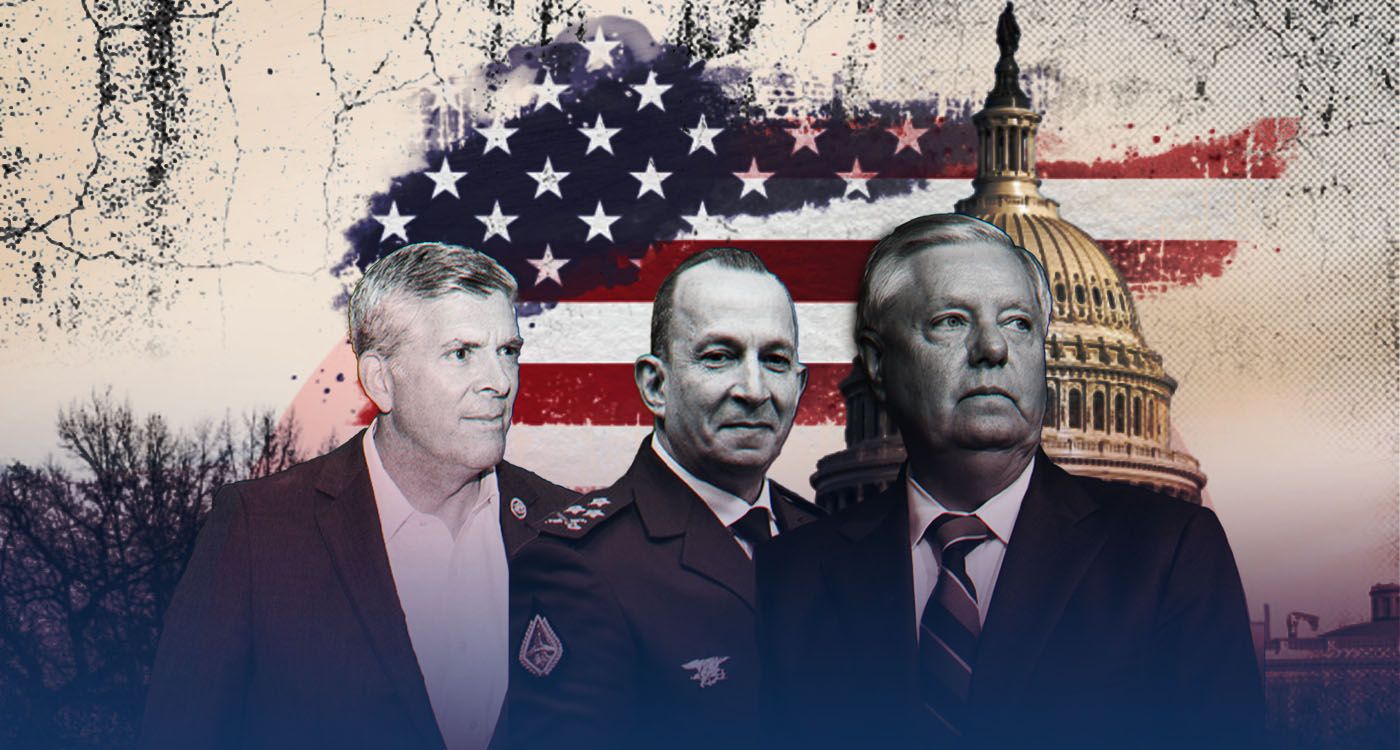
When Lebanese Army Commander Gen. Rodolphe Haykal arrived in the U.S. capital during the first week of February, he entered a fundamentally transformed strategic landscape. The meetings that unfolded—from tense political exchanges to a dramatic walkout by Sen. Lindsey Graham—crystallized a stark reality: Lebanon’s decades-long balancing act between state sovereignty and militant autonomy is collapsing, and Washington is no longer willing to accept ambiguity.
The weakening of Hezbollah, Iran’s economic crisis, and the collapse of the Bashar al-Assad regime in Syria have converged to create what U.S. policymakers now call a “once-in-a-generation opportunity” for Lebanon to reclaim its full sovereignty. Yet, as Rep. Darin LaHood, co-chair of the U.S.-Lebanon Friendship Caucus, bluntly warned exclusively to This Is Beirut, “Lebanon is on the path to do that, but we’re not there yet. And there are important milestones that need to be met.”
His assessment reflects a growing bipartisan consensus in Washington: this convergence has created unprecedented conditions for Lebanese state institutions to assert control. But the U.S. message is clear: time is of the essence, and patience is exhausted. “We want to see success, we want to see goals achieved, we want to see tangible results, we want to see weapons recovered,” LaHood emphasized.
The transformation Washington seeks goes far beyond military disarmament. While Gen. Haykal acknowledged American support and reaffirmed Lebanon’s commitment to the ceasefire agreement and U.N. Resolution 1701, his careful language revealed the delicate domestic politics he must navigate. Lebanon speaks of commitment; America demands demonstration.
The U.S. wants the Lebanese Army not only to collect weapons but to fundamentally reorder the country’s security architecture. Substantial American support will only flow if Lebanon demonstrates genuine progress.
Yet the diplomatic language—referring to “non-state actors” rather than explicitly naming Hezbollah—has itself become controversial. The State Department’s Bureau of Near Eastern Affairs framed the stakes in stark terms: “Disarming Iranian proxy terror groups and cultivating peace in the Middle East are essential parts of POTUS’s agenda.”
Graham asked Haykal whether he considered Hezbollah a terrorist organization. Haykal’s refusal to do so abruptly ended the meeting, underscoring how Washington’s tolerance for nuance has evaporated. “As long as this attitude exists from the Lebanese Armed Forces, I don’t think we have a reliable partner in them,” Graham stated, echoing a growing frustration in Congress. LaHood was equally direct: “I would love to see a time when Israel doesn’t need to bomb areas in South Lebanon, doesn’t need to go after Hezbollah targets, to see that we can rely on the LAF to do that. That’s the ultimate goal here, to have the LAF control all of South Lebanon.”
“You’ll start to see more of that coming to the LAF,” LaHood said, adding a clear caveat: no progress, no support.
The pressure from Washington extends well beyond military matters. Congress is calling for personal sanctions against Lebanese officials who obstruct reform. “Anyone within the government of Lebanon—especially elected officials who obstruct electoral reform or efforts to reform the banking system, whether through the Gap Law or diaspora voting legislation—must be held accountable,” LaHood stated. “The members of Congress continue to be frustrated because of the lack of progress, and the Trump administration has become very frustrated.”
On February 4, LaHood and Rep. Darrell Issa introduced the Lebanon Election Integrity and Diaspora Voting Protection Act, which targets sanctions against officials who obstruct electoral and banking reforms. Introduced during Haykal's visit, the legislation reflects Congress's resolve to impose consequences on those who block Lebanon's transformation.
Lebanon’s parliamentary elections, scheduled for May 2026, loom as a critical test. Testimony before the House Foreign Affairs Subcommittee warned that Hezbollah, though militarily weakened, is redirecting resources to protect its political infrastructure. The group and its ally, the Amal Movement, aim to secure all 27 Shiite parliamentary seats, maintain the speakership, and preserve influence over key security and financial appointments. Without rapid disarmament progress, Hezbollah could use its remaining arms to intimidate voters and consolidate power even as its military capabilities decline.
LaHood stressed the urgency: “The U.S. and the Congress want to see things expedited, particularly north of the Litani and in the Bekaa, and to make sure that continues at a rapid pace.” Disarmament progress before the elections could fundamentally alter the political landscape.
U.S. backing is not unconditional. “These are all instances that show that America wants Lebanon to succeed, but it is going to be up to the Lebanese government and the people in the parliament to move it forward in an appropriate way,” LaHood said, placing the burden squarely on Beirut. His words carry an implicit warning: this time, American patience has limits.
The strategic calculation is simple: if Lebanon acts decisively while Hezbollah is weak, it can establish state control over all territory and weapons. If it hesitates, Hezbollah will recover—and the opportunity will vanish.
As Haykal returned to Beirut, he carried both promises of American support and unmistakable warnings. That support comes with conditions Lebanon has historically resisted: genuine disarmament, electoral reform, economic restructuring, and unambiguous alignment with state sovereignty over militia autonomy.
Lebanon can move from rhetoric to direct action. Or it can continue the familiar pattern of promising reforms while preserving the status quo, hoping that American pressure will eventually ease. But this time, the window is closing—and Washington is watching.


Comments