- Home
- Middle East
- U.S. Steps Up Tracking of Iranian Funds as Nuclear Talks Loom
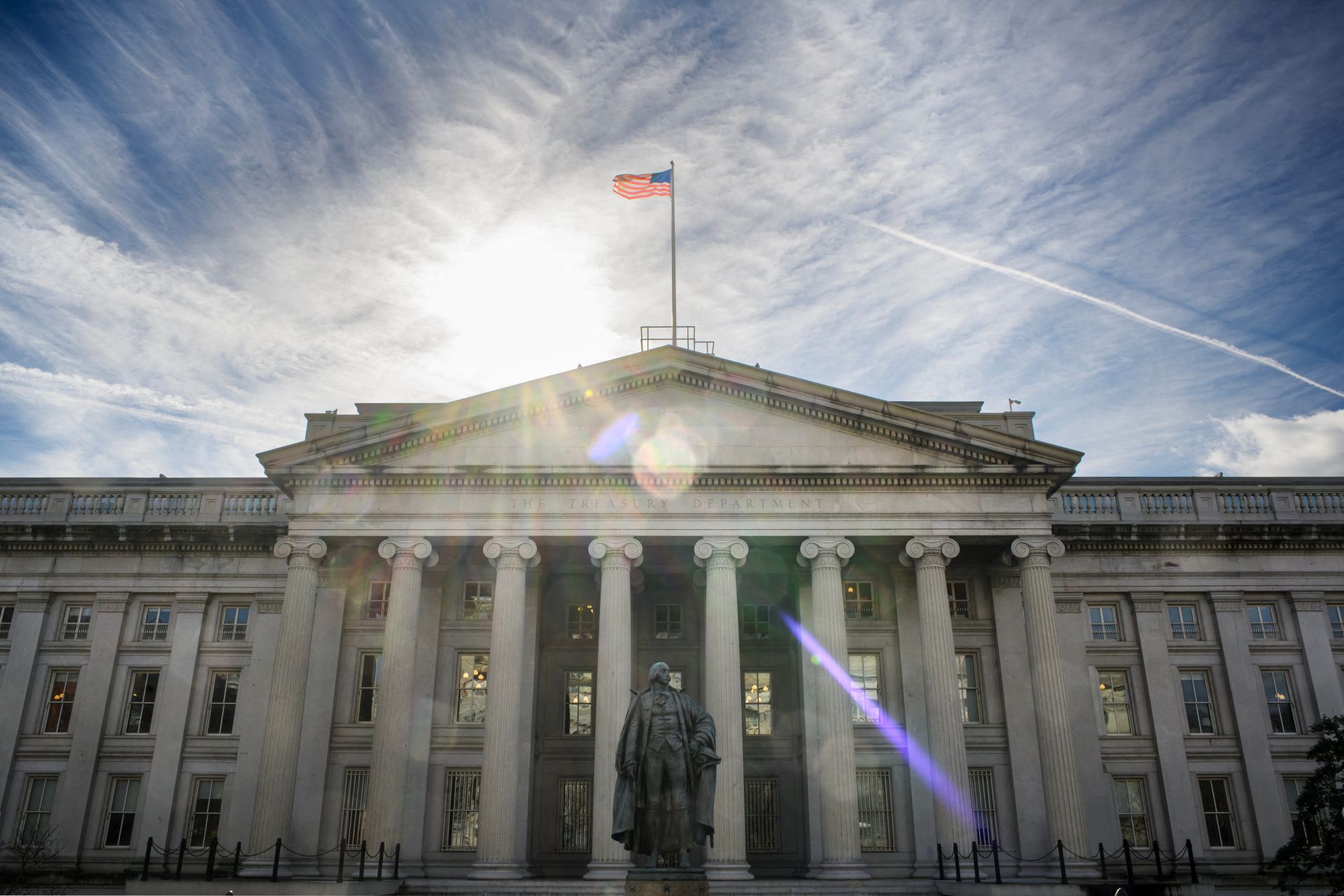
The Treasury Building seen in Washington, DC. ©Photo by Mandel Ngan / AFP
The U.S. Treasury Department said on Sunday it was ramping up monitoring of Iranian financial networks, alleging that the Iranian government is transferring funds overseas to shield assets from soaring domestic inflation and long-standing American sanctions.
The United States has intensified efforts to track Iranian money flows, accusing Tehran of moving large sums abroad to evade sanctions, even as preparations continue for another round of nuclear negotiations between Iran and the United States.
The announcement comes amid what officials have described as a cautiously positive atmosphere ahead of renewed U.S.-Iran talks, following indirect negotiations held last week in Oman.
Washington alleges mass capital flight
U.S. Treasury Secretary Scott Bessent told a Senate banking committee earlier this month that Iranian leaders were moving millions of dollars out of the country “like rats fleeing a sinking ship,” citing surveillance of large-scale financial transfers through both banking channels and smuggling operations.
He said U.S. authorities had detected transactions amounting to tens of millions of dollars as sanctions enforcement tightens.
Israeli and Iranian opposition media have also alleged that as much as $1.5 billion was transferred via cryptocurrencies to Dubai, including $328 million reportedly linked to Mojtaba Khamenei, the son of Iran’s Supreme Leader Ali Khamenei, claims that have not been independently verified.
U.S. officials say Iran has increasingly relied on digital currencies since 2023 to bypass restrictions, with Iranian-linked crypto wallets receiving an estimated $7.8 billion in 2025, drawing heightened scrutiny over networks allegedly tied to the Islamic Revolutionary Guard Corps.
The Treasury has previously sanctioned figures, including Babak Zanjani, over oil smuggling and cryptocurrency use.
‘Shadow fleet’ under pressure
In parallel, India’s Coast Guard announced it had intercepted three oil tankers on February 6 in a coordinated air–sea operation about 100 nautical miles west of Mumbai.
According to shipping analytics firm Kpler, the vessels Chiltern, Asphalt Star, and Stellar Ruby are listed under U.S. sanctions by the Office of Foreign Assets Control for allegedly transporting Iranian crude.
Indian authorities said the operation uncovered an international network suspected of conducting ship-to-ship oil transfers at sea, a hallmark of what analysts call Iran’s “shadow fleet.”
Over recent years, Tehran has developed this covert network of tankers that frequently change names and flags, disable tracking systems, and conduct offshore transfers to circumvent sanctions on Iranian oil exports.
Iran warns of war but says it seeks diplomacy
Despite the financial crackdown, Iranian officials struck a defiant tone. Iranian Armed Forces Chief of Staff Abdolrahim Mousavi said at a forum in Tehran that Iran was prepared for a prolonged conflict with the United States, while insisting it did not seek a regional war.
“We are ready for a long-term war with the United States,” Mousavi said, adding that any regional conflict would delay development for years and that responsibility would rest with Washington and Israel.
Iranian Foreign Minister Abbas Araghchi, meanwhile, questioned Washington’s commitment to “real negotiations,” saying the U.S. military buildup in the region did not intimidate Tehran.
“We are a diplomatic nation, and we are also a nation of war, but that does not mean we seek conflict,” Araghchi said, a day after U.S. envoy Steve Witkoff visited the aircraft carrier USS Abraham Lincoln in the Arabian Sea alongside Jared Kushner.
Witkoff said U.S. sailors were delivering President Donald Trump’s message of “peace through strength.”
Trump has repeatedly threatened military action against Iran, citing Tehran’s handling of recent protests and pressing for a new nuclear deal. Following Friday’s Oman talks, he described discussions as “very good” and said both sides would meet again early next week.
Read more

Comments