- Home
- Middle East
- U.S. in Talks With Iranian Kurdish Groups Over Potential Uprising Against Tehran
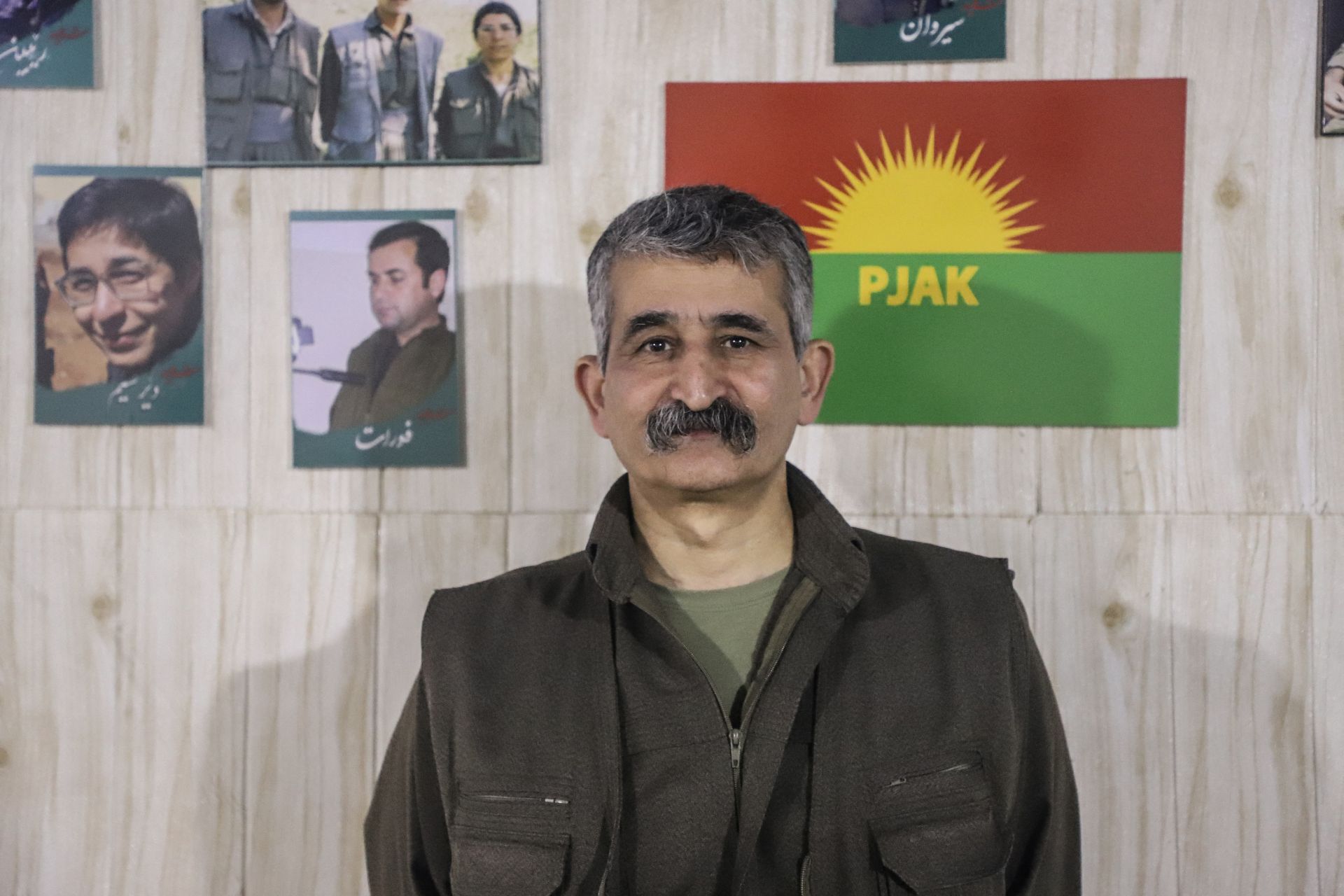
Mazlum Haftan, commander in the Kurdish Iranian armed faction, the Party of Free Life of Kurdistan (PJAK), poses for a photograph near the Iraqi border with Iran in Iraq's northern autonomous Kurdish region on February 26, 2026. ©SHWAN MOHAMMED / AFP
The United States has held discussions with Iranian Kurdish armed groups about the possibility of launching attacks against Iranian security forces in the country’s western regions, according to multiple sources familiar with the talks.
The discussions, first reported by Reuters and confirmed by several media outlets, come as the U.S.-Israeli military campaign against Iran enters a new phase following the reported killing of Supreme Leader Ali Khamenei and several senior Iranian officials.
According to the sources cited by Reuters, Kurdish militias based along the Iran-Iraq border in the semi-autonomous Kurdistan Region of Iraq have been consulting with U.S. officials in recent days about whether and how such an operation could take place.
The goal would be to weaken Iranian security forces in the country’s western provinces and potentially create space for domestic unrest or a broader uprising against the Islamic Republic.
Kurdish Groups Seek U.S. Support
The Iranian Kurdish coalition, composed of several opposition groups operating near the border with Iraq, has reportedly been training for a possible offensive while U.S. and Israeli forces continue to strike Iranian military targets.
Two sources told Reuters that Kurdish factions have requested U.S. military assistance, including weapons, and are discussing potential support from the CIA.
CNN previously reported that American intelligence officials had been exploring options for cooperation with the Kurdish groups, while Axios said U.S. President Donald Trump recently held a call with senior leaders of Iraq’s Kurdistan Region.
However, sources said no final decision has been made on whether the operation will proceed or when it might take place.
U.S. officials have not publicly confirmed the discussions. The CIA declined to comment, while the White House and Pentagon did not immediately respond to requests for clarification.
In the Iraqi mountains near Iran, an exiled Kurdish Iranian commander told AFP that whether or not the U.S. launches strikes on Iran, he will still seek regime change to secure the Kurds' right to self-determination.
Iraq's autonomous Kurdistan region has long been a haven for several Kurdish Iranian armed factions, which have repeatedly faced cross-border strikes from Iran. "We cannot take the side of either the Americans or the Iranians. Our cause is different... our goal is democratic change in Iran, a democracy that will benefit the Kurdish people," said Mazloum Haftan, a senior commander in the Party of Free Life of Kurdistan (PJAK).
Operation Could Require Major U.S. Support
Any Kurdish operation inside Iran would likely require significant logistical, intelligence, and military support from Washington, according to analysts and officials familiar with the situation.
U.S. forces already operate from two bases in Erbil, in Iraqi Kurdistan, which support the international coalition against ISIS.
According to sources cited by CNN, the potential strategy would involve Kurdish armed groups confronting Iranian security forces along the border region, thereby creating an opportunity for civilian protests or unrest inside Iranian cities.
The Iranian Kurdish groups vary widely in size, organization, and battlefield experience, raising questions about their ability to sustain a prolonged fight inside Iran.
Regional Risks and Geopolitical Fallout
A Kurdish-led uprising in western Iran could have broader regional consequences.
Analysts warn that it could embolden other separatist movements, particularly among Iran’s Baluch minority, whose militants have longstanding ties with insurgent networks in neighboring Pakistan.
Such developments could complicate relations with regional powers.
Pakistan has historically opposed any moves toward Baluch independence, while Turkey, which remains highly sensitive to Kurdish militant activity near its borders, is unlikely to support the arming of Kurdish groups operating in the region.
Ankara has long battled the Kurdistan Workers’ Party (PKK) and has warned against expanding Kurdish armed movements across the Middle East.
Escalation as War Intensifies
The talks come amid a rapidly escalating confrontation between Iran and the United States and Israel.
Iran’s Islamic Revolutionary Guard Corps has reportedly already targeted Kurdish positions near the Iraqi border, including a drone strike earlier this week.
While Washington has not confirmed direct involvement in any Kurdish military planning, the discussions suggest that the conflict with Iran could increasingly expand beyond airstrikes into potential ground-based proxy operations.
For now, officials say the proposal remains under consideration.
But if implemented, it could mark one of the most significant attempts to destabilize Iran from within in decades.
Read more

Comments