- Home
- Middle East
- Iran’s Revolutionary Guards Claim “Full Control” of Strait of Hormuz as Oil Traffic Plunges
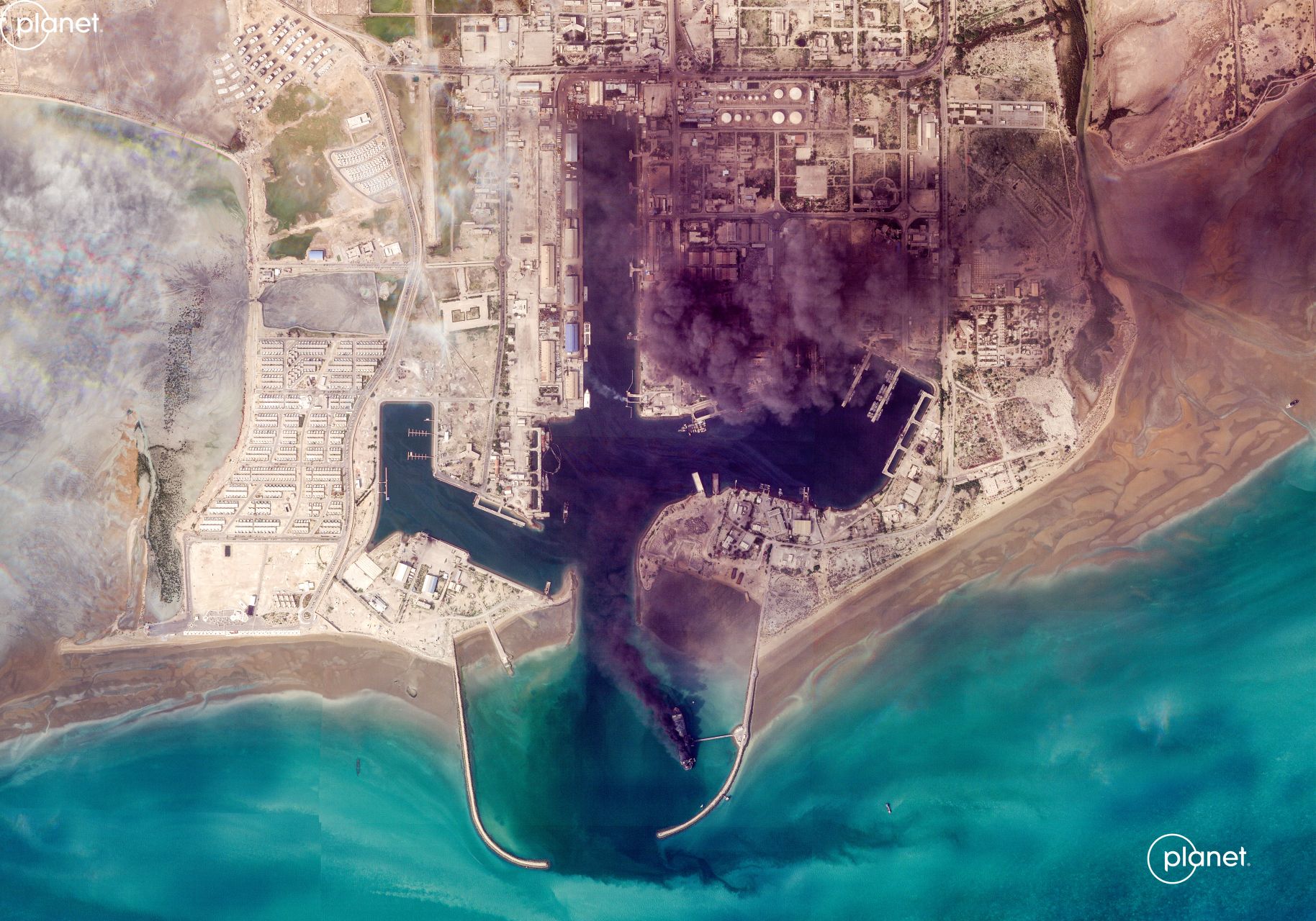
This handout satellite image taken by 2026 Planet Labs PBC on March 2, 2026 shows smoke billowing following an explosion from the port of Bandar Abbas along the strait of Hormuz. ©- / 2026 PLANET LABS PBC / AFP
Iran’s Islamic Revolutionary Guard Corps (IRGC) announced Wednesday that it has taken “full control” of the Strait of Hormuz, the critical maritime chokepoint through which a significant share of the world’s oil supply passes.
According to Iran’s Fars News Agency, senior IRGC naval official Mohammad Akbarzadeh said the strategic waterway at the entrance of the Persian Gulf is now “under complete control of the naval forces of the Revolutionary Guards.”
The claim comes amid the widening regional conflict involving Iran, the United States, and Israel, raising concerns over global energy security and maritime safety.
Vessel hit near Strait of Hormuz
A container ship was struck off the coast of Oman while transiting the Strait of Hormuz on Wednesday, a British maritime security agency reported, as Iran presses its retaliation campaign in the Gulf.
The ship was two nautical miles north of Oman, "transiting eastbound in the Straits of Hormuz," when it was "hit by an unknown projectile just above the water line, causing a fire in the engine room," according to the United Kingdom Maritime Trade Operations (UKMTO).
It was the fourth reported attack in regional waters within 24 hours, after projectiles struck on or near three other vessels off the Emirati and Omani coasts.
Oil Traffic Drops Dramatically
Data cited by CNN, based on tracking from S&P Global Commodities at Sea, suggests a dramatic slowdown in traffic through the strait. Only two oil and chemical tankers reportedly passed through the waterway on Monday, far below normal levels.
Under typical conditions, roughly 60 vessels transit the Strait of Hormuz daily, carrying about 20 percent of global oil flows, making it one of the most strategically important shipping lanes in the world.
Escalation at Sea
Iran’s Revolutionary Guards also said that more than 10 oil tankers that ignored warnings not to transit the Strait of Hormuz were struck by projectiles and caught fire, according to statements carried by Iranian media.
Mohammad Akbarzadeh, a political adviser to the IRGC navy, said Iran had effectively declared a “transit ban” through the strait, warning that the waterway from “beginning to end” was now operating under wartime conditions.
He said the Guards had broadcast a message to global maritime navigation networks cautioning that ships entering the area could be damaged by missiles or drones and should avoid the corridor.
Insurance and Risk Driving the Slowdown
Energy analysts told CNN that Iran may not need to physically close the strait to disrupt shipping. Instead, insurance companies and shipping operators appear to be avoiding the route due to rising security risks, effectively reducing maritime traffic through the corridor.
Without insurance coverage, tanker operators face potentially massive financial losses if vessels are attacked or cargo is destroyed.
U.S. Signals Possible Naval Escorts
The situation has prompted responses from Washington.
U.S. President Donald Trump said Tuesday that the U.S. Navy could escort oil tankers through the Strait of Hormuz “if necessary,” signaling that the United States may intervene to maintain freedom of navigation.
Trump announced that he had instructed the U.S. International Development Finance Corporation to provide political risk insurance and financial guarantees for maritime trade moving through the region.
“Whatever happens, the United States will guarantee the free flow of energy to the world,” Trump wrote on social media, adding that U.S. naval forces could begin escorting oil tankers through the Strait of Hormuz if necessary.
Any attempt by Iran to assert military control over the strait could trigger a broader international response, as the waterway is widely considered vital to global energy markets.
Strategic Chokepoint
The Strait of Hormuz, located between Iran and Oman, is the narrow maritime gateway linking the Persian Gulf to the Gulf of Oman and the Arabian Sea. Because of its geographic position, even limited disruptions to traffic through the strait can rapidly affect global oil prices and international trade flows.
With tensions escalating across the Middle East, analysts warn that the waterway could become one of the most sensitive flashpoints in the current conflict.
For now, it remains unclear whether Iran’s declaration reflects actual operational control over the strait or a strategic signal aimed at deterring Western intervention.
Read more


Comments