- 30
- Jan.
- 2026
Op-edFrom Armed Deterrence to Durable Peace: Rethinking Shiite Security in Lebanon
Read : 5 minute(s) A A A
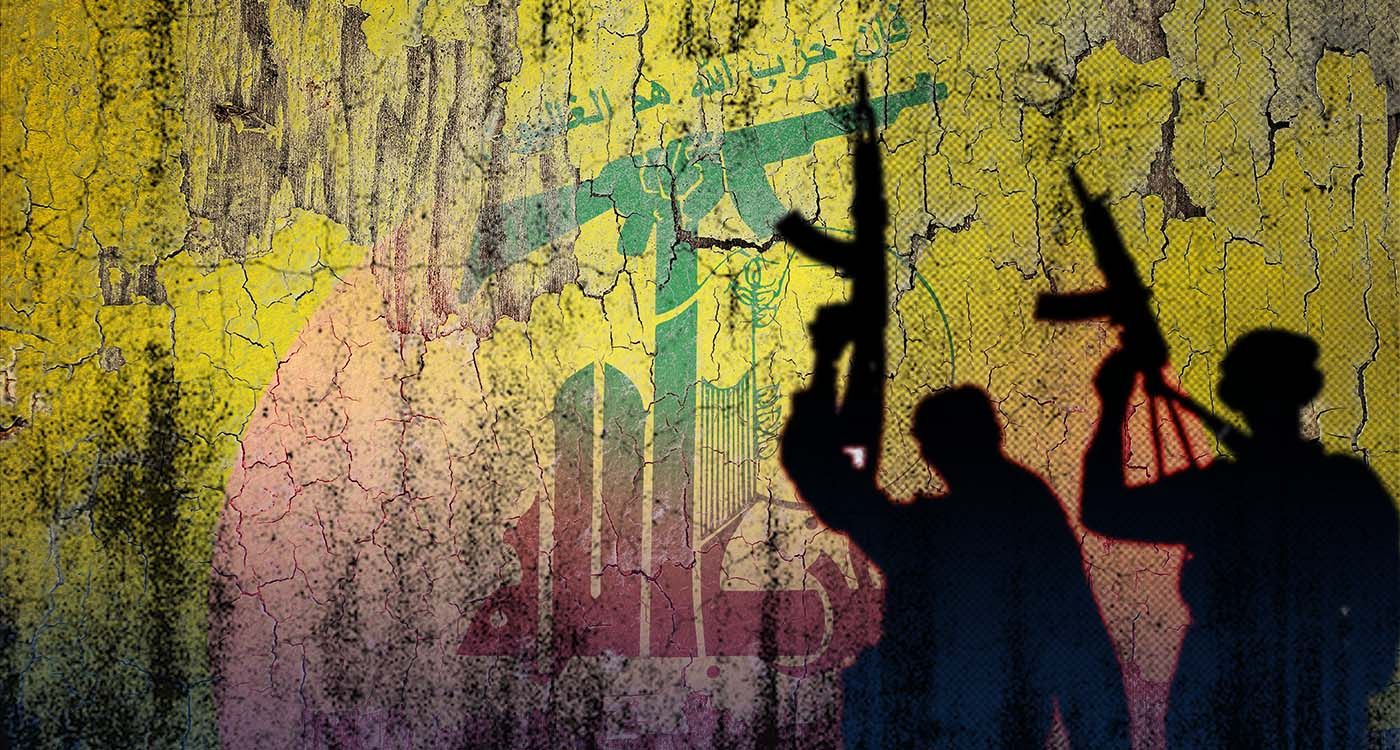
Despite failing to instill ideological allegiance to Iran's Wilayat al-Faqih among Lebanon's Shia, Hezbollah has succeeded in forging a sense of collective belonging to Iran’s political project. The party achieved this more consequential outcome by recasting its weapons as a political doctrine and overarching identity, portrayed as superior to all other affiliations.
From its inception, Hezbollah has consolidated control over the Shia community through the logic of force, built upon a governing equation of “threat and protection.” For years, the party invested heavily in a fear-based discourse framed around the central claim that Israel poses an existential threat to Shia. Hezbollah, under the banner of “resistance,” positioned itself as the sole guarantor of their security and survival.
Through this approach, Hezbollah became more than a military actor. It actively reshaped political and social consciousness within the Shia community, making its weapons the core reference point for identity and decision-making, anchored to a transnational political project led by Tehran.
The equation of “threat and protection” became a foundational pillar of Hezbollah’s political doctrine and was used to justify its military intervention in Syria in defense of Bashar al-Assad’s regime. As Hezbollah casualties mounted in Syria, a pressing question began to surface within the Shia milieu: Why are our young men being sent to die fighting there?
To confront this dilemma, Hezbollah revived the same binary logic, repackaging it through a narrative of preemptive defense. The party argued that the war in Syria was not about protecting Assad, but about confronting extremist groups, most notably ISIS, in order to prevent the threat from spilling into Lebanon. Fighting in Syria was thus portrayed as a security necessity to protect Lebanon in general, and Shia in particular, from an inevitable danger.
However, Hezbollah’s severe defeat in its most recent war with Israel dealt an unprecedented blow to this narrative within Shia public consciousness. For the first time, the party appeared openly vulnerable and exposed, as the scale of Israeli intelligence penetration into its organizational structure, at the highest levels, became evident. This perception deepened with each Israeli assassination of senior Hezbollah figures, culminating in the killing of Secretary General Hassan Nasrallah, which sent shockwaves through the party’s support base.
With this paradigm shift, Hezbollah’s “threat and protection” equation vis-à-vis Israel effectively collapsed. Since the end of the 2024 War, Israel has continued its strikes against Hezbollah positions and figures, exposing the party’s deterrence as hollow while revealing a stark gap between rhetoric and reality.
Faced with this unraveling, Hezbollah sought to reproduce the same equation in a new form, this time centered on Syria’s new leadership under Ahmad Al-Sharaa. The party began promoting the prospect of Sharaa’s forces entering Lebanon as a direct threat to Shia, arguing that continued adherence to its weapons is necessary to protect the community from “Islamist extremism.”
Clashes in Syria between Sharaa’s forces and Alawites, Druze, and Kurds were used to reinforce this message. The fighting was framed as a cautionary tale that what happened to minorities in Syria could be repeated in Lebanon with the Shia. In doing so, Hezbollah has attempted to rebuild the legitimacy of its weapons and revive the logic of “threat and protection” by invoking a new threat.
Regardless of whether the dangers Hezbollah promotes are real or not, the more fundamental question is whether the party’s arsenal can actually protect Lebanon’s Shia, or is there a more viable and less costly alternative?
Empirical realities reveal that the weapons have failed to fulfill their claimed function. They neither protected Shia nor deterred Israel from launching a devastating war that resulted in the near-total destruction of dozens of border villages, the displacement of hundreds of thousands of Shia civilians, and the occupation of Lebanese territory. This failure was compounded by Hezbollah’s heavy military losses, with estimates indicating that nearly 80 percent of its military capabilities were destroyed in the latest conflict.
The situation has grown even more complex following the collapse of the Assad regime, which severed Hezbollah’s primary military supply line. Ironically, Syria, long portrayed as a strategic lifeline for Hezbollah, is now framed by the party’s own discourse as a source of danger threatening Shia. This convergence of setbacks has militarily exhausted Hezbollah and raises serious questions about its ability to protect itself, let alone the Shia community.
Against this backdrop, an alternative path emerges, one that could offer genuine stability for Lebanon and Shia in particular: peace between Lebanon and Israel. Such peace would end the transformation of southern Lebanon into a perpetual battlefield, historically exploited by multiple actors, from Palestinian factions to the Syrian regime and later the Iranian project, while Shia bore the human and economic costs of continuous war.
Peace would release Lebanon’s south from a vicious cycle of danger, tension, and destruction. It would allow for lasting stability, opening the door for a broad economic revival in Shia areas through economic zones, jobs creation, and the development of the region’s considerable tourism potential.
This option gains strategic weight given that a Lebanese-Israeli peace agreement could pave the way for a defense pact with the U.S., a possibility publicly raised by Senator Lindsey Graham. Such an arrangement could provide Lebanon, and Shia in particular, with a genuine security umbrella against extremist threats by strengthening the Lebanese Armed Forces and enhancing national defense capabilities.
Hezbollah invokes external threats to justify its arms, yet its armed capacities cannot meet these very threats. Instead, Hezbollah uses its arms to dominate the Shia it claims to defend, binding them to a failed, weapons-centered ideology. In contrast, peace between Beirut and Jerusalem offers credible guarantees of security and stability, as well as a long-awaited gateway to new economic and political horizons for both Shia and Lebanon as a whole.

Comments