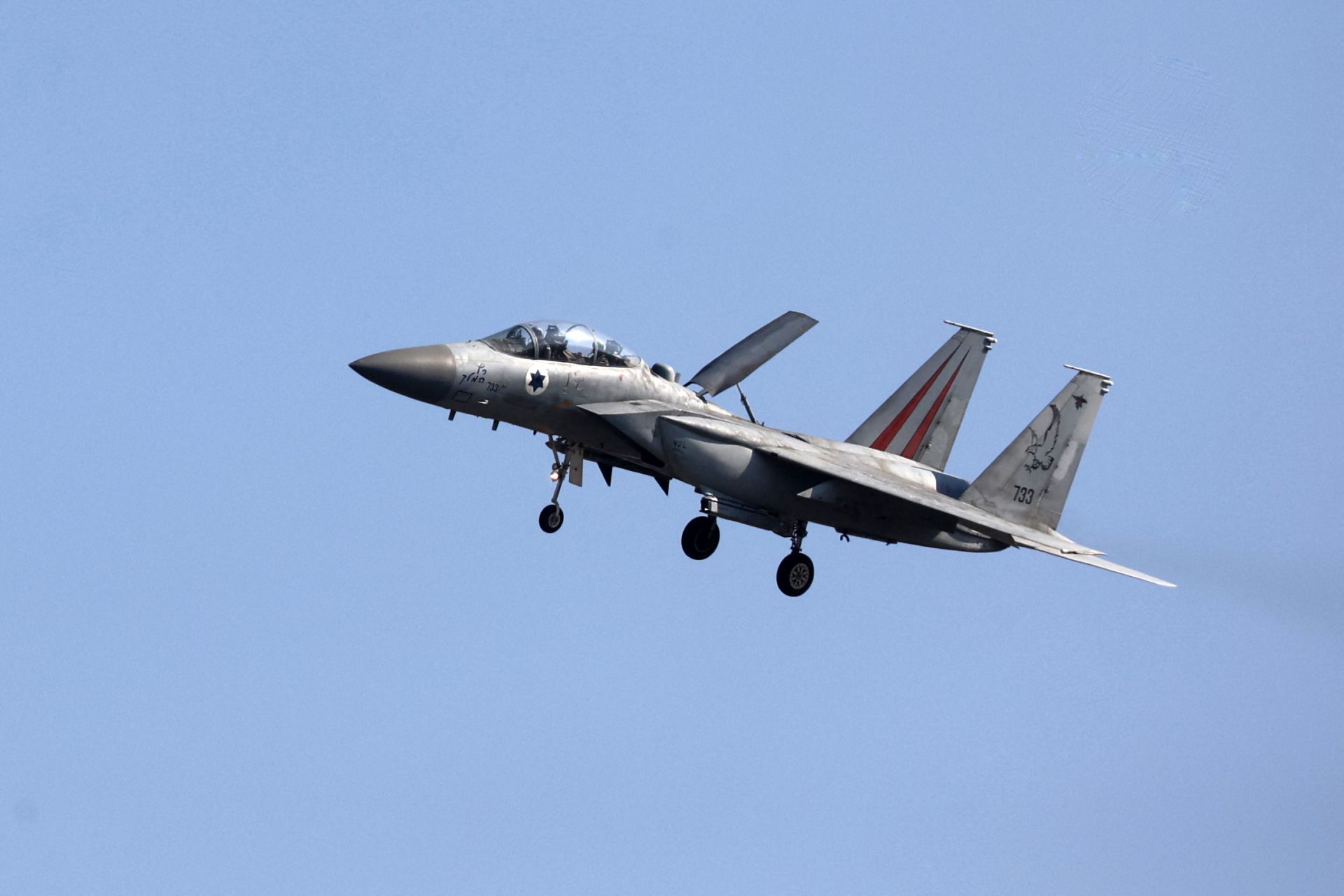
Israel carried out a significant military escalation in southern Lebanon late Sunday and early Monday, launching a series of airstrikes it said targeted Hezbollah military infrastructure, as tensions along the border continued to rise.
At dawn on Monday, Israeli fighter jets struck the Aqmata–Louaize heights in the Iqlim al-Touffah region. Earlier, automatic gunfire was reported from an Israeli military position in Bayad toward the outskirts of the town of Blida, according to local sources.
Reports of an Israeli ground incursion toward Mays al-Jabal were later denied, with the lights observed by some residents attributed to routine Israeli patrols along a military road running parallel to the technical barrier.
Local sources said Israeli warplanes carried out fourteen heavy airstrikes in three successive waves late Sunday. Ten strikes hit the Maydoun and Jbour heights, two targeted Wadi Barghaz, and two others struck the Kassaret al-Arouch area between the Rihan and Louaize heights.
The strikes sparked widespread fires in mountainous and wooded areas of southern Lebanon. Lebanese Civil Defense teams struggled to reach several of the affected sites due to rugged terrain, nighttime conditions, and ongoing security risks. Firefighting operations were still underway hours after the bombardment.
Some Lebanese media outlets reported the suspected use of GBU-type bunker-busting munitions, also known as seismic bombs, designed to destroy fortified and underground targets. The Israeli military has not officially confirmed these reports.
Israeli claims
In a series of statements, Israeli military spokespeople said the strikes targeted weapons depots, military infrastructure, and a complex used by Hezbollah’s elite Radwan Force. According to Israel, the sites were part of efforts to rebuild Hezbollah’s military capabilities and prepare attacks against Israeli forces and territory.
The Israeli army said the targeted facilities formed part of a concealed military network, including weapons storage and operational installations allegedly located within or near civilian areas. It described these activities as a violation of existing security arrangements between Israel and Lebanon, vowing to continue operations “for as long as necessary” to address perceived threats.
In a separate announcement, Israeli military spokesperson Captain Ella said a Hezbollah artillery commander was killed in a targeted strike in the village of Arzoun, alleging the individual operated under civilian cover while holding an active military role.
Lebanon turns to the UN
Meanwhile, Lebanon has filed a formal complaint with the United Nations, submitting a document to the Security Council and the secretary-general detailing 2,036 alleged Israeli violations between October and December 2025.
The Ministry of Foreign Affairs requested that the complaint be circulated to all UN member states, stressing Israel’s alleged failure to comply with UN Security Council Resolution 1701 and the ceasefire declaration. The letter called on the Security Council to pressure Israel to withdraw its forces and halt what it described as ongoing aggression.
The Lebanese government reaffirmed its commitment to extending state authority over weapons and pursuing negotiations to end the occupation, while adhering to the 1949 Armistice Agreement and the 2002 Arab Peace Initiative.


Comments