- Home
- Middle East
- After Maduro: The Challenge of Dismantling Hezbollah in Venezuela
- 26
- Jan.
- 2026


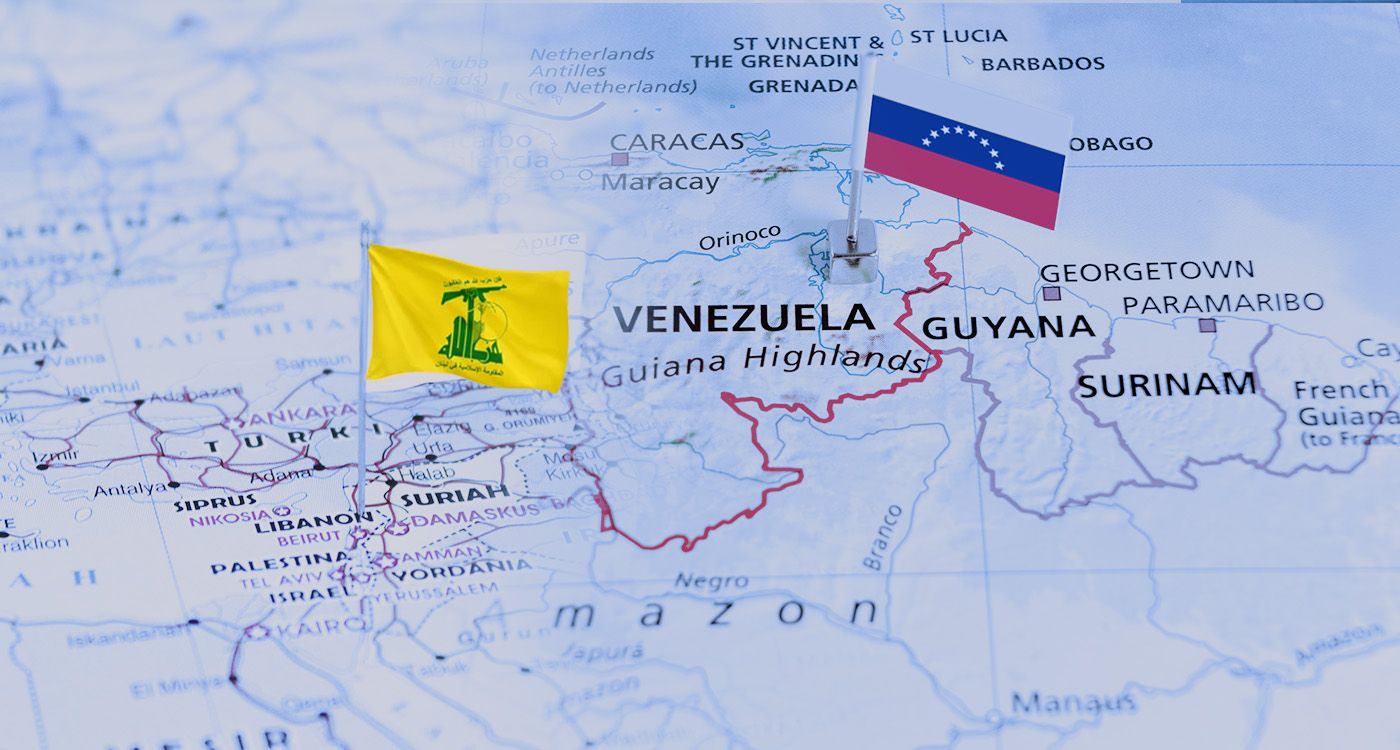
After U.S. special forces captured Venezuelan leader Nicolás Maduro in Caracas on January 3, Secretary of State Marco Rubio vowed that Washington would uproot Hezbollah and Iranian influence in the South American country.
“We are not going to have a country like Venezuela in our own hemisphere, in the sphere of control and the crossroads for Hezbollah, for Iran…. That’s just not going to exist,” Rubio said in a January 4 interview on CBS’ Face the Nation.
He said that the U.S. would continue its military and diplomatic pressure on Caracas to ensure the country would “no longer cozy up to Hezbollah and Iran.”
But after the capture of Maduro, a key question remains over what exact steps the Trump administration will now take to dismantle Hezbollah’s presence in Venezuela.
Limits of Maduro’s Ouster in Disrupting Hezbollah’s Presence
Real change to Hezbollah’s presence in Venezuela will require much more than Maduro’s ouster from power, according to former U.S. Department of the Treasury official Matthew Levitt.
“Removing Maduro alone doesn't create anything new vis-à-vis Hezbollah, unless it involves a change of the regime or somehow discernible change in regime behavior,” Levitt told This is Beirut.
Such a shift would only happen if Washington gained significant leverage to force meaningful changes in how the Venezuelan regime operates, the former U.S. Treasury deputy assistant secretary for intelligence and analysis added.
“There are many countries in South America that are not necessarily close to Hezbollah, but don’t crack down on Hezbollah activity because it is costly. They don’t want to start a fight with the local pro-Hezbollah community,” he explained.
The Venezuelan government could face similar challenges if it tried to confront Hezbollah directly, making such a move unlikely unless the U.S. can exert stronger leverage to force action.
Even though further developments are required, Maduro’s arrest still represents a critical step toward dismantling networks of illicit actors, said Hagar Chemali, a former U.S. Treasury Department spokesperson and geopolitical risk expert.
Maduro’s removal, Chemali said, “will hit Hezbollah in terms of however much financial flow they had coming from this corner of the world.”
While Venezuela was not the militant group’s largest source of income, she explained, its importance has grown as Iran’s own economic crisis deepens, “especially given that the Iranian regime is crumbling and literally has no money.”
As Iran’s financial capacity weakens, Chemali said, “Hezbollah will have to rely more and more on the business networks it has set up for itself, some of which are in Latin America,” making Maduro’s ouster particularly consequential.
Hezbollah’s Footprint in Venezuela
Venezuela has served as a sanctuary for Hezbollah to evade sanctions, a hub for operations and money laundering, and a base for its transnational criminal and drug-trafficking networks.
Hezbollah partners with Venezuelan and regional drug trafficking networks to traffic cocaine through the country to international markets in collusion with Venezuelan officials. In 2011, U.S. investigators traced ties between a senior Hezbollah official and Lebanese drug kingpin Ayman Saied Joumaa.
The U.S. Drug Enforcement Administration (DEA) said Joumaa headed one of the largest and most sophisticated international drug smuggling and money-laundering networks involving Venezuela and Colombia ever encountered by the agency.
U.S. sanctions and indictments have exposed networks involving Hezbollah operatives who laundered drug trafficking proceeds and transferred funds to the group’s global budget. These operations generated estimated revenues in the tens of millions of dollars per year.
Venezuela has also become a key financier of Hezbollah, using gold reserves to bypass sanctions. In 2023, a seizure order signed by then-Israeli Defense Minister Yoav Gallant revealed a smuggling ring that moved Venezuelan gold to Iran on sanctioned flights in exchange for oil and fuel, with some proceeds diverted to Hezbollah’s financial network.
Hezbollah has established a presence in strategic locations across Venezuela, embedding itself within local business networks on Margarita Island and the Paraguaná Peninsula, coastal hubs with sizable Lebanese diaspora communities.
Levitt said that Hezbollah exploited the large Lebanese diaspora community in Venezuela, relying on willing supporters as well as “people who are strong-armed into doing so through mafia-style shakedowns and intimidation,” including pressure on their relatives in Lebanon.
The Venezuelan government has long turned a blind eye and, in some cases, facilitated Hezbollah’s activities, he said. “From engaging in small-arms training, to procuring the equivalent of Social Security cards or passports, to allowing Hezbollah to raise funds through illicit financial practices in Venezuela,” Levitt said, the government has enabled these activities.
In October 2025, former U.S. Treasury official Marshall Billingslea told the Senate that the Maduro regime provided Hezbollah a safe haven, issuing thousands of passports to suspected operatives and allowing a training center on Margarita Island.
U.S. Policy Options in Venezuela
The Trump administration should pursue a range of policy actions to reduce Hezbollah’s presence in Venezuela, according to Levitt, who said that many prominent Venezuelan officials are widely believed to be close to the group.
“You would want to remove Hezbollah supporters in the Venezuelan government from their positions,” he explained.
Levitt argued that the Venezuelan government would need to begin actively arresting, deporting, and putting individuals on trial for illicit financial activities, including laundering the proceeds of narcotics trafficking.
“They need to stop looking the other way when Hezbollah asks for passports for its operatives and when Hezbollah supporters are receiving small-arms training on Venezuelan army bases,” he stressed.
“These changes are not rocket science,” Levitt added.
The bigger question is whether any of these changes can happen without a broader shake-up of the Venezuelan regime. “And the answer to that is I highly doubt it,” he said.
Geopolitical Window of Opportunity
The U.S. capture of Maduro came as a geopolitical window of opportunity opened up to counter Iran’s influence, Chemali said. “Maduro has fallen, and it happens to be at the same time as the protests unfolding in Iran,” she explained.
Protests that erupted in Iran on December 28, 2025, spread across the country, posing one of the most serious challenges to the Islamic Republic in decades. Iranian authorities reacted with lethal force and a near-total internet blackout, while publicly blaming foreign interference for the violence. As many as 30,000 people may have been killed across Iran during a two-day crackdown on January 8 and 9, with the total toll likely higher.
“The Iranian regime has never been this weak,” Chemali said. Iran’s economic struggles, combined with the ouster of a nefarious actor like Maduro, undermine not only Tehran’s financial networks but also the perception of its strength, she explained.
Such developments, Chemali said, can embolden people to protest and defect, a dynamic she hopes will also be reflected in Lebanon against Hezbollah.
“With the Iranian regime the way it is and Maduro now removed, it's all imploding at once, and that's why you have this extra window of opportunity to target nefarious actors,” including Hezbollah, she said.
However, Levitt cautioned that achieving sustainable change in Iran would require multiple, coordinated steps, adding that meaningful pressure on Tehran requires more than removing Ayatollah Ali Khamenei from power, mirroring Washington’s action in Venezuela.
“If all Trump does is target the Ayatollah and leave the rest of the regime intact, this would not be an effective use of tools,” Levitt said.
Read more
Comments