- Home
- Middle East
- After Khamenei’s Killing, Will Hezbollah Enter the War?
- 01
- Mar
- 2026


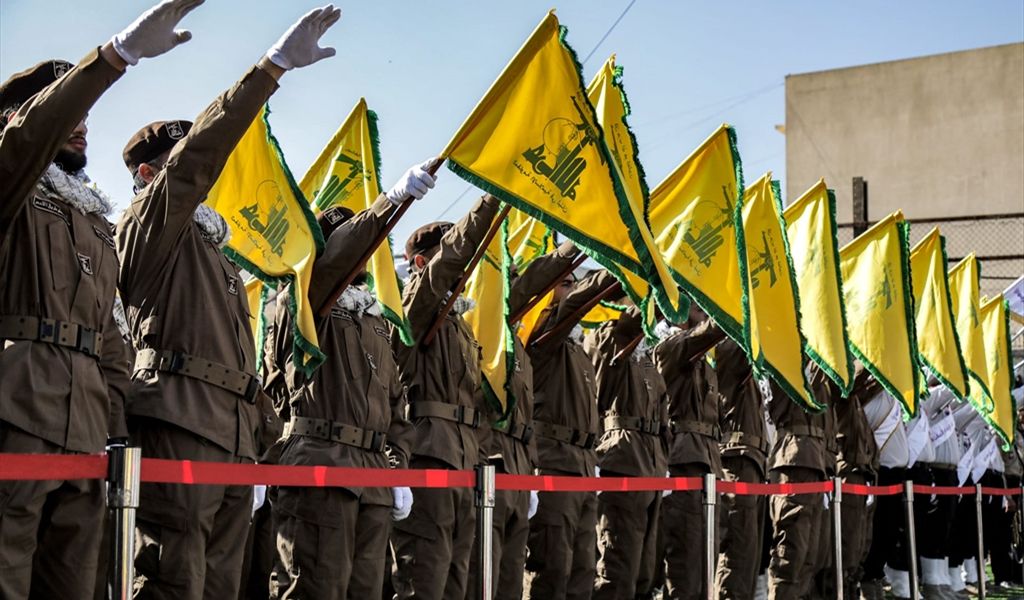
Le centre de recherches israélien Alma révèle l'existence d'un vaste réseau de tunnels du Hezbollah. ©Al-Markazia
Israeli officials claim that Iran’s Supreme Leader, Ayatollah Ali Khamenei, has been killed in a joint U.S.–Israeli strike, shifting global attention toward Lebanon amid fears of regional escalation. The question now dominating security circles is whether Hezbollah will enter the confrontation in support of Tehran.
Analysts have debated for weeks whether Hezbollah might open a northern front if tensions between the U.S., Israel, and Iran escalate into direct conflict. The reported targeting of Khamenei dramatically alters that equation.
Hezbollah’s Declared “Red Line”
Earlier this week, a senior Hezbollah official stated that the group would not intervene militarily in the event of “limited” U.S. strikes against Iran. The official, speaking on condition of anonymity, indicated that Hezbollah’s threshold for intervention had not been automatically triggered by contained military action.
However, the same official warned that any direct targeting of Iran’s Supreme Leader would constitute a “red line.”
That distinction now carries significant weight.
Hezbollah’s Statement: Political Alignment, No Military Declaration
On Saturday, Hezbollah issued a strongly worded statement condemning what it described as U.S.-Israeli “aggression” against Iran. The group reaffirmed its full solidarity with Tehran and defended Iran’s right to develop peaceful nuclear capabilities and defensive missile systems.
In an interview with This Is Beirut, Ali Al-Amin, founder of the opposition outlet Janoubia, said, “Hezbollah’s statement gave the impression that it stands politically with Iran, but it did not state that it would enter the confrontation militarily. That distinction is very important.”
The statement framed the confrontation as part of a broader project aimed at destabilizing the region and weakening states that resist Western influence.
Notably, the statement did not announce military action.
The language was ideological and political, not operational. There was no mobilization order, no declaration of battlefield engagement, and no explicit commitment to open a northern front.
Military Reality: Can Hezbollah Shift the Balance?
Al-Amin argued that Hezbollah’s capacity to intervene meaningfully is far more limited than in previous confrontations.
“Hezbollah suffered significant setbacks during the Gaza support war and the period that followed,” Al-Amin said. “The balance of power today is not what it was before.”
He noted that while Hezbollah may retain the technical capability to launch a limited number of missiles, such action would not alter the regional military balance. “Even if Hezbollah were to launch 10 or 30 missiles, it would change nothing strategically,” he said. “But the consequences would be severe.”
Al-Amin emphasized that Israeli strikes over recent months have targeted Hezbollah’s long-range infrastructure. South of the Litani River remains under Lebanese Army control under existing international arrangements, restricting operational freedom. The Bekaa Valley and Beirut’s southern suburbs remain under intense surveillance, and Israel has demonstrated its ability to strike with precision.
“Hezbollah’s ability to mobilize heavy assets without detection is extremely limited,” Al-Amin said.
Domestic Constraints and Strategic Risk
Beyond military capacity, Hezbollah faces domestic political constraints. Lebanese Prime Minister Nawaf Salam has publicly warned against dragging the country into “adventures” that threaten national security. President Joseph Aoun also stressed that shielding Lebanon from external conflicts is a national priority.
Diplomatic messaging from Western officials suggests that Israel’s posture toward Lebanon remains conditional: if Hezbollah does not intervene, Lebanon itself may not be targeted. For Hezbollah, the cost-benefit calculation is therefore severe.
“Hezbollah’s core legitimacy has always been built on its ability to provide protection,” Al-Amin explained. “Entering a confrontation that exposes its own environment to large-scale destruction contradicts that logic.”
He added that any intervention that leads to strikes on Lebanese infrastructure, such as the airport or energy facilities, would generate significant internal backlash. “Even Hezbollah’s own support base does not want a suicidal operation,” Al-Amin emphasized.
Amin explained that today, without the Syrian regime and without substantive regional backing, “there is no chance Hezbollah can provide meaningful military support to Iran.”
“If Hezbollah intervenes, it would be burning its remaining strategic cards,” Al-Amin said. “It cannot fundamentally alter the outcome for Iran, but it would expose Lebanon to major destruction.”
Read more
Comments