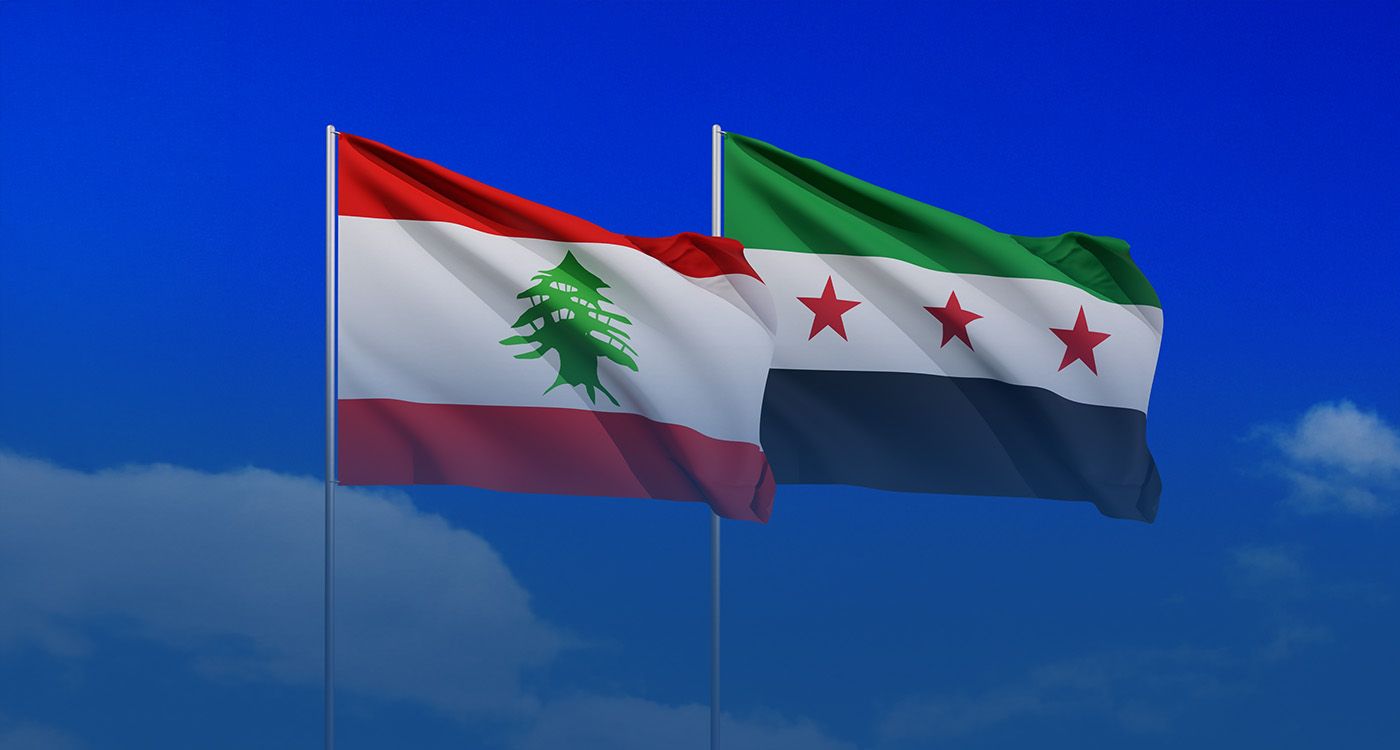
Since the collapse of Bashar Assad’s regime in December 2024, Lebanon and Syria have been in the process of rebuilding trust and repairing relations. The challenging endeavor, supported by Saudi Arabia with Washington’s backing, follows decades of recriminations and Lebanon’s former subjugation under Syria’s Baathist rule.
Syria did not formally recognize Lebanon’s sovereignty until 2008, three years after mass protests over the assassination of former Prime Minister Rafik Hariri forced Syria to withdraw its military from Lebanon. Even though diplomatic ties at the time were technically established, relations have remained deeply fraught up until the end of Assad’s rule in Syria.
“Ties between the two countries for the past five decades have been unequal… now, we have an opportunity to rebuild these relations on new foundations of equality, mutual respect, and parity,” Deputy Premier Tarek Mitri, Beirut’s pointperson for talks with Damascus, said in October 2025.
As Lebanon and Syria seek rapprochement, they must first resolve outstanding issues such as the presence of Assad-era officers in Lebanon, border demarcation, the fate of Syrian detainees in Lebanese prisons, and the repatriation of Syrian refugees in Lebanon.
Assad-era Officers in Lebanon
In recent weeks, Syria’s new leadership has grown increasingly uneasy about alleged plots by former Assad-era officers to destabilize the country’s Alawite-populated coastal region, the heartland of the former regime.
A top Syrian officer visited Lebanon in mid-December 2025 to ask Lebanese authorities to hand over 200 officers, according to Reuters, which reported that Lebanon had become a “hub for insurgent plotting.”
Afterward, the Lebanese Armed Forces (LAF) and other security services conducted raids in northern and eastern Lebanon in search of Assad-era officers, United Press International (UPI) reported. The searches targeted Alawite-populated villages as well as camps hosting Syrian Alawite refugees, according to the report, including in Hermel, a pro-Hezbollah town near the border.
In a January 11 interview with Télé Liban, President Joseph Aoun denied that senior Assad-era officers were present in Lebanon, citing the investigations conducted by the LAF’s intelligence directorate in its raids.
The Lebanese president said that while former junior-ranking Alawite officers were found in Lebanon, no connection was found between them and any plots against Syria’s new rulers. “We are in contact with the Syrian government and have told officials there that if they have any information, they should inform us,” Aoun said.
Meanwhile, Mitri said on January 13 that his country’s security services were working to “ensure that Lebanon is not used for any military action that would harm Syria,” denying that Damascus had sent Beirut a list of wanted former officers.
“No one—Syrian or non-Syrian, whether from the former regime’s officers or its members—can endanger Syria’s security and stability. Anyone who threatens Syria also threatens Lebanon,” he added.
Amid the ongoing investigation, Lebanese daily Nidaa al-Watan reported January 19 that Syria had asked Lebanon for the handover of officers, among them prominent figures from Baathist-era security services residing in Beirut and its suburbs, and Hermel.
The newspaper published the names of five senior officers and their whereabouts, saying that they are moving about freely and openly.
Mutual Distrust and Diverging Priorities
A lingering sense of distrust on both sides of the border has been a key obstacle to building relations between the two neighbors, according to David Wood, the International Crisis Group’s (ICG) senior analyst on Lebanon.
“While it is clearly in the interest of both Lebanon and Syria to have better relations than they had before, the two parties have been engaged in positive rhetoric but no action. In fact, mutual distrust is the main stumbling block slowing down the process,” Wood told This is Beirut.
Moreover, both countries have been confronting more pressing issues than their diplomatic ties with each other. In Lebanon, the government is seeking to disarm Hezbollah and end ongoing Israeli military actions and its occupation of hilltops along the border. “Though it is equally important to normalize relations, it is not the main priority for the moment,” the ICG analyst noted.
Additionally, Syria and Lebanon have different priorities in their approach to fixing ties. Syria’s focus is the release of its nationals from Lebanese prisons, who it considers political prisoners, whereas Beirut’s main concern is securing its borders. “It is not as simple as to hand over prisoners because Damascus requested it,” Wood argues.
“This could be considered a miscarriage of justice. It is a judicial issue that should not be politicized,” he said.
The Syrian Network for Human Rights estimates over 2,000 Syrian nationals are detained in Lebanon, making up approximately a quarter of the country’s total prison population. Most of these inmates, some 1,650 individuals, are in pre-trial detention, with many having been held for years without a final verdict.
Saudi newspaper Asharq Alawsat reported January 8 that Damascus and Beirut are hammering out an agreement over 370 convicted Syrian prisoners, while the issue of Syrians in pre-trial detention will be discussed later.
Saudi Role and Border Control
Saudi Arabia has facilitated efforts to resolve the key issue of demarcating and securing the Lebanese-Syrian border, hosting meetings between security officials from both countries in March and July of last year. These yielded an agreement to enhance border control, prevent cross-border tensions, and deepen security coordination.
“One positive development is Saudi Arabia’s role in encouraging the two sides to secure their common border and prevent border clashes between Syrian factions and Shia tribes backed by Hezbollah, particularly in the northern Bekaa Valley,” Sami Nader, director of the Institute of Political Science at Saint Joseph University, told This is Beirut.
Riyadh has treated both governments as partners in the goal of cutting off the supply of Iran’s weapons to Hezbollah, which had been smuggled to Lebanon through a logistics corridor in Syria under Assad’s rule.
Retired Lebanese Army General Khaled Hamade accused the Lebanese government of procrastinating and delaying a border settlement with Syria, under pressure from Hezbollah.
“The border demarcation should have already been initiated since you have a regime in Damascus that recognizes Lebanon’s independence. But once the border is demarcated you have to control it and consequently deprive Hezbollah of smuggling routes,” he said.
“It is more of a political issue than anything else,” Hamade argued.
Lebanon and Syria are just starting the daunting task of rebuilding trust with the support of key stakeholders, including GCC countries, especially Saudi Arabia, the U.S. and EU.
"Lots of things need to be worked on—all of them still at a very preliminary stage," Wood said, noting that "trust is at the base of any process, and this will take time to build."



Comments