- Home
- Middle East
- As Border Threats Evolve, Israel Turns to New Technologies
- 21
- Jan.
- 2026

©This is Beirut
Even though Israel may have militarily weakened Hamas and Hezbollah, it must still contend with increasingly complex and non-traditional security threats along every front, underscoring that today’s borders and battlefields are interconnected in ways that were once unimaginable.
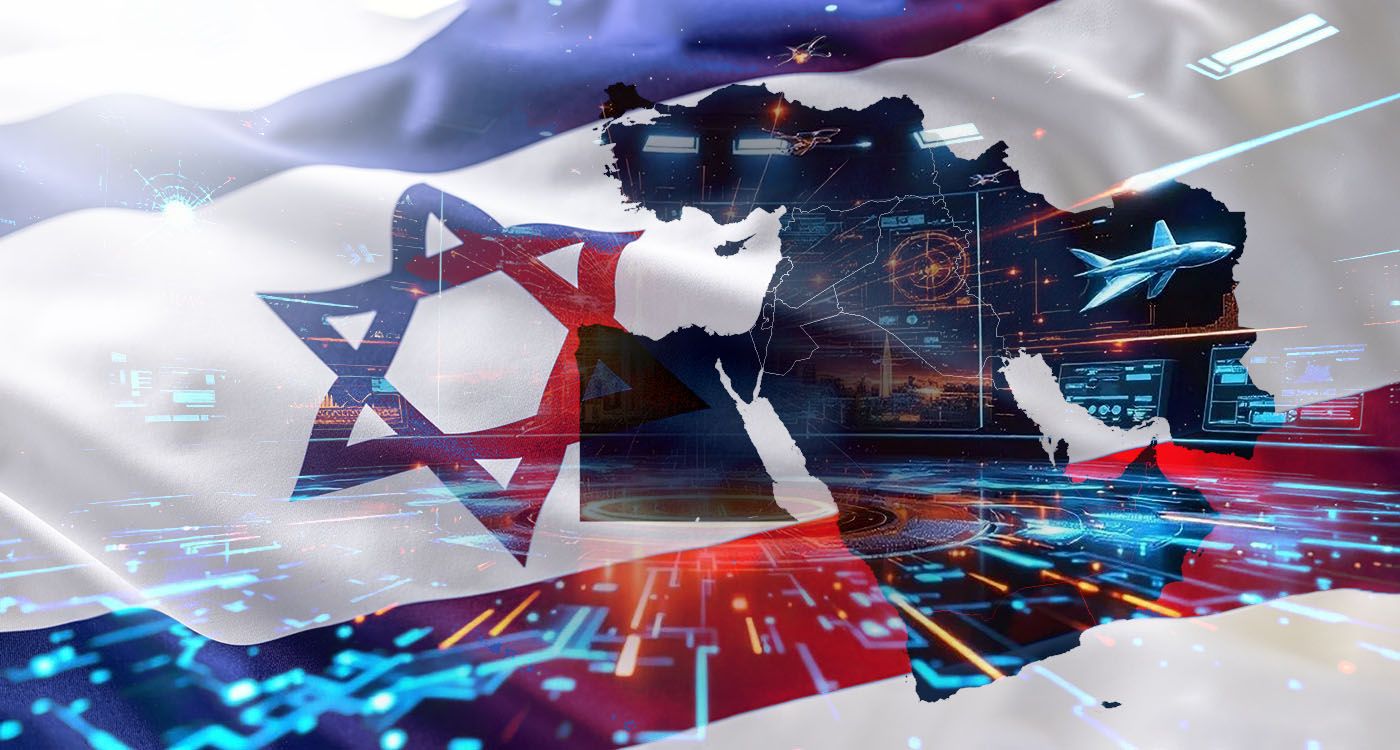
On January 7, Israel Aerospace Industries (IAI) announced that it had completed a series of successful demonstrations of a new border protection solution that integrates state-of-the-art technologies to safeguard Israel’s borders against “a wide range of threats from the air, sea and land.” Following these tests, Israel Defense Forces (IDF) Chief of Staff Lt. Gen. Eyal Zamir said on January 19 that his country was prepared to use “unprecedented offensive capabilities” against multi-front threats.
These statements show that as Israel continues to prepare for a possible new conflict with Iran and Hezbollah, it will need to rely on new technologies to counter the threat of missiles and other forms of attacks.
As if to underline the threats brought up by Zamir, the IDF that same day announced a wave of airstrikes in Lebanon against Hezbollah. “As part of the strikes, the IDF struck military structures used by Hezbollah to conduct drills and training for terrorists and for planning and advancing attacks against IDF troops and Israeli civilians,” the Israeli military said January 19.
At the same time, the IDF was also facing threats in the West Bank, where it said its troops in Hebron in the West Bank were working to “eradicate illegal possession of weapons, and enhance security in the area.”
In southern Israel a new kind of threat has emerged. Smugglers in Egypt are using large drones to move weapons across the border. In many cases, these drones can carry several M-16 rifles. This illustrates how drones have gone from the commercial DJI Mavic types that might be used to photograph weddings to much larger multi-rotor drones that can transport items the size of a suitcase.
These types of drones can be used by criminal gangs or cartels and do not need state backing. The war in Ukraine has shown that the proliferation of drone technology is changing the battlefield. There, armies have gone from using hundreds of drones at the onset of the conflict in 2022 to deploying thousands, or even tens of thousands, a month.
In its statement, IAI said that it was using “advanced, artificial intelligence-based technologies” for seamless communication and connectivity. The Israeli defense giant also touted its electro-optical systems, radars, autonomous vehicles, drones, and UAVs, which it said “played a significant role in the demonstrations, proving their effectiveness against a wide variety of threats across the operational arena.” Together, these battlefield innovations and technological developments point to a new era of increasingly complex threats.
The solution offered by Israeli defense giant IAI is but one layer of Israel’s defenses. The country has large numbers of sensors and air defenses, as well as smart fences and also autonomous vehicles that can now be used to protect its borders. However, Hamas’s October 7, 2023 attacks showed that no amount of technology can ever be enough.
What does this mean for Israel and the wider region? Israel is not only one of the most well-protected countries in the world, but also a leader in defense technology and technological innovation. This technological tidal wave sweeping around the world is connecting countries that are involved in innovation.
For instance, U.S. Under Secretary of State for Economic Affairs Jacob Helberg was recently in the Middle East to complete the signing of the Pax Silica Declaration with several countries. “The United States welcomed the United Arab Emirates as the ninth Pax Silica signatory. They joined partners from Australia, Israel, Japan, the Republic of Korea, Qatar, Singapore, and the United Kingdom as fellow signatories. India will join as a signatory next month,” the U.S. Department of State noted.
The Pax Silica Declaration is important because it brings together key U.S. partners and allies around the world, particularly in the Middle East. “The United States and the United Arab Emirates affirmed their commitment to jointly pursue multilayered partnerships that strengthen supply chain security, address coercive dependencies and single points of failure, and advance the adoption of trusted technology ecosystems,” the State Department’s statement added on January 14.
The issue of border security is clear for the wider region. As conflicts in Yemen, Syria, and elsewhere have shown, many countries these days are working toward stability. However, emerging threats, such as drones smuggling M-16 rifles, show how borders can be penetrated by new methods. Israel’s drive for new technologies is likely a harbinger of more to come in the region regarding using various types of drones, sensors and other technology to prevent threats.
Read more


Comments