- Home
- Middle East
- Has Iran Been Militarily Exposed?
- 03
- Mar
- 2026

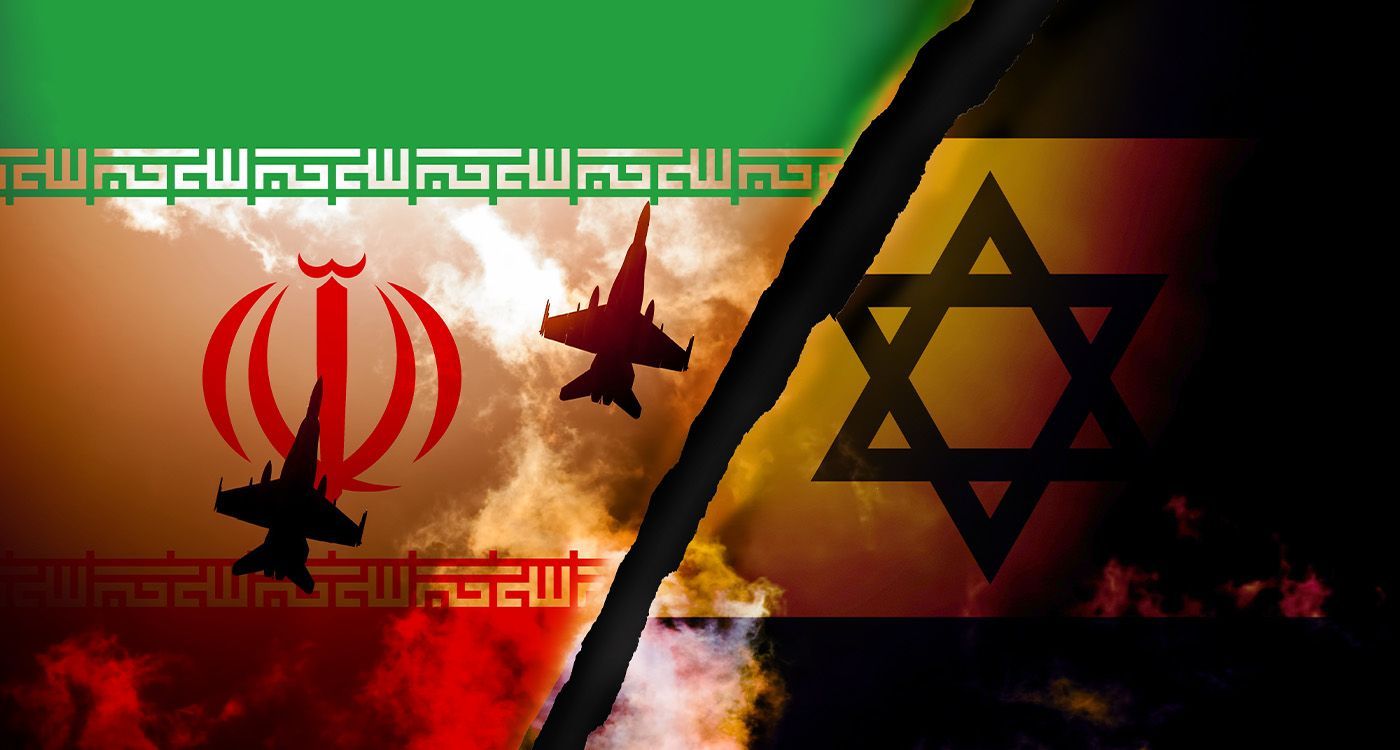
More than 2,000 bombs dropped in just thirty hours. That is the estimate cited by several Israeli and American security sources to illustrate the scale of the opening wave of strikes against Iran — a level of firepower rarely directed at a country of 88 million people and home to the Middle East’s largest ballistic missile arsenal.
In less than forty-eight hours, the region’s strategic balance appeared to shift dramatically. According to Western and regional security assessments, Iran has, since the June 2025 campaign and again during the February 2026 offensive, suffered severe degradation of its air defense systems and ballistic launch infrastructure. Some analysts describe the moment as a potential military turning point.
Air Superiority Established
Security sources cited by American media report that the Israeli Air Force conducted nearly 700 separate combat flight missions in the first thirty hours, focusing on air defense networks around Tehran and major strategic bases.
Among the targets were the Russian-supplied S-300PMU-2 batteries delivered in 2016 and components of the Chinese-designed HQ-9B system — both central pillars of Iran’s air defense shield around the capital. Israeli military footage shows strikes on long-range radar installations associated with these systems.
Officials from U.S. Central Command (CENTCOM) confirmed that coordinated operations across multiple phases of the campaign struck more than 1,000 military sites inside Iran.
The New York Times, citing American officials, reported that nearly half of Iran’s ballistic missile launchers were either destroyed or rendered inoperable.
Ballistic Arsenal Under Pressure
Before the offensives, Iran was estimated to possess roughly 3,000 ballistic missiles and nearly 400 mobile transporter-erector-launchers (TELs), dispersed across hardened bases, underground tunnels, and fortified facilities developed over three decades by the Revolutionary Guards’ Aerospace Force.
Among the most feared systems were the Ghadr-1, with a range approaching 2,000 kilometers, the precision-guided Emad, and the solid-fuel Kheibar Shekan, designed to shorten launch preparation time and complicate detection.
During the first escalation phase, 62 waves of Iranian missile launches were recorded. Western assessments note a gradual decline in projectiles per salvo — interpreted as evidence of mounting attrition in launch capacity.
Israeli footage shows F-35I aircraft striking mobile launchers on open roads, while American releases document Tomahawk cruise missile strikes against hardened facilities.
The “Scud Problem” Revisited
Several military analysts draw parallels with the coalition’s struggle during the 1991 Gulf War to neutralize Iraq’s mobile Scud launchers. The Scud, a Soviet-era ballistic missile widely exported during the Cold War, proved difficult to eliminate due to its truck-mounted mobility.
Iran’s early systems, including the Shahab-1 and Shahab-2, were derived from Scud technology. For decades, this mobile architecture formed the backbone of Tehran’s deterrent, complicating detection and targeting.
Security experts argue that today’s battlefield environment is fundamentally different. Persistent satellite surveillance, next-generation airborne sensors, and AI-assisted targeting analysis have drastically compressed the detection-to-strike timeline. Mobile launchers that once ensured survivability may now be significantly more vulnerable.
Nuclear Shadow
Beyond conventional assets, a deeper concern remains: the security of Iran’s nuclear program.
Prior to the June 2025 campaign, the International Atomic Energy Agency (IAEA) reported approximately 408 kilograms of uranium enriched to 60 percent — close to weapons-grade. Since the strikes, Israeli officials have acknowledged limited visibility over the precise location of this stockpile.
For many analysts, the partial dismantling of Iran’s air defense network weakens its ability to shield sensitive nuclear facilities in the event of escalation. If nuclear latency once served as Tehran’s ultimate strategic insurance policy, the protective umbrella surrounding it appears compromised.
A Deterrent Weakened — Not Erased
Has Iran been fully exposed? Most analysts caution against such a conclusion. Tehran retains substantial asymmetric capabilities: regional militia networks, long-range drones, cyber operations, and strategic depth through allied actors across the Middle East.
Yet security assessments converge on one point: the loss of launchers, degradation of air defenses, and sustained strikes on logistical nodes have, at least temporarily, diminished the credibility of Iran’s ballistic deterrent.
For the first time, a state widely described as “nuclear-threshold” has seen its strategic military architecture targeted openly and repeatedly — under the full scrutiny of the international community.
Read more


Comments