- Home
- Middle East
- Trump Says Largest Strikes on Iran Still to Come as War Expands Across Region
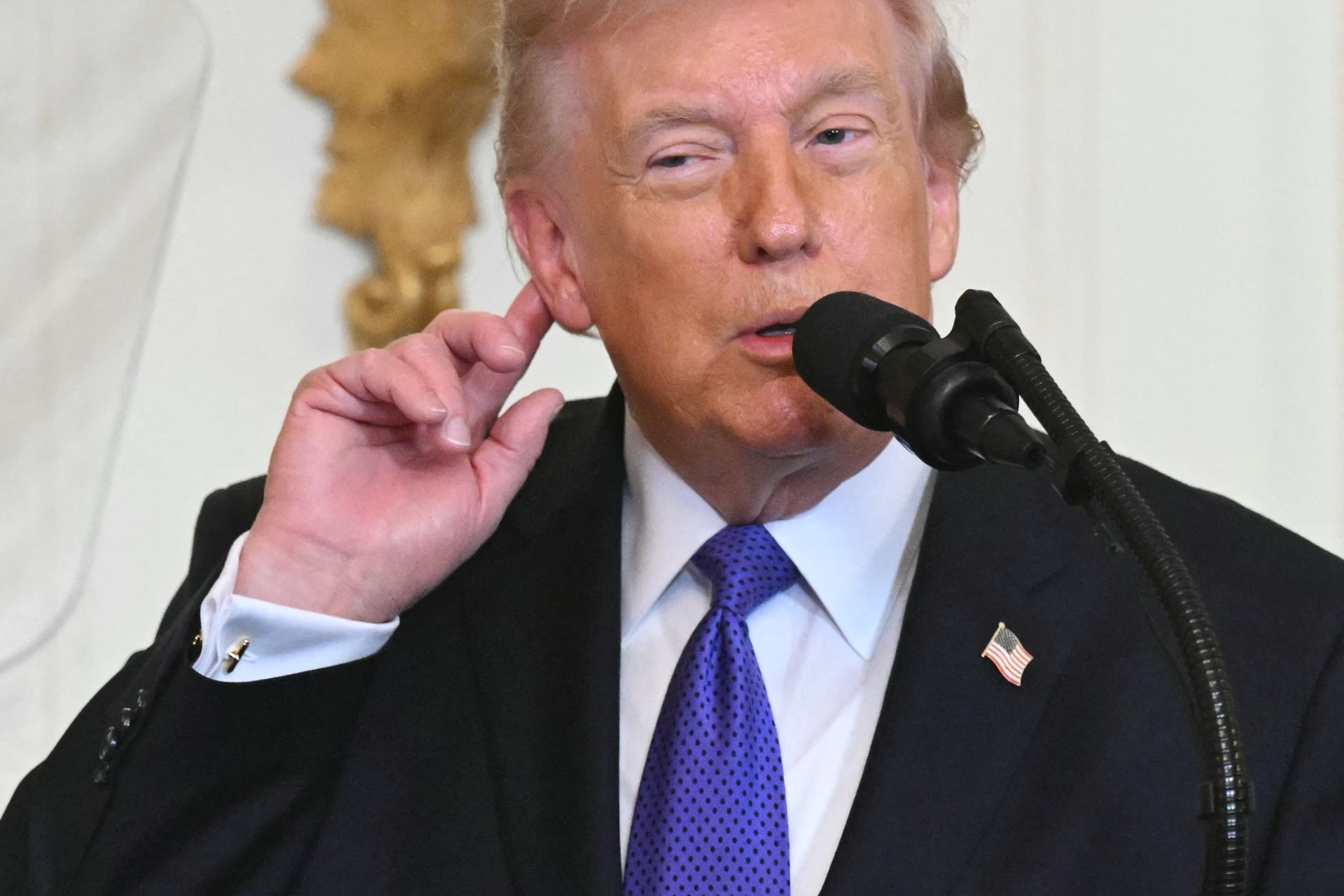
US President Donald Trump speaks during a Medal of Honor ceremony in the East Room of the White House on March 2, 2026, in Washington, DC. ©SAUL LOEB / AFP
“We haven’t even started hitting them hard. The big wave hasn’t even happened. The big one is coming soon.” That was U.S. President Donald Trump’s warning Monday as the U.S.-Israeli war against Iran entered its third day, signaling that the most intense phase of the campaign may still lie ahead.
Trump outlined an expanded set of war objectives and declared the war with Iran is projected to last four to five weeks; however, he added, "We have the capability to go beyond that, and we will do it."
Ground Troops Not Ruled Out
In interviews with U.S. media, Trump said he does not share the traditional presidential reluctance to commit troops on the ground.
“I don’t have the yips with respect to boots on the ground,” he told The New York Post.
While no ground invasion has been announced, the statement introduces a new level of uncertainty about how far Washington is prepared to go.
Trump described the campaign as the “last best chance” to eliminate what he called the “intolerable threats” posed by Iran’s leadership.
Expanding War Aims
The president laid out four principal objectives: destroy Iran’s ballistic missile capabilities, eliminate its naval power, ensure it can never obtain a nuclear weapon, and halt its support for proxy armed groups across the region.
Although Trump did not explicitly repeat calls for regime change, he has previously urged Iranians to seize the opportunity created by the strikes.
Air Superiority Claimed
At a separate Pentagon briefing, U.S. military leaders said American and Israeli forces have already struck more than 1,000 targets in the first 24 hours, with Israel reporting approximately 600 Iranian regime sites destroyed since operations began.
Chairman of the Joint Chiefs Gen. Dan Caine said U.S. forces achieved local air superiority over Iran, enabling sustained operations.
“This is not a single overnight operation,” Caine said. “The objectives will take time.”
Secretary of War Pete Hegseth insisted the campaign is not intended to become “another Iraq,” describing it as focused and decisive rather than open-ended. “This is not endless,” he said. “We fight to win.”
American Casualties and Friendly Fire
The war has already taken a toll on U.S. forces.
Six American troops have been killed since hostilities began, according to U.S. Central Command. Additionally, three U.S. aircraft were accidentally shot down by Kuwaiti forces in friendly fire incidents, though no casualties were reported in those cases.
CENTCOM said the remains of two previously unaccounted-for service members were recovered from a facility struck during Iran’s initial retaliatory attacks.
Iran Escalates, Gulf States Drawn In
Iran has responded with sustained missile barrages against Israel, including a strike on Beersheba that wounded 19 people.
The Islamic Revolutionary Guard Corps claimed it targeted Israeli Prime Minister Benjamin Netanyahu’s office and the headquarters of the Israeli Air Force commander. The Prime Minister’s Office denied the claim as false.
An Iranian drone struck Saudi Arabia’s Ras Tanura oil refinery, causing a fire and partial shutdown. A Saudi source warned that a coordinated Iranian attack on Aramco infrastructure could trigger direct military retaliation from the kingdom.
Qatar reported intercepting ballistic missiles and drones launched from Iran and said it shot down two Iranian-Russian-made Sukhoi Su-24 aircraft.
The United Arab Emirates said it has intercepted 174 ballistic missiles since Saturday, the vast majority successfully neutralized.
Strategic Inflection Point
Trump acknowledged that one of the biggest surprises of the conflict has been Iran’s willingness to strike Arab states, something he suggested could provoke broader regional retaliation.
The war, initially framed as a joint U.S.-Israeli campaign against Iran’s leadership and military infrastructure, now risks evolving into a multi-front regional confrontation involving Gulf states, Hezbollah, and potentially ground deployments.
Read more

Comments