- Home
- Middle East
- Iran: The Regime Falters as Fear Shifts
- 02
- Jan.
- 2026

©This is Beirut
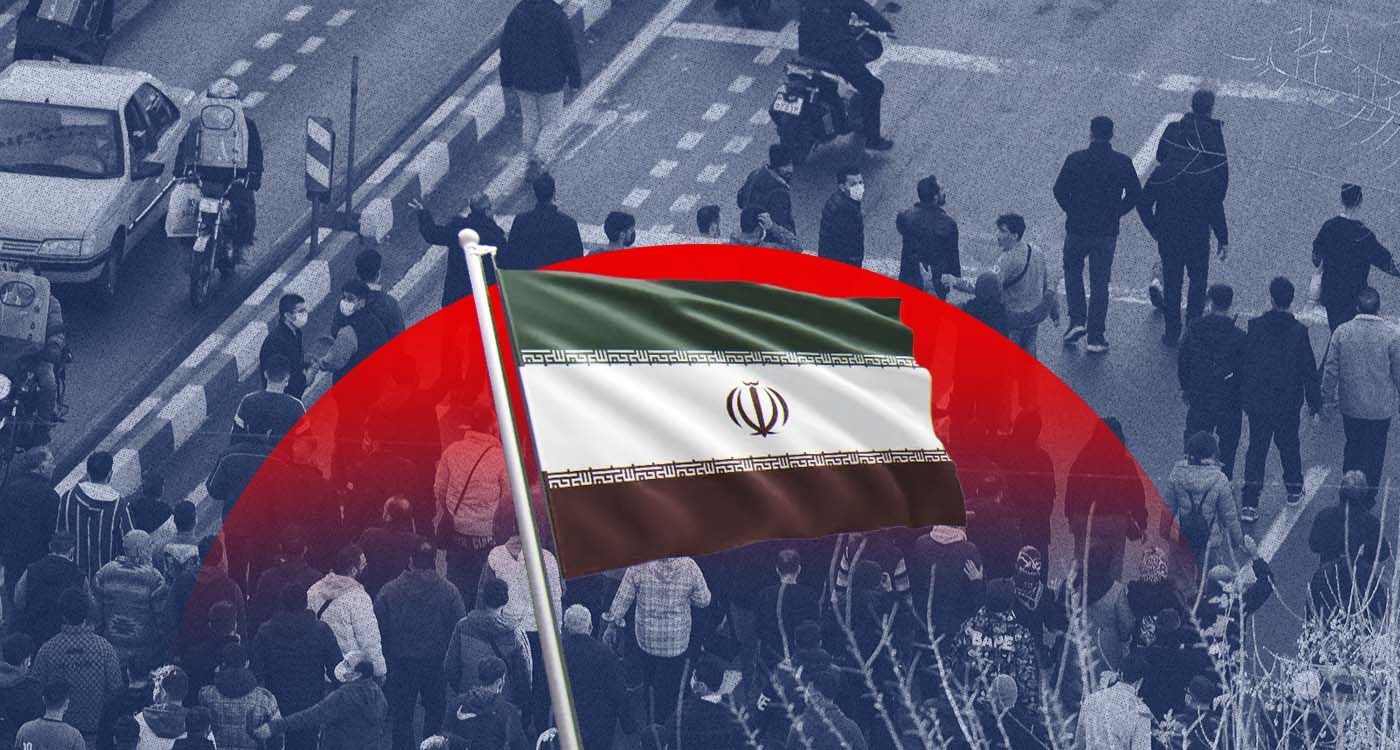
In Iran, today’s protests are no longer a part of a long series of crises that the Islamic Republic has, over decades, contained through repression, intimidation, or external distraction. This is different: a deep, gradual, but now unmistakably visible erosion of the regime’s symbolic, ideological, and psychological foundations. This crisis no longer affects only the margins of society; it penetrates the entire social fabric and strikes at the very heart of power.
Since December 28, demonstrations have erupted in Tehran, led by merchants protesting soaring prices and the continued collapse of the rial. With inflation exceeding 50% year on year amid prolonged and recently tightened international sanctions, daily life has become economically unbearable for large segments of the population. What began as a localized protest in the capital quickly spread to universities in Tehran and across the provinces, signaling growing unrest.
Although the demands are primarily economic, the slogans on the streets reveal a far deeper political discontent. David Rigoulet-Roze, a researcher at the French Institute for Strategic Analysis (IFAS), affiliated with EISMENA and editor-in-chief of Orients Stratégiques at Harmattan, told This is Beirut: “All the factors of crisis, economic, social, political, and symbolic, are converging. This is no longer a temporary or cyclical crisis but a systemic one that has become unmanageable for the authorities.”
A Generational and Ideological Break
One of the most striking features of the current movement is the explicit emergence of slogans calling for the return of the Pahlavi monarchy. Observers describe this as unprecedented. Until now, protests largely focused on opposing the Islamic Republic without clearly articulating an alternative. However, the protest movement today is no longer merely naming what it wants to dismantle but is increasingly expressing what it envisions as a political alternative and, for some, a demand.
For Fahimeh Robiolle, a Franco-Iranian former nuclear engineer and lecturer in leadership and conflict resolution, interviewed by This is Beirut, this dynamic goes far beyond an economic or social crisis. “What is unfolding today is a clear, deliberate, and ideologically structured political rupture, carried by a youth that no longer believes in reforming the system or in its capacity to survive,” she says.
This shift is first and foremost generational. Iran’s youth, born long after the 1979 revolution, neither share the traumatic memory of the monarchy nor accept the narratives promoted by the Islamic Republic to demonize the Shah’s era. “This generation harshly judges its elders, accusing them of having accepted or facilitated a system that has led the country to economic, social, and moral collapse,” notes Robiolle.
The symbolic rehabilitation of the Pahlavis, reflected in slogans that are increasingly explicit, is less an expression of historical nostalgia than a direct rejection of the current order. Rigoulet-Roze also sees a broader reappropriation of Iran’s pre-Islamic and millennia-old national identity. “After the so-called 12-day war, the regime attempted to mobilize Iranian nationalism in the hope of bringing society back in line with the authorities. That calculation now appears to be backfiring, as these pre-Islamic references are being used against clerical power,” he explains.
A Regime Under Pressure, Between Repression and Loss of Control
On the ground, the regime is showing unmistakable signs of fatigue. The protest movement now spans more than forty cities, cuts across all social groups, including merchants, university and high school students, and women from conservative backgrounds, and is no longer confined to major urban centers. Still marked by the uprisings of 2019 and 2022, the authorities remain on permanent alert. Officially, the temporary closure of schools and public administrations has been attributed to energy shortages and air pollution. Yet in recent days, the skies have been strikingly clear, with no acknowledged connection to the demonstrations.
Faced with mounting discontent, President Massoud Pezeshkian has multiplied conciliatory gestures, calling for the legitimate demands of the population to be heard and announcing several economic measures, including the replacement of the central bank governor and a 20% salary increase planned in the 2026 budget. These announcements are widely viewed as insufficient in the face of runaway inflation. In parallel, the judiciary has warned that any attempt to politicize the movement will not be tolerated.
For Robiolle, the regime no longer commands the same coercive levers as in the past. “The economic collapse is also affecting the forces responsible for repression, whose salaries no longer cover even basic needs.” This erosion is compounded by a reduced reliance on foreign auxiliaries and regional proxies due to funding shortages and weakened security priorities. The confrontation has become essentially internal, pitting Iranians against Iranians, a historically unstable configuration.
Another major rupture is the widening disconnect between the Iranian population and the regime’s regional agenda. The slogan “Neither Gaza nor Lebanon, I give my life for Iran” is no longer marginal. It reflects a growing rejection of the ideology of revolutionary export, widely perceived as a financial drain and a driver of international isolation. External escalation, once a reliable tactic to divert domestic pressure, now appears increasingly ineffective. “The population is no longer prepared to mobilize for external causes. Such a headlong rush would be extremely dangerous for the regime,” warns Rigoulet-Roze.
Finally, the tightening of repression has become a key indicator of the system’s fragility. The number of executions has surged since 2024, placing Iran among the countries with the highest per capita execution rates. Robiolle interprets this judicial violence as a classic sign of an authoritarian system nearing the end of its cycle: when political control erodes, terror becomes the final instrument. Repression now primarily targets figures associated, directly or indirectly, with monarchist currents, which are perceived as an existential threat. “Repression is part of the regime’s DNA, but it is no longer sufficient to regain control,” observes Rigoulet-Roze.
Trump Takes Action
In this volatile context, Trump’s statement on Friday morning that the United States would intervene if the Iranian regime fired on peaceful protesters sparked immediate reactions. The Iranian Ministry of Foreign Affairs swiftly rejected any foreign interference, asserting that “Iranians will not allow any external intervention” and condemning the U.S. threat as a “blatant violation of international law.”
Rigoulet-Roze said he was “stunned” by the U.S. president’s remarks, describing them as both surprising and at odds with Trump’s usual non-interventionist stance. Robiolle sees a transactional logic: “Trump thinks like a businessman. For him, this regime is an economic obstacle. An Iran free of the mullahs represents an enormous market.”
However, on the ground, the American position appears to have little effect on the movement itself. The protests remain overwhelmingly domestic, driven by a society that no longer seeks incremental reforms but demands a radical overhaul of the system.
The End of a Cycle?
Is Iran on the verge of a dramatic collapse? One thing is certain: the founding cycle of the Islamic Republic is deeply fractured. The country is experiencing one of the most severe crises in its contemporary history. The ideological pillars of the regime are cracked, fear has shifted sides, and long-standing taboos—religious, political, and historical—have crumbled. The social contract on which the regime depended is broken.
Timing remains the key unknown. Rigoulet-Roze observes, “The regime was already doomed following the protests that erupted after the death of Mahsa Jina Amini. Its ultimate collapse remained difficult to predict. Yet all the elements now appear to be in place for it to happen in the near future.” What is eroding today is not only the authority of the state but also the narrative that has legitimized it since 1979. For Robiolle, it is only a matter of days before Reza Pahlavi assumes a leading role.
Reducing the current movement to a mere economic crisis entirely misses the point. Iran is no longer simply protesting; it is redefining itself. This quiet yet profound transformation may prove far more destabilizing than any single outbreak of anger.
Read more
Comments