- Home
- Middle East
- Why was Sharaa Invited to Washington, but not Aoun?
- 23
- Dec.
- 2025

©This is Beirut
For all his efforts, Joseph Aoun deserves Washington’s active support to enable him to accomplish even more.
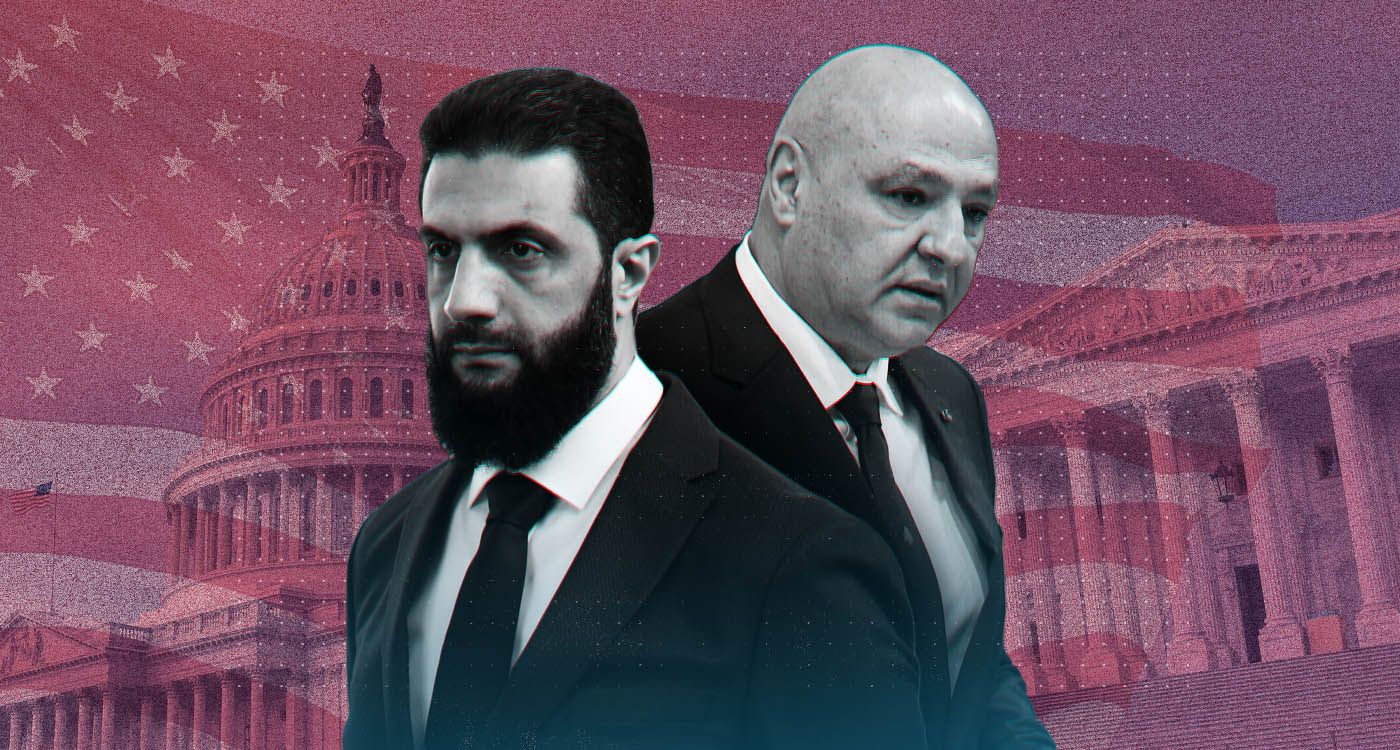
Until late 2024, Syrian President Ahmad al-Sharaa was a U.S.-designated terrorist with a $10 million bounty on his head for leading the al-Qaeda-linked Hayat Tahrir al-Sham. By contrast, Lebanese President Joseph Aoun, who served as commander of the Lebanese Armed Forces (LAF) until his election in January 2025, was widely regarded as one of America’s most reliable partners in the region, especially in the fight against ISIS.
So why has the White House rolled out the red carpet for Sharaa, who met President Trump at the White House last month, the first such visit by a Syrian leader in nearly 80 years, while Aoun has yet to receive a similar invitation?
The answer lies in Washington’s often counterproductive politics that interfere with sound policies.
Sharaa benefited from intense lobbying by influential regional players, including Qatar and Turkey, with their Islamist leanings, alongside Saudi Arabia, which successfully pushed for forgetting his al-Qaeda past. These nations helped secure Sharaa’s meetings with Trump in Riyadh and Washington and sanctions relief.
No comparable lobby exists for Aoun. In fact, his election as Lebanon’s 14th president since independence was driven largely by U.S. pressure, overriding Saudi Arabia’s preference for Lebanese Forces leader Samir Geagea. Washington secured Aoun’s ascent to the presidency, but he lacked the external advocacy needed to elevate his profile inside the White House.
Sharaa’s supporters in Washington marketed him as a counterterrorism partner, framing his invitation to the White House as a step toward Syria joining the fight against ISIS. Yet a month after the Syrian president’s November 10 meeting with President Trump, two U.S. servicemen on a joint patrol with Sharaa’s forces were shot dead. Questions arose about the reliability of troops under Sharaa’s command.
Reports have suggested significant terrorist infiltration within Sharaa’s security apparatus, with some estimates indicating thousands of former ISIS members could remain embedded. By contrast, the U.S. has fought ISIS alongside Syria’s Kurdish allies since 2014 without a single incident of betrayal.
With Damascus offering limited clarity on these issues, Syria’s Kurds and Lebanon’s army have emerged as the more dependable options, potentially serving as a “Plan B” if Sharaa’s counterterrorism efforts falter.
Another key yardstick in Washington is willingness to engage Israel, seen as a measure of commitment to peace and stability. Early on, Sharaa appeared open to dialogue, sending Foreign Minister Asaad al-Shibani to meet Israeli officials indirectly in Paris and other capitals while he was still consolidating power. As his international standing grew, however, Sharaa’s rhetoric cooled to vague references to “security arrangements,” as enthusiasm for deconfliction faded.
By the time he returned from Washington, Sharaa’s tone had shifted markedly. In Doha, he rejected the terrorist label, claiming his group never targeted civilians, and instead labeled the U.S. and Israel as the true aggressors in Iraq, Afghanistan, and Gaza.
While Sharaa grew bolder against U.S. and Israeli interests, Aoun moved in the opposite direction, demonstrating tangible commitment. Shortly after taking office, Aoun expressed openness to peace with Israel, though initially tied to the Arab Peace Initiative and the elusive two-state solution. By October 2025, Aoun urged direct civilian talks with Israel. On December 3, Lebanon’s president appointed former ambassador Simon Karam to head Lebanon’s first civilian-led talks with Israel in four decades.
A second round of these talks took place on December 19, with both sides confirming a focus on border security, resident safety, and economic growth. A third round is scheduled for January 9. Lebanon now outpaces more than 15 Arab governments in the number of public civilian engagements with Israel.
Aoun has instructed the LAF to cooperate with the Israel Defense Forces on enforcing UN Security Council Resolution 1701, as outlined in the November 2024 Cessation of Hostilities Agreement. He has pushed the LAF to dismantle as much Hezbollah weaponry as possible, despite severe resource constraints and Hezbollah’s ongoing rearmament outpacing both LAF efforts and IDF strikes. While Israel can escalate its operations, the LAF needs robust U.S. support to intensify disarmament against the pro-Iran militia.
Aoun has proven himself a steadfast partner against ISIS, dispatched officials for direct talks with Israel, and worked to restore as much of Lebanon’s independence as possible. He may well be Lebanon’s most pro-U.S. president since Camille Chamoun’s term from 1952 to 1958.
Yet Washington’s Islamist-influenced lobby appears to favor Sharaa as the man of the hour. The lobby often presses the Lebanese to defer to the Syrian president. Though still learning the presidency, Aoun has adapted quickly, and his intentions align with U.S. interests. For all his efforts, he deserves Washington’s active support to enable him to accomplish even more.
A stronger Aoun would help detach Lebanon from the region’s endless conflicts. Lebanon’s independence from Iran, Turkey, and Gulf influence—while maintaining peace with all, including Israel—should have been secured long ago. However, it is not too late. If Aoun is committed to this path, he must receive the full backing needed to make it a reality.
Read more
Comments