- 16
- Dec.
- 2025

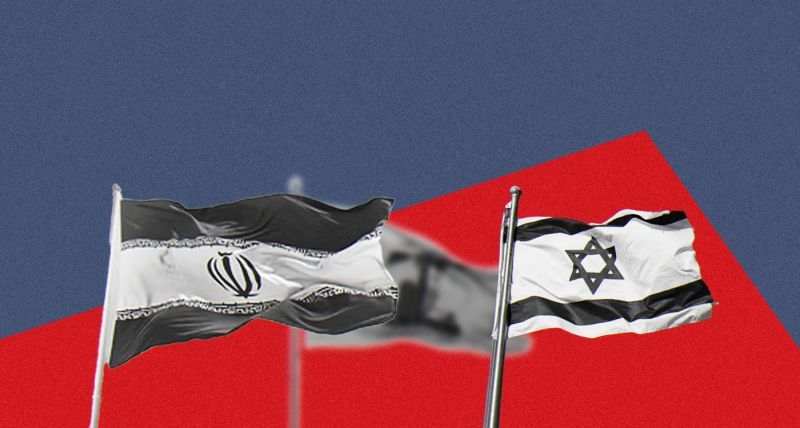
In recent weeks, a central question has dominated diplomatic and security circles: where will the next major shock occur? Will Israel move first against Hezbollah in Lebanon, or against Iran, its strategic godfather? And if Iran were struck before Hezbollah, what consequences would that carry for the movement and for Lebanon’s fragile balance?
Repeated Israeli strikes in southern Lebanon, increasingly explicit warnings of war, signals exchanged between Tel Aviv, Tehran, and Hezbollah, and seemingly peripheral events, such as the Sydney terrorist attack and renewed scrutiny of Iran, may appear disconnected. Viewed together, they form a coherent sequence.
The real issue is not escalation itself, but the order in which it unfolds. Will Israel strike Iran or Hezbollah first, and with what strategic repercussions? Without succumbing to speculation or hasty scenarios, This is Beirut offers an analysis of recent developments grounded in established facts, aiming to uncover deeper logics and plausible outcomes.
Strike the “Nest,” Not the Wasps
Lebanese retired General Maroun Hitti suggests Israel may be rethinking its strategy: instead of wearing itself down by attacking Hezbollah, the wasps, it could seek to strike the “nest,” Iran, the strategic hub behind its regional proxies. From a military standpoint, Israel considers this approach both reasonable and logical.
However, the central question is whether a strike against Iran would truly destabilize Hezbollah. Recent experience suggests caution. Israeli strikes last June against Iranian targets weakened the regime and its networks, but did not dismantle its structures or its regional proxies. “If Iran becomes the next target, and if the strikes resemble those carried out during the 12‑day war between Iran and Israel, one can expect further weakening without destabilization that fundamentally undermines the regime’s capabilities or its regional networks,” notes Hitti.
The military expert also highlights the constraints. Iran is no peripheral actor but a vast state of more than 1.5 million square kilometers and nearly 85 million people, with multiple centers of power that are dispersed and heavily secured. Identifying the true centers of gravity whose neutralization could topple the regime would require deep analysis. “Militarily, it is possible. Politically, it is entirely another matter,” he concludes, rejecting hasty speculation.
And what about Hezbollah? The pro‑Iranian militia insists it is ready for any eventuality. Yet behind this posture lie vulnerabilities. Militarily, the movement is weakened, even if partially rebuilding. Politically, it is increasingly isolated in a Lebanon on the brink. Socially, its base bears the cost of a prolonged, low‑intensity confrontation. Strategically, its dependence on Iran remains absolute. “This is where the knot tightens: Hezbollah can absorb limited Israeli strikes as long as Tehran remains a stable pillar,” explains a security source. If that pillar falters, the entire architecture of regional deterrence is shaken. The key question is not whether direct strikes on Hezbollah can weaken it, but how attacks on its strategic patron would reverberate through the movement itself.
An Opportunity for the Lebanese State: The Last One?
Hitti believes that Lebanon now faces a decisive moment. He describes it as a strategic turning point and perhaps the final opportunity for the Lebanese state to confront a reality long deferred. He insists that Lebanon’s problem is primarily internal rather than regional, rooted in the presence of a non‑state armed actor, Hezbollah, which operates outside the authority of the state.
In his view, if the Lebanese state adopts a clear and deliberate position toward Hezbollah, the confrontation could still be politically managed. If not, he warns, clarity will be imposed from outside. Should conflict erupt, it would not take the form of open war or a symbolic exchange of strikes. It would be limited in duration but designed to produce maximum impact, with a precise objective: to settle the Hezbollah question once and for all.
From this perspective, the international strategic goal in Lebanon would shift from immediate stability to the establishment of a new balance of power, from which stabilization could eventually follow. The risk of escalation is high, and the window for negotiation is short, concludes Hitti. In his view, the possibility of containing the situation in the long term is unlikely. He foresees that the first weeks of January could bring one of two outcomes: either major political concessions from Hezbollah, which he considers unlikely, or a violent military escalation, limited in time but intense in effect. In the meantime, negotiations will continue under heavy pressure, strikes will persist, and the failure of the ceasefire agreed in November 2024 will be confirmed.


Comments