- 15
- Dec.
- 2025

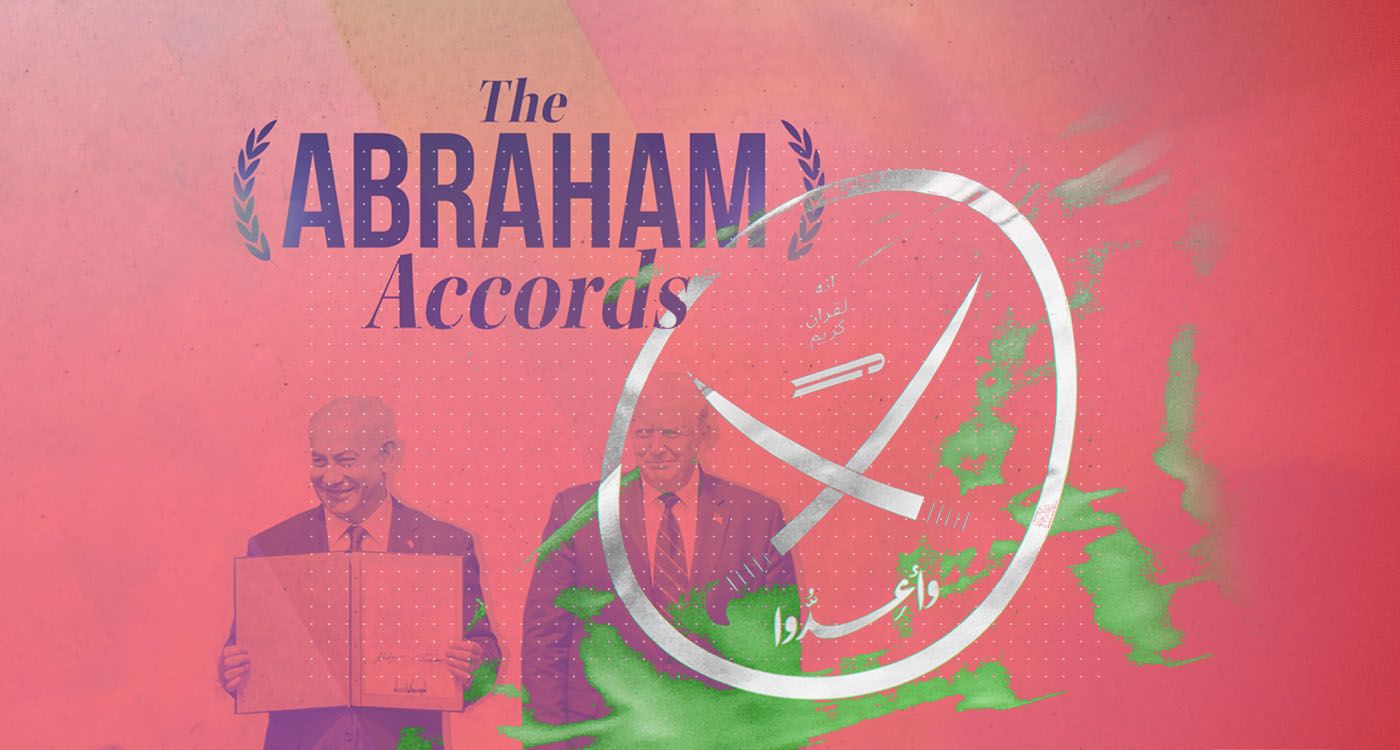
It would be a grave mistake for Lebanon to swap the Islamist resistance axis of Iran for the Muslim Brotherhood of Turkey and Qatar.
Lebanon must pick a side in the regional map of alliances. One seeks peace, prosperity and higher standards of living for all and consists of the United Arab Emirates, Israel, Bahrain, and Morocco, enshrined by the Abraham Accords. The rival alliance—Qatar, its ATM, and Turkey, its NATO muscle, as well as Syria, Algeria, and Tunisia—dismisses Western systems of governance as degenerate and aims to replace it with Muslim Brotherhood–style Islamist regimes.
Islamist Iran, whose theocracy is built on a Shia version of the Muslim Brotherhood’s supremacist government, was, until recently, the dominant Islamist regional force—especially in Lebanon—until Israel crushed its proxies across the region and severely bruised the Iranian regime.
The countries hunkering down and hedging include Saudi Arabia, Egypt, Jordan, Kuwait, Oman, and Mauritania. As they wait and see, they endorse a populist rhetoric sometimes articulated by the claim that “Israel is a greater danger to Arabs than Iran.” The only reason these countries argue as such is because they fear the retaliatory fury of Islamist Iran—and Turkey and Qatar—but are not scared of Israel, which never comes after anyone for their opinion, even if it is in favor of spilling Jewish blood.
Meanwhile, Lebanon, Iraq, Libya, and Yemen are struggling to choose a side. Lebanon has faced this dilemma since its independence in 1943. On the brink of civil war in 1975, Christian organizations argued that Lebanon should remain neutral in the war between Israel and the Palestinians. The Christians presented a historical narrative about themselves—whether real or imagined—that portrayed them as part of the West, not the Arab or Muslim worlds.
Lebanon’s Muslims—who had not accepted Lebanon as an independent state and who demanded that Lebanon join an imagined pan-Arab nation or Islamic caliphate—countered by calling the Christians isolationists and pawns of the imperial West and evil Zionism.
Along such fault lines, the Lebanese fought 15 years of bloody civil war, during which Palestinian factions played a major role in fanning the flames under the banner of “liberating Palestine.”
When the war ended in 1990, both sides made concessions. Christians agreed that Lebanon would define itself as an Arab country, while Muslims endorsed Lebanon’s sovereignty and independence as a final destination, not a temporary arrangement awaiting accession to the imagined greater Arab nation. But then, a new disagreement emerged: what should post-civil war Lebanon look like?
This time, the division was not along Christian-Muslim lines, but between capitalism and anti-imperialism. Rafic Hariri, a Sunni billionaire with strong connections to Saudi Arabia, had a plan and a vision that would have made Beirut what Dubai is today. Shia Hezbollah, however, had something else in mind. In the words of Naim Qassem—then its second-in-line and now its chief—in his book “The State of Resistance,” Lebanon should stay on its toes thereafter, engaged in perpetual conflict on the side of the downtrodden—especially including the “liberation of Palestine”—against the “arrogant powers,” Iranian code word for America and the West.
Syria’s Assad forced Lebanon to remain aligned with Hezbollah’s so-called “resistance axis.” When the U.S. war in Iraq weakened this axis, Hariri and Druze chief Walid Jumblatt saw an opportunity to assert themselves. Minority leaders like Jumblatt rarely take risks and always bet on who they think would be a winning horse. America seemed adamant about spreading democracy in the Middle East.
In 2005, Assad and Hezbollah assassinated Hariri, sparking a revolution that ejected Assad’s forces from Lebanon. As the Lebanese rushed to fill the vacuum and decide the country’s direction post-Assad, the witty Jumblatt summarized his country’s choices by quipping that Lebanon should decide whether it wants to be “Hanoi or Hong Kong,” the first being famous for a bloody war that ejected America while the second was focused on economic development that brought it enormous prosperity.
But Islamism won the day. In 2006, Hezbollah inaugurated the model of Lebanon as a “resistance state” by taking the country into a devastating war with Israel that ended in a stalemate. Both sides started preparing for the next round that came 17 years later when Hezbollah launched a war to support Gaza on October 8, 2023.
Israel has decimated Hezbollah and given Beirut a chance to switch from perpetual war to peace, economic growth and prosperity. This would mean Lebanon abandoning the Islamist resistance and joining the Abraham Accords.
Lebanon’s leaders, however, find it easier to hunker down and save their careers than to stand up and save their country. Beirut has not even attached itself to another irrelevant country, Saudi Arabia, and instead are watching events unfold, making statements like pundits, and hoping for the best.
But the best will not come. Israel will likely intensify its maintenance strikes to ensure that Hezbollah remains at the same strength it was on the eve of the ceasefire last year. If the Jewish state manages to eradicate Hezbollah fully, Lebanon will find itself stuck with the other branch of crazy Islamism: The Muslim Brotherhood of Qatar and Turkey.
Doha already bankrolls the Lebanese Armed Forces (LAF) to the tune of $144 million a year. Syria’s Ahmad al-Sharaa, formerly al-Jolani of al-Qaeda, seems to be a joint Turkish-Qatari venture, and will likely play an instrumental role facilitating the expansion of Sunni Islamism into Lebanon. The Muslim Brotherhood types already swept the Sunni vote in the municipal election earlier this year, while Sunnis of Lebanon celebrated the accession of Sharaa to power last week, ignoring the patriotism they had long urged their Shia compatriots to uphold.
It would be a grave mistake for Lebanon to swap the Islamist resistance axis of Iran for the Muslim Brotherhood of Turkey and Qatar, much like it replaced Palestinian terrorism with Hezbollah’s “resistance.”
Lebanon’s salvation needs bold leadership that pulls it away from Islamist Iran, Turkey and Qatar as well as the irrelevant and toothless Saudi Arabia, Egypt and Jordan. Lebanon’s leaders should step up, be bold, join the Abraham Accords, the West, and prioritize economic growth and national interests over anything else.
Lebanon should pick Abraham Accords over the Muslim Brotherhood.



Comments