- 08
- Dec.
- 2025

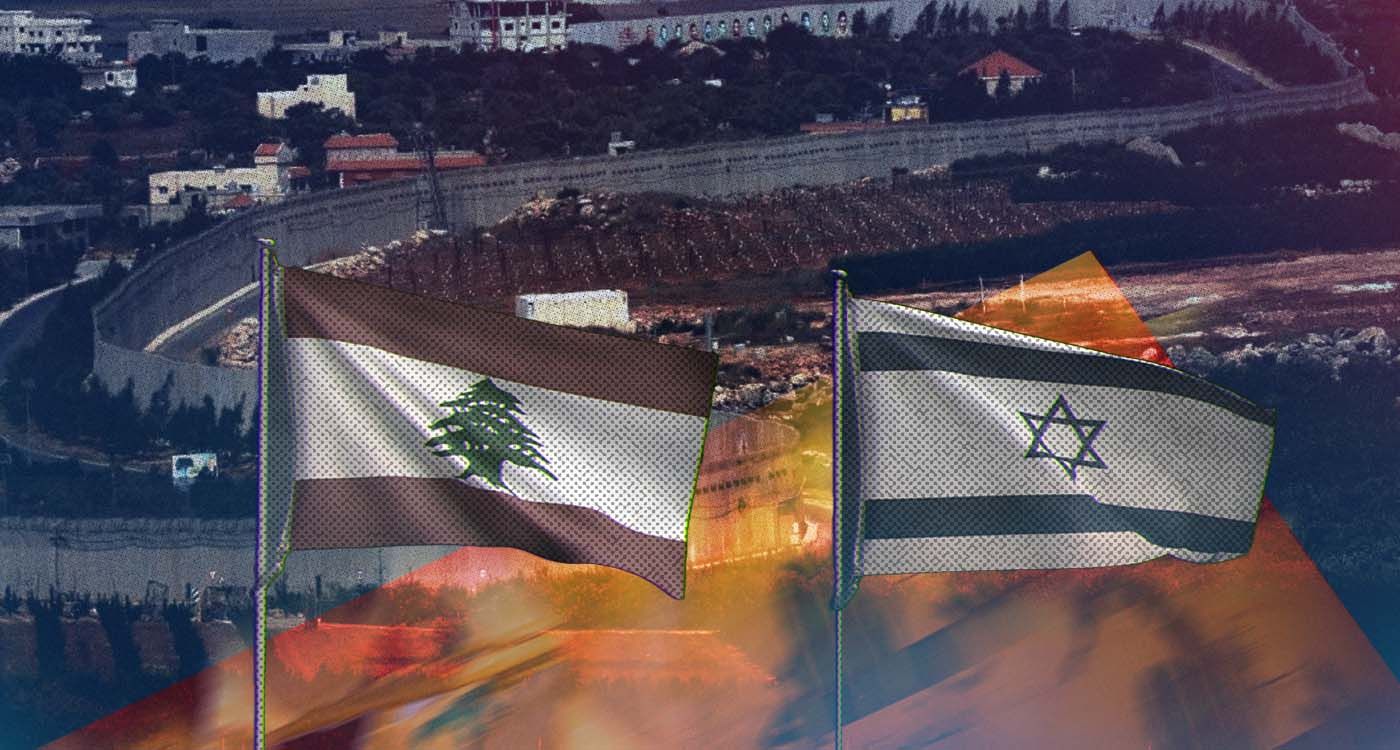
U.S. and Israeli officials are no longer debating whether fighting will erupt again, but how quickly and extensively it could escalate.
The Israeli-Lebanese border is now one of the Middle East’s most volatile fronts, where a “low-intensity” conflict feels less like crisis management and more like a dress rehearsal for an imminent war. U.S. and Israeli officials are no longer debating whether fighting will erupt again, but how quickly and extensively it could escalate, according to a U.S. diplomatic source.
The prevailing question in Tel Aviv, Washington, and anxious Beirut is whether outside powers—particularly the United States—can keep the confrontation contained as Hezbollah rebuilds its capacities. “Hezbollah's reconstitution has been noted by the U.S., creating a pressing need for action beyond the current limitations set by the Lebanese government,” Former Assistant Secretary of State for Near Eastern Affairs David Schenker told This is Beirut.
For Israel, October 7, 2023, marked not only a Hamas attack but a strategic turning point that recalibrated the rules along all its borders. In the north, that shock has manifested in a doctrine of "never again," said Mona Yacoubian, director of the Middle East Program at the Center for Strategic and International Studies, to This is Beirut.
Israel now views any sign of Hezbollah's rearmament as an intolerable threat that justifies preemptive action to push the group away from Israeli communities. Israeli planners increasingly discuss the establishment of de facto buffer zones in Lebanon, Syria, or Gaza as a critical measure to prevent future atrocities, Yacoubian told This is Beirut.
Israeli leaders now frame the security of Galilee towns as inextricably linked to degrading Hezbollah's precision strike capabilities and ensuring that its fighters remain kilometers—not meters—from the border. Targeted strikes on weapons depots, anti-aircraft systems, and senior operatives—once indicators of imminent conflict—have become part of a rolling "campaign between wars" aimed at keeping Hezbollah off balance.
Analysts say that Hezbollah's deterrent reputation has weakened; the group continues to absorb significant blows while avoiding actions that might trigger a devastating Israeli military campaign. This restrained posture appears less like strategic patience and more like vulnerability.
Calibrated campaigns, not total war
Despite the growing drumbeat of war, both Israel and Hezbollah still appear to prefer calibrated campaigns to a 2006-style total war, Schenker told This is Beirut. Yet any potential development along the border is complicated by the broader contest between the U.S. and Israel on one side, and Iran on the other.
From Israel's vantage point, rockets fired from southern Lebanon are rarely local decisions; they are pieces of a coordinated Iranian pressure campaign across multiple fronts. Even if Lebanese politicians desire calm, the key decisions about Hezbollah's strategic posture are made in Tehran.
The Trump administration's National Security Strategy now casts Iran as a destabilizing force that has been weakened and deterred by strikes and operations such as the joint U.S.–Israeli "Operation Midnight Hammer" against Iranian nuclear sites in mid-2025.
In this view, choking off Iran's ability to fund, arm, and resupply Hezbollah is as important as any tactical success along the Israel-Lebanon border. For Washington, disarming and containing Hezbollah is part of a broader effort to shape a Middle East where Iranian proxies no longer have a veto over regional stability. Schenker emphasized that "disarming Hezbollah is the sine qua non; it must come first as reform, sovereignty, and reconstruction cannot occur without it."
The uncomfortable consensus in Washington, Tel Aviv, and much of Beirut is that another round of serious fighting along the Israel–Lebanon front is no longer a question of "if," but "when" and "how."
Israel will not tolerate an entrenched Iranian proxy sitting on its northern doorstep with a growing precision strike arsenal. Hezbollah, for ideological and financial reasons, shows no sign of voluntarily laying down its arms.
In between stands a fragile Lebanese state and a U.S. administration trying to turn unavoidable confrontation into something less than a catastrophe. If those guardrails hold, the coming months will likely resemble an ugly sequence of bounded conflicts.
A state too weak to say no
Hezbollah's greatest vulnerability may be the increasingly disillusioned Lebanese public that it claims to defend. Years of economic collapse, electricity shortages, and currency devaluation have led many Lebanese—particularly among the Shia population—to express open hostility towards the idea of their future being sacrificed for an endless "resistance" project directed from Tehran, said Hanin Ghaddar—senior fellow at the Washington Institute—to This is Beirut.
The group's refusal to disarm undermines the state, deters investors, and forces border villages to bear the brunt of decisions made in Beirut's southern suburbs and across the Iranian border. Recent Gallup surveys indicate a growing fatigue among the Lebanese population. Many argue that true sovereignty means total disarmament of Hezbollah, the establishment of peace treaties, and direct negotiations with Israel—rather than subcontracting national security to a militia that answers to Iran's Revolutionary Guard.
For ordinary Shia families who have endured loss and witnessed the destruction of neighborhoods for the sake of a failed "resistance," a war with Israel is no longer an ideological cause but a dead end with a high human cost, Ghaddar told This is Beirut.
Lebanon's tragedy is that while its society grows impatient with Hezbollah, the state remains too weak to rein the group in. Years of fiscal mismanagement and political stagnation have leftministries incapable of providing basic services, let alone enforcing international resolutions along the border. The Lebanese Armed Forces (LAF)—trusted by the public and heavily supported by the United States and Europe—are underfunded, under-equipped, and politically constrained from confronting an armed group that outmatches them.
U.S. officials assert that American aid to Lebanon is an investment in a sovereign and democratic nation capable of defending its borders and pursuing peace with its neighbors, rather than depending on armed militias for security. Jacob McGee, deputy assistant secretary of state for democracy, human rights, and labor, said, "We support a sovereign, stable, and democratic Lebanon—one that is free from foreign interference, able to defend its borders, benefits all its people, and is at peace with its neighbors."
The U.S. continues to invest billions in humanitarian aid, economic stabilization, and support for the Lebanese Armed Forces (LAF), believing that a strong, functioning state serves as a long-term bulwark against Hezbollah.
Yet a paradox persists: as Lebanon’s institutions weaken, Hezbollah gains ground by positioning itself as the sole protector of Shia interests and the "national resistance." Schenker notes, "While the recognition of the LAF's efforts in the South is evident, there is still reluctance on the part of the Lebanese to fully engage, particularly regarding private property, which complicates progress." He added, "It’s evident that more needs to be done."
Disarmament is non-negotiable
Patience with the ongoing limbo over disarming Hezbollah is evaporating on Capitol Hill. Last week, a bipartisan group of House lawmakers sent a blunt letter to Lebanon's president and prime minister demanding that Beirut finally implement its ceasefire pledge to disarm Hezbollah, "including by force if necessary."
The lawmakers blasted "empty promises and partial measures" that have allowed Hezbollah to rearm, including south of the Litani River, in direct defiance of UN Security Council Resolution 1701. Their warning was unambiguous: every day of inaction pushes Lebanon "closer to renewed war and deeper into the grip of a terrorist organization loyal to Iran, not to the Lebanese people."
The letter went further, tying the future of U.S. support directly to Lebanese decisions on Hezbollah's weapons. Members argued that failure to pursue disarmament has displaced families in southern Lebanon, exposed civilians to renewed Israeli strikes, and jeopardized Lebanon's long-term viability.
They cautioned that if Beirut continues to duck its obligations, Washington will find it "increasingly difficult to justify continued support for a government that refuses to uphold its own commitments and allows a terrorist organization to dictate its future," a polite way of saying that aid and diplomatic cover are on the line.
U.S. strategy: hard line, soft landing
U.S. policy toward Hezbollah allows little room for nuance.Washington labels the group as a terrorist organization, a pillar of Iran's regional network, and a serial violator of UN resolutions governing southern Lebanon. Sanctions, financial pressure, and diplomatic isolation aim to curtail its funding and complicate its foreign operations, from weapons procurement to money laundering.
In Washington's framing, Hezbollah is not merely a Lebanese political party but one of Iran's destabilizing proxies, whose rocket arsenals threaten Israel, U.S. forces, and critical shipping routes across the Eastern Mediterranean and Red Sea, as mentioned in the newly published National Security Strategy.
Yet the U.S. strategy is not purely punitive. By tying economic aid and military assistance to reforms that empower state institutions over militias, the administration aims to cultivate alternative centers of authority in Lebanon that can, over time, challenge Hezbollah's de facto monopoly on violence.
High-level envoys shuttle between Tel Aviv and Beirut to keep Israel's operations closely coordinated with U.S. escalation thresholds. Yacoubian noted that "The U.S. certainly wields significant influence over both Lebanon and Israel, and we've seen past administrations successfully use leverage to temper military actions."
Last week, the five-party panel monitoring the November 27, 2024 ceasefire between Lebanon and Israel—known as the “mechanism”—quietly underwent a small but telling upgrade: for the first time, civilian representatives joined military officers at the Naqoura table.
This shift expanded the agenda beyond narrow force-protection concerns to include reconstruction, displaced communities, and the broader political context of the ceasefire. By incorporating civilian metrics into the mechanism’s discussions, Washington aims to embed political costs into any decision to escalate.

Comments