- Home
- Middle East
- Behind the Israeli Escalation in South Lebanon: What Explains the Push Beyond the Litani?
- 17:20
Behind the Israeli Escalation in South Lebanon: What Explains the Push Beyond the Litani?
Read : 5 minute(s) A A A
©This is Beirut
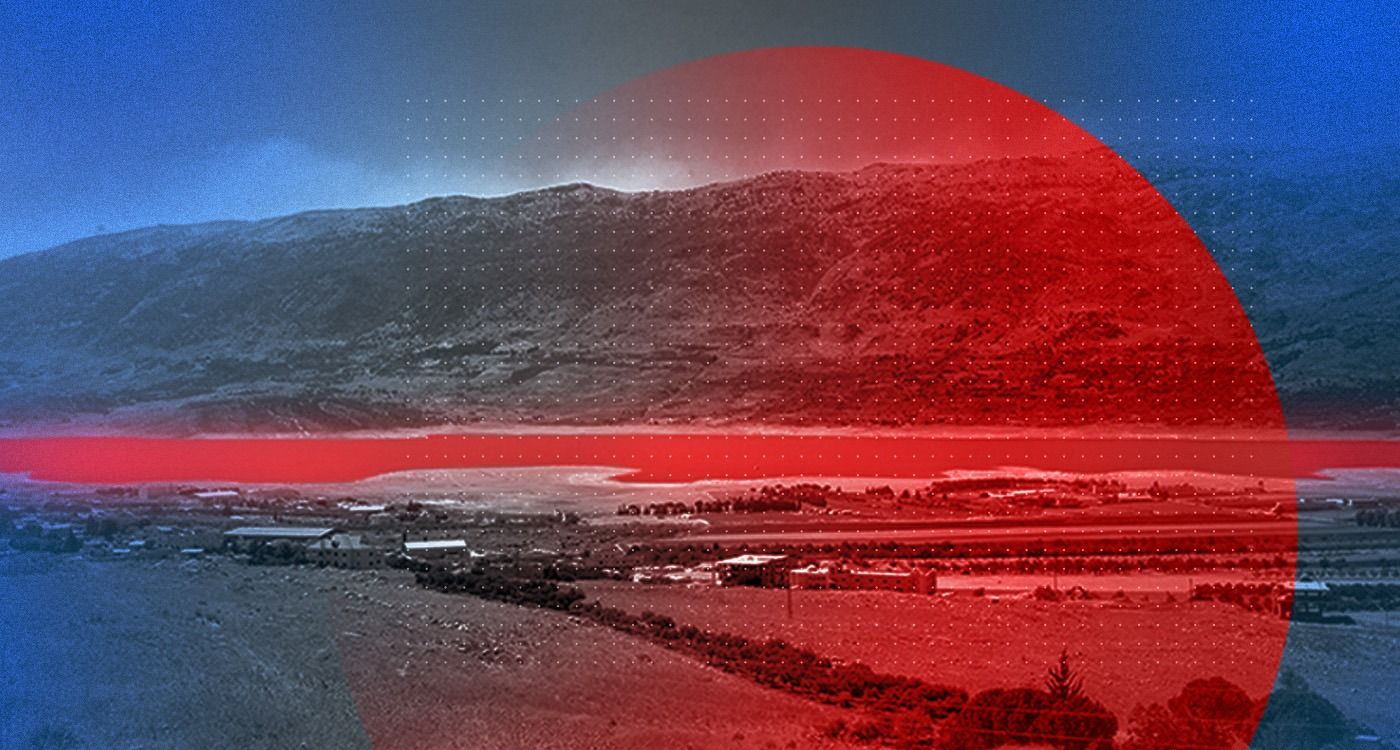
Israeli officials signaled a major escalation in the conflict in southern Lebanon this week, with Prime Minister Benjamin Netanyahu announcing on Friday that Israeli forces had crossed the Litani River while intensifying strikes across Lebanon.
“We struck Beirut just now, and Tyre yesterday, and our forces crossed the Litani River,” Netanyahu declared, adding that Israel “will continue to strike Hezbollah with great force.”
On Friday, IDF Chief of Staff Lieutenant General Eyal Zamir reinforced the message, describing an expanded military campaign aimed at pushing Hezbollah farther from Israel’s northern border.
“The objective is clear — to deepen the blow against Hezbollah, push the threats farther away, and strengthen the defense of the northern communities,” Zamir stated. He added that the Israeli military no longer considers previous operational boundaries restrictive: “The Yellow Line does not limit us — wherever we identify a threat, and wherever we are required to remove a threat, we will act.”
According to Zamir, Israel has inflicted “severe and unprecedented” damage on Hezbollah, claiming more than 7,500 Hezbollah militants have been killed since the start of the war, including 2,500 since the launch of Operation Roar of the Lion.
Reports from southern Lebanon indicate Israeli forces have recently advanced toward the strategic area of Dibbine, raising concerns that the operation may be evolving from a limited border-security campaign into a deeper strategic push into southern Lebanon.
Political Pressure Through Military Expansion
Speaking to This is Beirut, former Lebanese Forces MP Antoine Zahra argued that the strikes on Tyre and the broader Israeli advance are intended not only as military operations but also as political pressure on Hezbollah’s support base and the Lebanese state itself.
Zahra described Tyre and Nabatieh as the two major urban and economic centers of southern Lebanon. “The importance of these cities lies in the fact that they are the principal economic and social centers of southern Lebanon,” Zahra said. “The pressure and systematic bombing are intended to move toward maximum pressure on Hezbollah’s social environment.”
According to Zahra, Israel’s military escalation is also designed to compel the Lebanese state to implement longstanding international demands regarding Hezbollah’s weapons and state authority.
“Internationally, regionally, and even locally, Lebanon’s demands are tied to one central issue: extending the authority of the state over all Lebanese territory through the withdrawal of armed militias and their weapons,” he stated.
Zahra added that while Israel may ultimately seek a peace agreement, Lebanon’s immediate priority remains achieving a “stable and lasting security arrangement” and completing border demarcation.
He also warned that no Israeli retreat would happen before the State asserting it’s authority and the establishment of a security agreement with Israel and the demarcation of the Lebanese Israeli Borders.
Strategic Geography of the Advance
Retired Lebanese Armed Forces General Khalil Gemayel provided This is Beirut with a military analysis of the terrain and operational logic behind the Israeli movements.
According to Gemayel, the Khardaleh area of southern Lebanon has effectively become a new operational axis after heavy destruction altered the battlefield geography. He described two primary advances, one moving from Deir Seryan toward Zawtar and another climbing toward Mazraat al-Hamra and the strategic Beaufort Castle (Chaqif) area before reaching the outskirts of Yahmour.
“They decided to move up toward Chaqif because this area overlooks the entire sector,” Gemayel explained. “It dominates Khardaleh, Iqlim al-Tuffah, and key operational areas from which rockets and drones can be launched.”
The Beaufort Castle ridge and the Ali al-Taher heights are especially significant for commanding wide views over southern Lebanon and northern Israel, including Israeli towns such as Margaliot, Yuval, Maayan Baruch, and Misgav Am in the Galilee region.
Gemayel stressed that Ali al-Taher’s higher elevation approximately 200 meters higher than Nabatieh provides easier control over the city and surrounding areas. “The city of Nabatieh can be controlled by fire from the heights of Ali al-Taher,” he said.
The retired general cautioned that capturing Nabatieh itself would be extraordinarily difficult due to its dense urban environment and demographic concentration. “It’s possible,” he acknowledged, “but extremely costly. The Israelis could certainly reach it, but it would cost them heavily.”
Beaufort Castle and the surrounding Chaqif heights overlook wooded valleys such as Wadi al-Qatrani and Wadi Maleh, areas long viewed as favorable terrain for guerrilla operations, rocket launches, and drone activity.
He suggested that Israeli movement toward Dibbine indicates a broader attempt to dominate these elevated positions and deny Hezbollah operational depth south of the Litani.
A Conflict Entering a New Phase
Crossing the Litani River carries both military and symbolic significance. For decades, the Litani has represented a de facto strategic threshold in southern Lebanon, particularly since the implementation of UN Security Council Resolution 1701 following the 2006 war.
Israeli statements now suggest that operational considerations — rather than previously observed geographic limits — are driving military decision-making.
Whether the current advance remains a temporary pressure campaign or evolves into a longer-term military presence inside southern Lebanon may ultimately depend on Hezbollah’s response, international diplomatic pressure, and the willingness of the Lebanese state to address the unresolved question of armed non-state actors operating outside state authority.
Read more


Comments