- Home
- Middle East
- Khamenei Orders Iran’s Enriched Uranium Stockpile to Remain Inside Country: Report
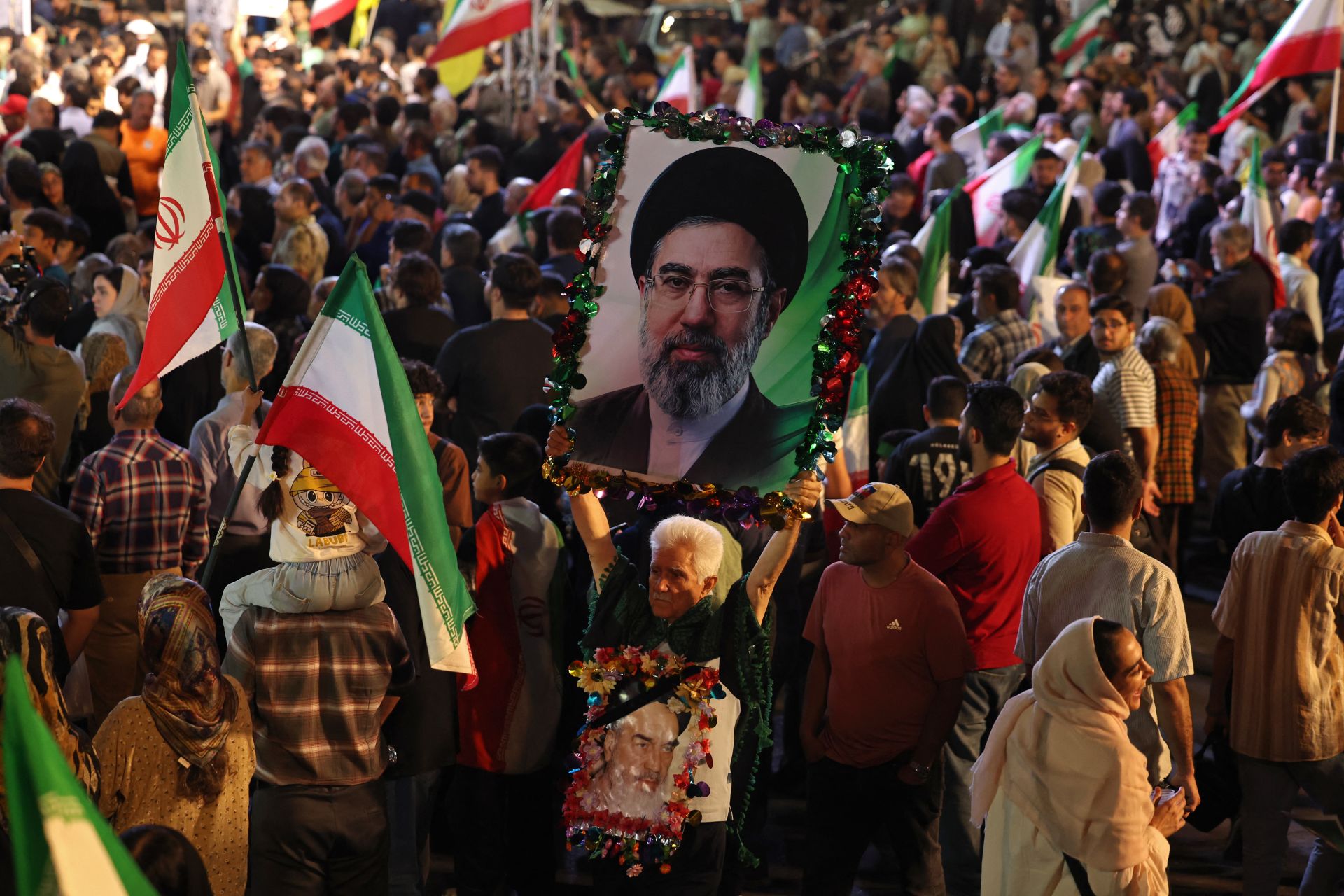
A man holds a portrait of Iran's supreme leader Ayatollah Mojtaba Khamenei while attending the farewell ceremony of Iran's national football team ahead of their departure for the 2026 FIFA World Cup, in Tehran on May 13, 2026. ©ATTA KENARE / AFP
Iran’s Supreme Leader, Ayatollah Mojtaba Khamenei, issued a directive that the country’s stockpile of highly enriched uranium remain inside Iran, according to two senior Iranian sources cited by Reuters on Wednesday.
The directive directly challenges one of the key American and Israeli demands in the talks: the removal of Iran’s near-weapons-grade uranium stockpile from Iranian territory as part of any future agreement.
According to Reuters, the two Iranian sources said Khamenei’s order reflected a growing consensus within Iran’s leadership that transferring the uranium abroad would leave the country vulnerable to future strikes by the United States or Israel.
“The Supreme Leader’s directive, and the consensus within the establishment, is that the stockpile of enriched uranium should not leave the country,” one of the sources told Reuters on condition of anonymity due to the sensitivity of the matter.
The development comes as negotiations mediated by Pakistan remain deadlocked despite a fragile ceasefire that has technically been in place since April 8, following weeks of regional escalation triggered by the U.S.-Israeli strikes launched against Iran on February 28.
Uranium at Center of Stalled Talks
Israeli officials previously told Reuters that U.S. President Donald Trump had assured Israel that any future agreement would require Iran’s enriched uranium stockpile to be removed from the country.
Israeli Prime Minister Benjamin Netanyahu has repeatedly insisted the war cannot be considered over unless Iran’s enriched uranium is removed, its ballistic missile program dismantled, and its support for regional proxy groups ended.
Iran, however, appears to be hardening its position.
According to Reuters, Iranian officials believe the ceasefire could merely be a tactical pause before renewed American or Israeli strikes. Iran’s chief negotiator and parliament speaker Mohammad Bagher Ghalibaf said Wednesday that both “overt and clandestine” enemy movements suggest Washington “is seeking to start a new war.”
President Trump also renewed his threats this week, saying the United States remained prepared to strike Iran again if negotiations failed to produce what he described as the “right answers.”
Iran Rebuilding Faster Than Expected
Meanwhile, CNN reported Thursday that Iran is rebuilding its military capabilities faster than expected, including restarting drone production and restoring missile infrastructure with alleged assistance from both China and Russia.
A U.S. official cited by CNN reportedly said Iran could recover much of its pre-war military capacity within six months, adding that Tehran had “exceeded all timelines” previously estimated by the American intelligence community.
Hormuz Tensions Continue
At the same time, tensions remain high around the Strait of Hormuz, one of the world’s most critical energy corridors. Iran’s newly created “Persian Gulf Strait Authority” announced Thursday that ships transiting through the strait would require coordination and authorization from Iranian authorities, according to Iranian media.
The move drew immediate criticism from the United Arab Emirates. UAE presidential adviser Anwar Gargash described the announcement as “an infringement on the UAE’s sovereignty,” writing on X that attempts to control the Strait of Hormuz were “nothing but pipe dreams.”
The continued dispute over Hormuz remains one of the central obstacles in negotiations, with the U.S. naval blockade on Iranian ports and Tehran’s restrictions on maritime traffic still in effect.
No Clear Breakthrough
Despite ongoing diplomatic contacts, neither side has publicly announced significant concessions. Reuters reported that Iran continues demanding sanctions relief, the release of frozen Iranian assets abroad, guarantees against future attacks, and recognition of its right to continue uranium enrichment.
Iranian officials also maintain that discussions on the nuclear file can only move forward after credible guarantees are provided that the U.S. and Israel will not resume military operations.
According to the International Atomic Energy Agency (IAEA), Iran possessed roughly 440 kilograms of uranium enriched to 60% before major strikes targeted its nuclear facilities last year. The agency says part of that stockpile is believed to remain stored in underground facilities in Isfahan and Natanz.
IAEA Director Rafael Grossi previously stated that some of the remaining material was likely still located inside tunnel complexes at the Isfahan nuclear site.
While Tehran insists its nuclear program is civilian, Western powers and Israel argue that uranium enriched at such levels has no credible peaceful use and significantly shortens the path toward a potential nuclear weapon.
Read more

Comments