- Home
- Middle East
- Trump Warns Iran ‘There Won’t Be Anything Left’ as US-Israeli Strike Preparations Intensify
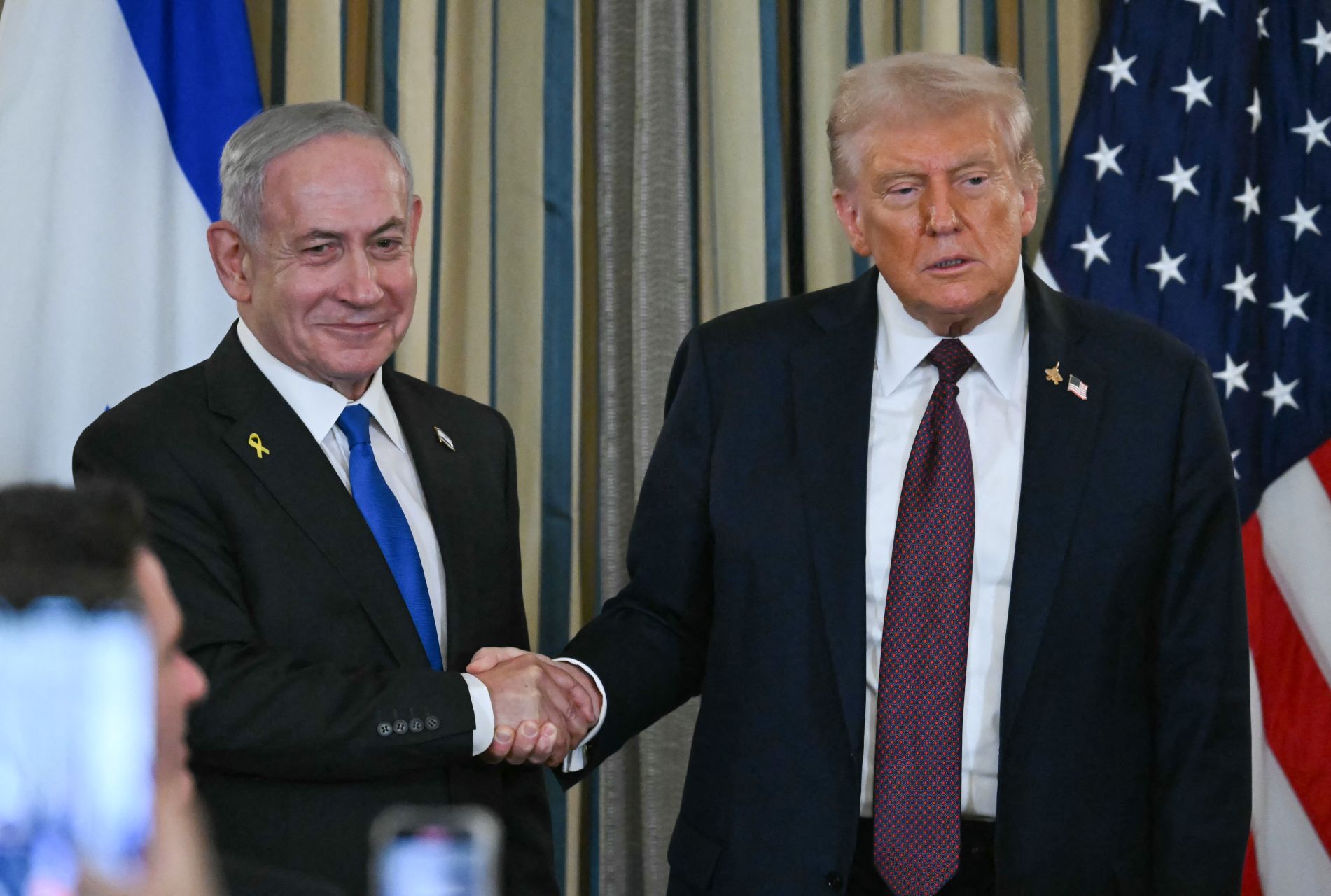
U.S. President Donald Trump and Israeli Prime Minister Benjamin Netanyahu shake hands after a joint press conference in the State Dining Room of the White House in Washington, DC, on September 29, 2025. ©Andrew Caballero-Reynolds / AFP
U.S. President Donald Trump issued a new warning to Iran on Sunday evening, declaring that Tehran must move quickly toward a peace agreement or face devastating consequences.
“For Iran, the clock is ticking, and they better get moving FAST, or there won’t be anything left of them. TIME IS OF THE ESSENCE!” Trump wrote on Truth Social.
The warning came hours after Israeli Prime Minister Benjamin Netanyahu held a phone call with Trump focused on the war with Iran and the possibility of renewed military action, according to Netanyahu’s office and Israeli media reports.
Netanyahu was later expected to convene a restricted security cabinet meeting in Jerusalem to discuss the next phase of the confrontation.
Readiness for escalation?
Speaking Sunday in his weekly cabinet meeting prior to his conversation with Trump, Netanyahu said Israel remained prepared “for every scenario,” while stressing that “our eyes are open regarding Iran," and referring to the U.S. president, he added, “I will certainly hear impressions from his trip to China, perhaps other things as well. Certainly, there are many possibilities, and we are prepared for every scenario.”
On the other hand, Iranian armed forces spokesman Abolfazl Shekarchi warned that any renewed attack on Iran would trigger what he described as “unprecedented, offensive, surprising and tumultuous scenarios” against American military assets.
Meanwhile, Iran’s deputy parliament speaker, Hamidreza Hajibabaei, warned that any strike targeting Iranian oil infrastructure could lead Tehran to block global access to Gulf oil supplies “for an extended period.”
Nuclear talks remain deadlocked
Despite the April 8 truce brokered between Washington and Tehran, negotiations aimed at ending the war remain stalled.
Iranian media on Sunday accused the United States of refusing to offer meaningful concessions in its latest response to Tehran’s negotiation framework.
According to the Iranian Fars news agency, Washington demanded that Iran maintain only one operational nuclear facility and transfer its stockpile of highly enriched uranium to the United States.
The report added that Washington refused to release “even 25 percent” of Iran’s frozen overseas assets or offer compensation for war-related damage.
The Mehr news agency described the negotiations as heading toward “an impasse,” accusing Washington of attempting to secure through diplomacy concessions it “failed to obtain during the war.”
Iran’s proposal reportedly included demands for lifting the U.S. naval blockade imposed on Iranian ports since April 13; maintaining Iranian control over the Strait of Hormuz; ending fighting on all fronts, including Lebanon; and lifting sanctions.
In fact, Iran's clerical state, Hezbollah's patron, has demanded a lasting ceasefire in Lebanon before any broader peace agreement with Trump, who has been frustrated by Tehran's refusal to accept a deal on his terms.
Sunday saw more unrest in parts of the region, where a drone strike triggered a fire near a nuclear power station in the emirate of Abu Dhabi, authorities said, reporting no injuries or impact on radiation levels.
Iranian-backed armed groups equipped with drones are based in Iraq, while Tehran's allies in Yemen, the Houthi rebels, also possess combat-grade UAVs.
China Attempts to enter Hormuz diplomacy
The crisis also featured prominently during Trump’s recent summit with Chinese President Xi Jinping in Beijing earlier this week.
Trump said Xi assured him that China would not provide military aid to Iran and offered to play a role in reopening the Strait of Hormuz, one of the world’s most strategic oil shipping corridors. President Trump, along with Secretary of State Marco Rubio, highlighted that the United States is not asking for China’s help with regard to reopening the Strait of Hormuz or with ending the conflict with Iran altogether. Rather, they pointed out that both the U.S. and China agree that the strait should not be militarized.
No major diplomatic breakthrough emerged from the talks.
Read more


Comments