- Home
- Middle East
- Iran’s Revolutionary Guard Warns U.S., Sets Deadline to Lift Naval Blockade
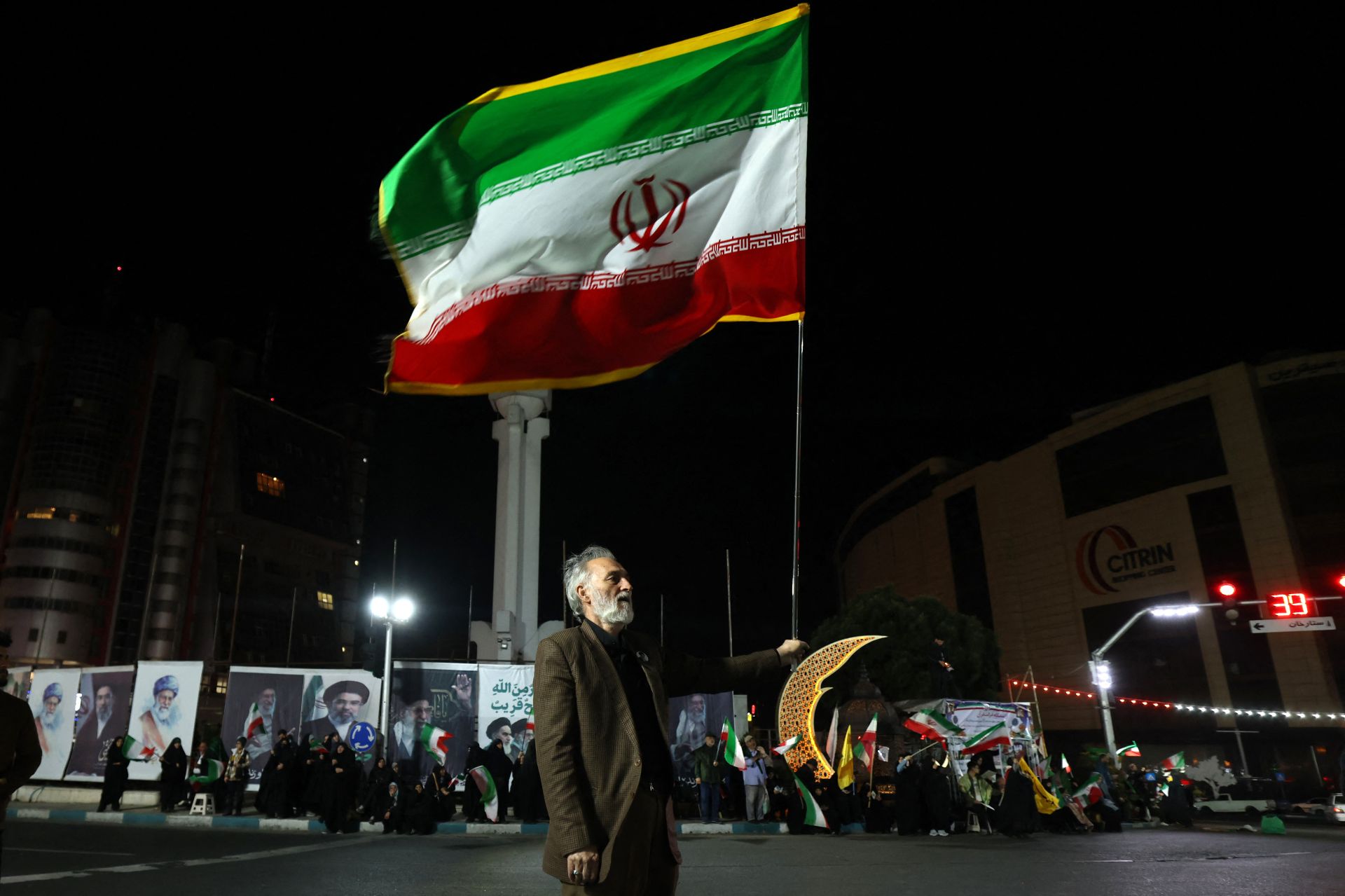
A man holds an Iranian flag during a rally in support of Iran's supreme leader Ayatollah Mojtaba Khamenei at Sadeghyeh Square in Tehran on April 27, 2026. ©ATTA KENARE / AFP
Iran’s Islamic Revolutionary Guard Corps (IRGC) intelligence arm issued a series of new warnings on Sunday, saying Tehran has given Washington a deadline to lift its naval blockade on Iranian ports, as tensions escalate alongside fragile diplomatic efforts.
The IRGC said on Sunday that Iran had granted the Pentagon a “final deadline” to end the blockade imposed on April 13, following the collapse of initial U.S.-Iran talks aimed at ending the war.
According to reports by Tasnim news agency, in a sharply worded statement, the IRGC warned that U.S. President Donald Trump now faces a choice “between an impossible military option or a bad agreement” with Iran, adding that Washington’s room for maneuver has narrowed.
Escalation warnings amid stalled diplomacy
The warning comes as the United States prepares to respond to a revised Iranian proposal submitted days earlier via Pakistani mediation, part of ongoing efforts to reach a framework agreement to end the conflict.
Iranian officials have maintained a dual-track approach, signaling readiness for both diplomacy and confrontation.
Deputy Foreign Minister Kazem Gharibabadi said on Saturday that Tehran does not trust Washington’s intentions but still considers diplomacy based on “national interests” the preferred path forward.
He added that Iran is fully prepared for both scenarios: a negotiated settlement or continued military escalation.
Proposal seeks phased deal, delays nuclear talks
The latest Iranian proposal, a 14-point plan reported by Tasnim, calls for a permanent end to the war, a full withdrawal of U.S. forces from the region, and the lifting of the naval blockade, alongside the reopening of the Strait of Hormuz.
However, the plan reportedly postpones negotiations over Iran’s nuclear program to a later stage, a sequencing Washington has consistently rejected, insisting that nuclear issues be addressed from the outset.
President Trump confirmed he is reviewing the revised proposal but has already hinted at possible rejection, particularly over the absence of immediate commitments on the nuclear file.
The exchange of warnings and proposals underscores a widening gap between the two sides, even as mediation efforts continue.
Read more



Comments