- Home
- Middle East
- U.S. Hits Iran With New Sanctions, Warns Against Hormuz ‘Fees’
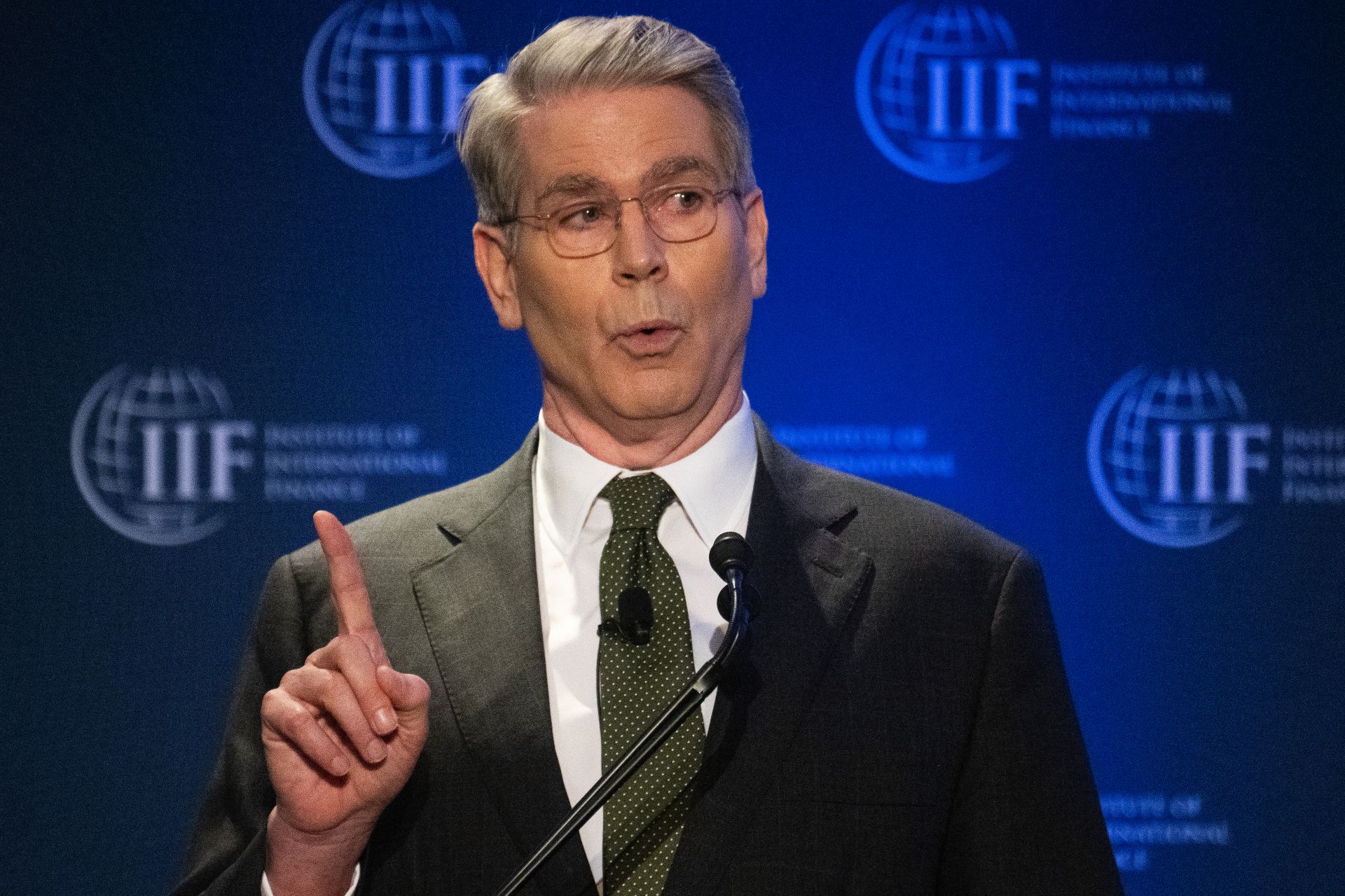
US Treasury Secretary Scott Bessent speaks during the Institute of International Finance (IIF) Global Outlook Forum in Washington, DC on April 23, 2025. The International Monetary Fund and World Bank \ ©Jim WATSON / AFP
The United States on Friday imposed new sanctions on Iran, targeting three Iranian exchange companies, while warning that any attempt to charge transit fees in the Strait of Hormuz could trigger further punitive measures.
According to a statement by the U.S. Treasury Department, the sanctions are part of Washington’s broader effort to cut off what it described as Tehran’s “sources of funding” amid the ongoing conflict.
In a separate warning, the Treasury cautioned against paying any “fees” to Iran in exchange for safe passage through the Strait of Hormuz, stressing that such payments could expose individuals and entities to U.S. sanctions.
The move comes as tensions around the strategic waterway intensify, with Iran previously signaling that access to the strait could be conditioned on its approval, a stance firmly rejected by Washington.
Iran Submits New Proposal Via Pakistan
At the same time, Iran has delivered a new proposal to the United States through Pakistani mediation, in an effort to reach a final agreement to end the war, according to Iranian state media.
The official IRNA news agency reported that “the Islamic Republic of Iran submitted its latest proposals for negotiations to Pakistan, acting as mediator in talks with the United States,” without providing further details.
The development follows a series of stalled diplomatic efforts and comes amid continued uncertainty over the direction of negotiations.
However, President Trump said Friday he was unhappy with a new proposal from Iran for peace talks with the United States and threatened to "blast them to hell" if they failed to strike a deal.
Mounting Pressure Amid Fragile Diplomacy
The latest sanctions and diplomatic exchanges highlight the dual-track approach currently pursued by Washington: increasing economic pressure while keeping negotiations alive through indirect channels.
With the Strait of Hormuz remaining a central point of leverage and the nuclear issue unresolved, the path toward a comprehensive agreement remains uncertain, even as both sides continue to engage through intermediaries.
Read more

Comments