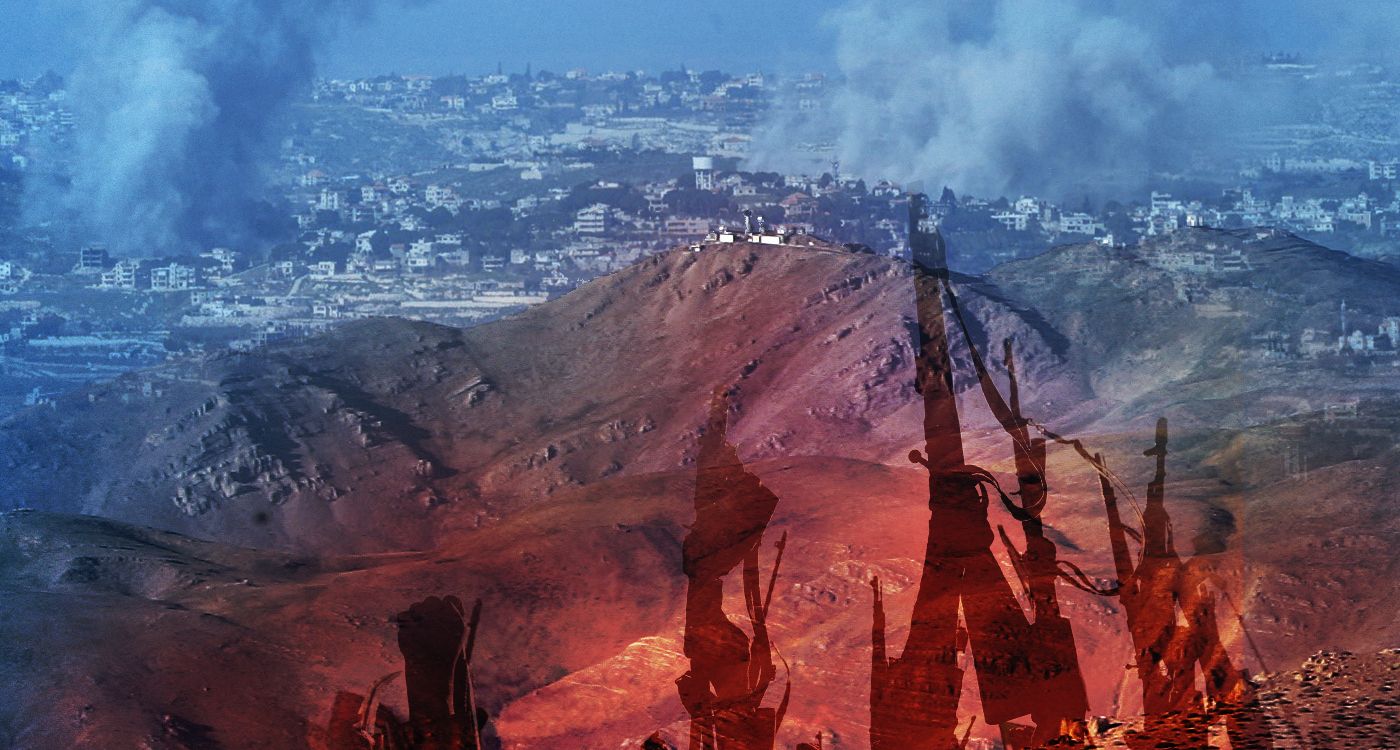
For nearly 60 years, the Shia of southern Lebanon have known only the rule of militias. This reality dates to 1969, when the Lebanese state ceded part of its sovereignty to Palestinian armed groups, allowing them to launch attacks against Israel. Since then, the region has fallen under a succession of armed actors, culminating in the firm dominance of Shia militias from the late 1980s to the present, first the Amal Movement and then Hezbollah.
During this time, southern Lebanon became a battlefield with Israel, beset by recurring cycles of war that caused thousands of casualties, widespread destruction, and the repeated displacement of much of the region’s population. This prolonged history of violence has engendered deep-seated anger, resentment, and fear across generations of Shia in southern Lebanon.
This, in turn, has fostered a persistent inclination among Shia in southern Lebanon to seek protection from powerful actors capable of providing security and retaliation, reinforcing cycles of violence and entrenching militia power. The relationship between southern Shia and Shia armed groups, particularly Hezbollah, has been deeper and more firmly established than their ties to earlier Palestinian or leftist organizations. This is largely due to shared religious and sectarian identity, which has given this relationship greater cohesion and continuity.
Hezbollah benefited from a unique advantage after the end of the Lebanese Civil War in 1990, as it was allowed to retain its weapons under the banner of “resistance” while most other factions were disarmed. This gave the group a prominent role both politically and militarily, consolidating its position as the dominant actor in the south.
Over time, its influence expanded beyond southern Lebanon, extending into control of key segments of the country’s political, security, and military spheres. This growth in power deepened the bond between Hezbollah and the Shia community in Lebanon, particularly in the south.
Today, however, the Shia community finds itself in the grip of a profound crisis after Hezbollah sustained heavy losses in its successive wars with Israel in 2024 and 2026. The Shia community’s suffering goes beyond the loss of life, the destruction of homes and the inability to return to the border villages now under Israeli occupation. It also reflects a deeper crisis, with existential questions going unanswered: Why did this collapse occur? What justifies such immense sacrifices? And what lies ahead?
In the past, Hassan Nasrallah, Hezbollah’s longtime leader who was assassinated in September 2024, served as a key source of reassurance to the Shia community, helping to calm fears and contain anxiety. He possessed a unique ability to speak to this community and held significant moral authority within it. After his death, Lebanese Shia lack not only answers to their questions but also a figure capable of addressing them. No one in Hezbollah appears able to fill Nasrallah’s role, exacerbating anxiety and tensions within the Shia community.
Hezbollah’s defeats extended beyond the military to the political, media, and psychological spheres. A party that once maintained a coherent narrative—or at least the ability to persuade its constituency—now struggles to rebuild one capable of restoring confidence within its base.
Amid these developments, the Lebanese state now has a historic opportunity to fill the vacuum left by Hezbollah’s defeats and reassert its presence in Shia-populated areas. In this context, the government has taken a series of steps aimed at stripping legitimacy from Hezbollah’s weapons and banning its military activities, effectively placing it outside the law.
At the same time, President Joseph Aoun has outlined a path out of the crisis based on direct diplomacy between Lebanon and Israel. The aim is to open the door to a sustainable resolution and break the cycle of chronic conflict.
Now, the leadership of the Lebanese Armed Forces must translate these government decisions into concrete actions on the ground, safeguard the negotiation process set forth by Aoun, and begin restoring, at long last, what the Lebanese state relinquished since 1969.

Comments