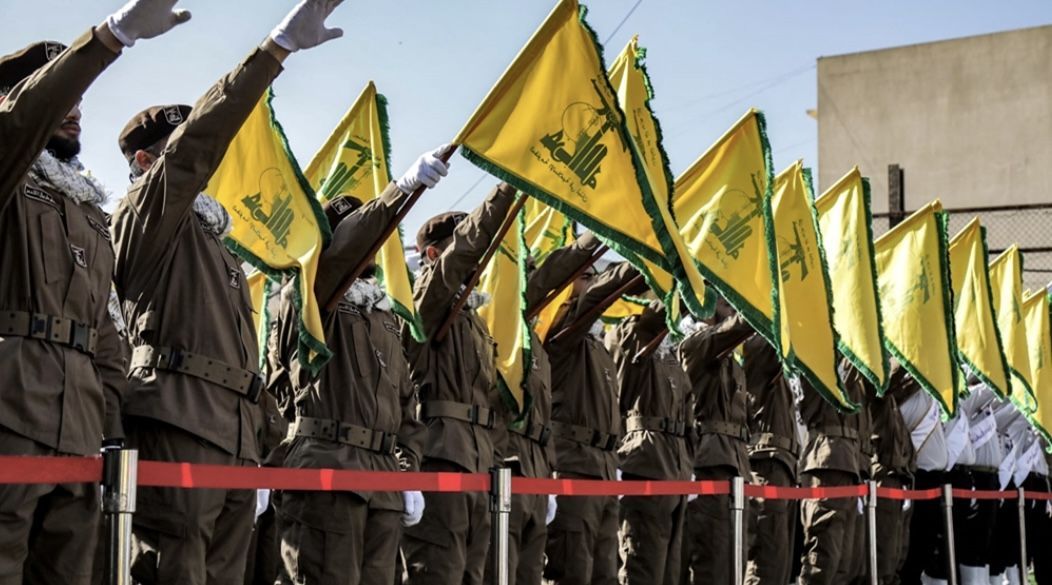
An investigation by the Documentation Center Political Islam (DPI) shed light on the extensive global financial networks of the Iran-backed Hezbollah, including its operations across Europe.
The report draws on publicly available sources such as court records, corporate registries, and government documents. It highlights how Hezbollah combines business structures to sustain its global activities.
Global Reach and Illicit Financing
According to the study, Hezbollah, designated by several Western countries as a terrorist organization, continues to maintain a transnational presence spanning the Middle East, Latin America, Africa, and Europe. The group remains a key component of Iran’s so-called “Axis of Resistance.”
The report alleges that Hezbollah is involved in a wide range of illicit activities, including drug trafficking, money laundering, oil smuggling, and the trade of diamonds and art. U.S. government assessments cited in the study estimate that around one-third of the group’s funding originates from criminal enterprises worldwide.
Activities and cases
The study also details Hezbollah-related activity in Austria, including a 2020–2021 court case in which a Lebanese national was convicted of membership in the terrorist organization. The court found that he had been active within Hezbollah since 2006, recruited around 250 individuals, and participated in ideological and military training activities.
Another case cited in the report involves the dismantling of a major drug trafficking network in 2021 during “Operation El Capta.” The criminal group allegedly smuggled large quantities of Captagon and cocaine from Lebanon to Europe and onward to the Middle East, using Austria and Belgium as transit points.
A pizzeria near Salzburg was reportedly used as a front for operations before the network was shut down and several individuals were convicted by Austrian courts.
Calls for coordinated action
The report concludes that Hezbollah’s financing structure relies on a complex interplay between legal business activity and criminal networks, enabling it to exploit regulatory gaps across jurisdictions. It warns that Europe’s fragmented legal approach limits the effectiveness of countermeasures.
Lina Khatib, one of the study’s authors, said the findings underline the need for stronger international coordination and a unified European legal stance on Hezbollah’s classification, arguing that the group’s global financial architecture cannot be effectively countered without consistent cross-border enforcement.



Comments