- Home
- Middle East
- U.S. Weighs New Military Plan in Strait of Hormuz
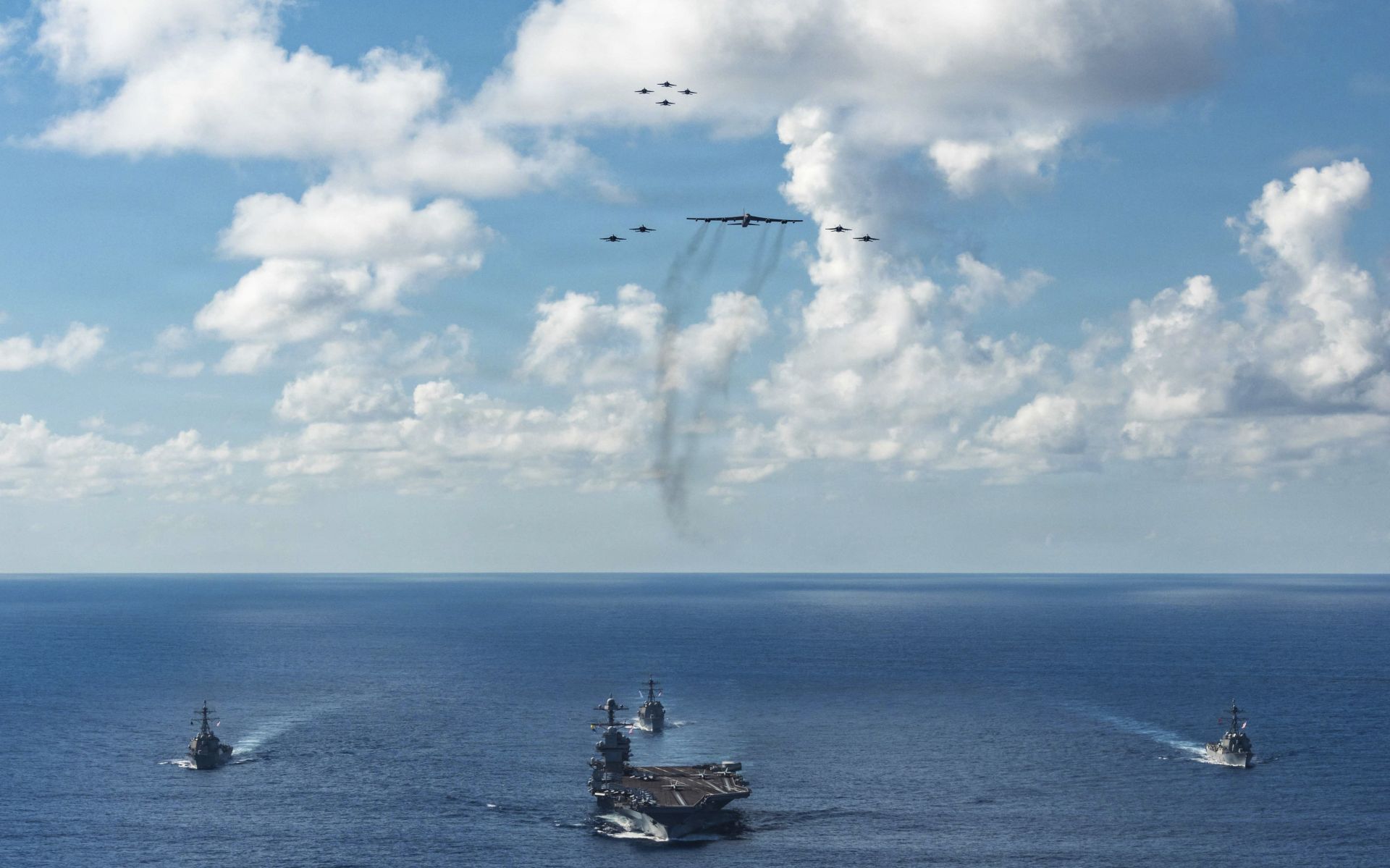
image released by the U.S. Department of Defense shows the USS Gerald R. Ford carrier strike group. ©Gladjimi Balisage / DoD / AFP
Senior U.S. military officials are developing new operational plans targeting Iran’s strategic capabilities in and around the Strait of Hormuz, according to multiple sources familiar with the matter who spoke to CNN.
The proposed options focus on a more aggressive and geographically concentrated military approach, particularly emphasizing what officials describe as “dynamic targeting,” the rapid identification and engagement of mobile Iranian assets. These include fast attack boats, minelaying vessels, and other asymmetric naval capabilities deployed by Iran across the Strait of Hormuz, the southern Arabian Gulf, and the Gulf of Oman.
Persistent Iranian Capabilities
Despite weeks of prior strikes, Iran retains significant coastal strike capabilities, including missiles and drones capable of targeting maritime traffic, according to a report by the Foreign Policy Research Institute.
Tehran also continues to rely on small fast-attack boats and mine-laying assets that remain largely intact and are used to disrupt shipping, according to Reuters.
Sources told CNN that even a sustained U.S. bombing effort in the Strait of Hormuz may not immediately restore safe passage through the waterway. The entrenched nature of Iran’s defensive network, combined with its asymmetric tactics, limits the effectiveness of purely kinetic solutions.
Escalation Scenarios under Review
Beyond maritime strikes, U.S. planners are also considering alternative escalation pathways, according to the report. One such option includes targeting specific Iranian military figures and officials accused of obstructing diplomatic negotiations.
Among those mentioned in internal discussions is Ahmad Vahidi, described by sources as a key figure within Iran’s military leadership. Officials told CNN that certain individuals within the regime are actively undermining efforts to de-escalate tensions.
Officials said that additional strike packages could also focus on Iran’s remaining military infrastructure, including missile stockpiles, launch systems, and production facilities that either survived initial U.S.-Israeli operations or have been repositioned since the ceasefire took effect.
Read more



Comments