- Home
- Middle East
- Severe Injuries to Mojtaba Khamenei, Power Consolidates Among Military Elite: Report
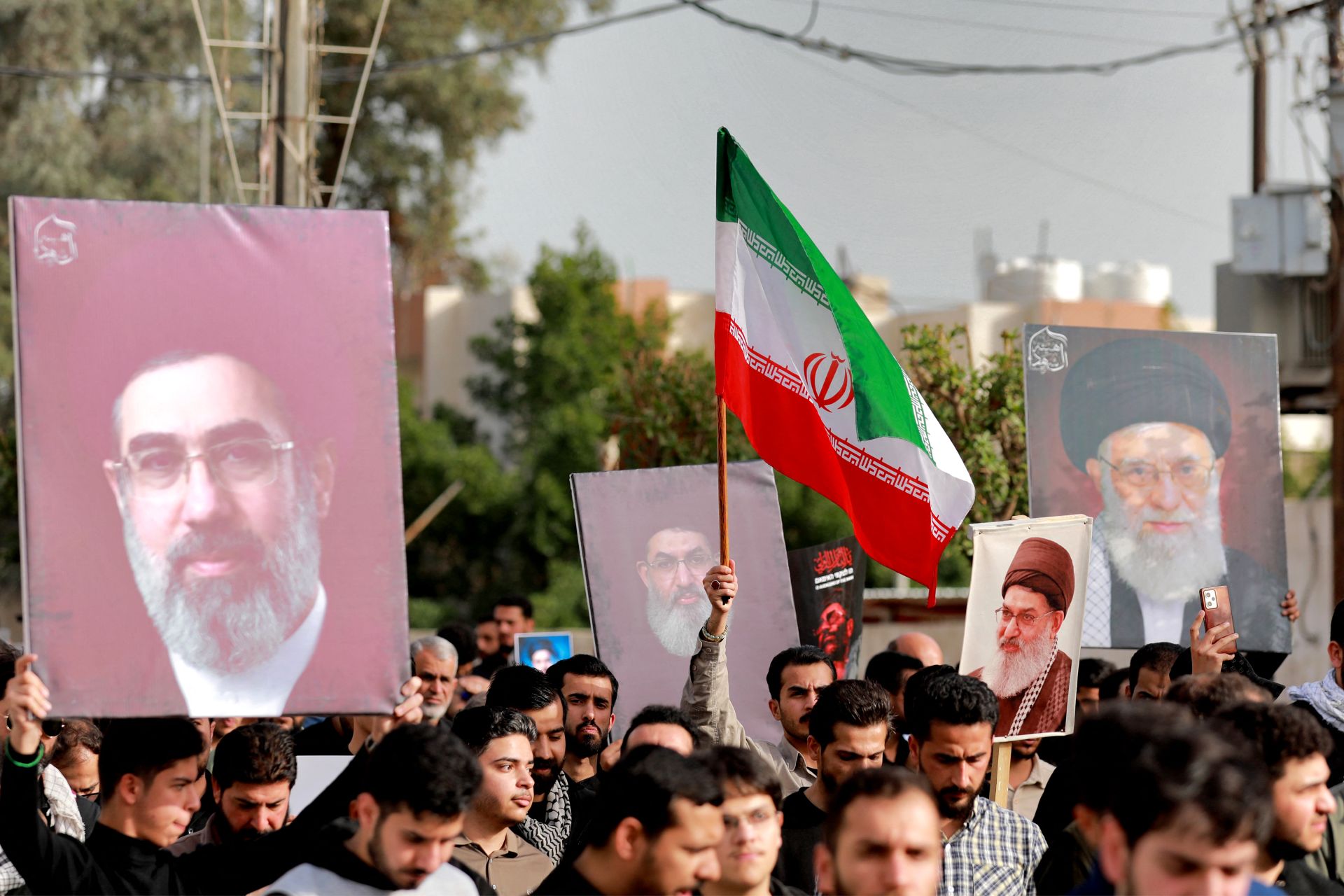
People display pictures of Iran's slain supreme leader Ayatollah Ali Khamenei and his son and successor Mojtaba Khamenei during a demonstration on April 3, 2026. ©MURTAJA LATEEF / AFP
According to a report by The New York Times, decision-making in Iran has narrowed to a small circle of senior military figures following a recent attack that left Mojtaba Khamenei severely wounded and reportedly killed members of his immediate family.
Citing sources familiar with the matter, the newspaper said his injuries are more extensive than previously disclosed, including multiple surgeries to his leg and ongoing treatment that may involve the fitting of a prosthetic limb.
The report further states that Khamenei suffered significant burns to his face, complicating his ability to speak and likely requiring reconstructive procedures. Despite his physical condition, sources quoted by the newspaper indicate that he remains mentally alert.
Medical care is said to be overseen by a senior team, with the reported involvement of Iran’s president, Masoud Pezeshkian, a trained cardiac surgeon, as well as the country’s health minister.
According to the report, concerns about potential tracking by Israeli intelligence have led to highly restricted communication methods. Messages are reportedly transmitted through handwritten notes delivered via couriers, while senior officials including commanders of the Islamic Revolutionary Guard Corps are said to avoid direct contact with him to prevent revealing his location.
In parallel, the report suggests that day-to-day governance is currently being handled by a small group of senior military figures. Among those cited are Ahmad Vahidi, Mohammad Bagher Zolqadr, and Yahya Rahim Safavi. Mojtaba Khamenei is described as retaining a supervisory role, approving decisions but rarely intervening directly.
The claims could not be independently verified, and Iranian authorities have not publicly confirmed the details outlined in the report.
Read more

Comments