- Home
- Middle East
- Khamenei Issued No Mercy, 'Shoot to Kill' Orders
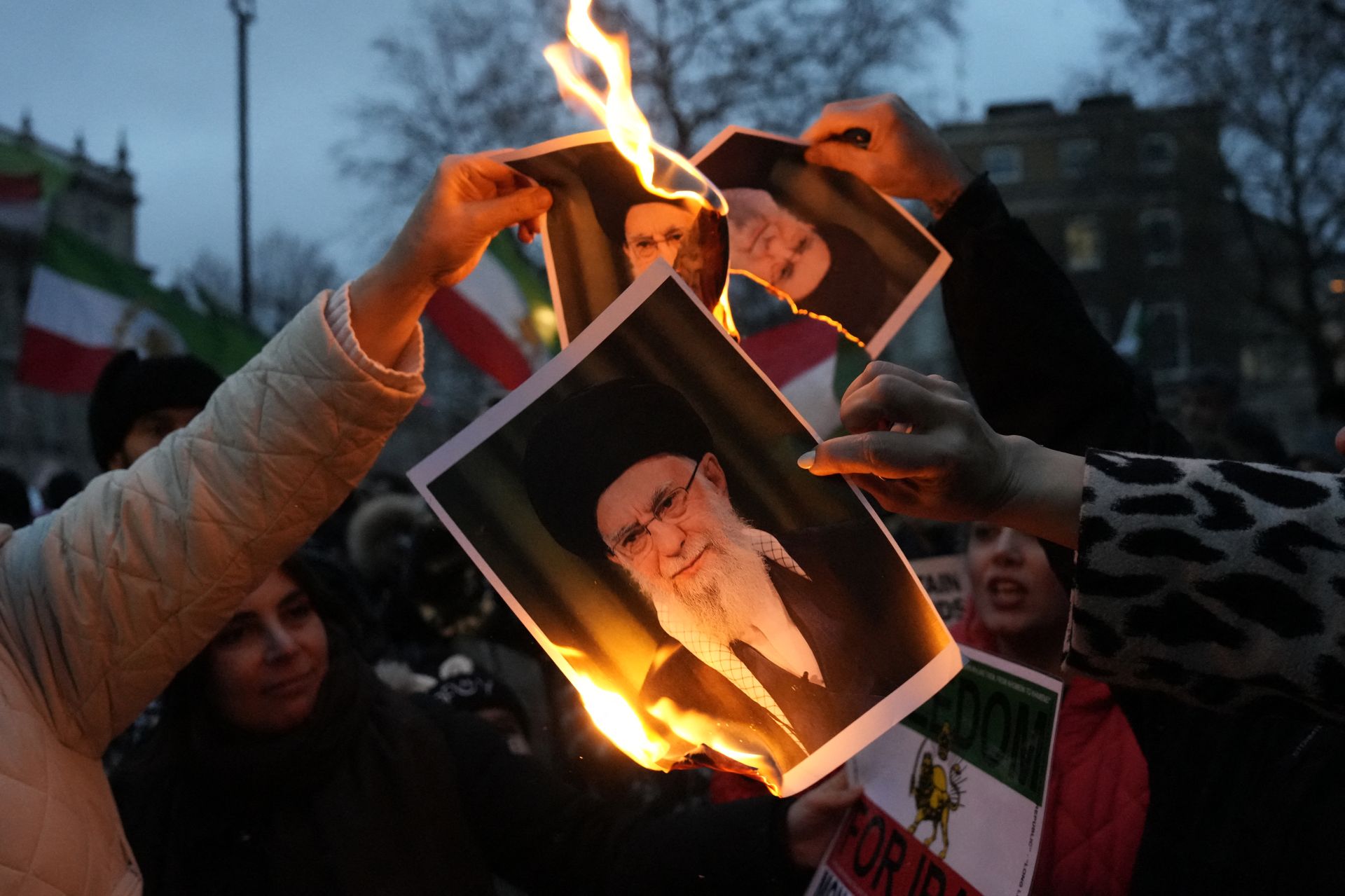
Des manifestants brûlent des images de l’ayatollah Ali Khamenei lors d’un rassemblement de solidarité avec le soulèvement en Iran, organisé par le Conseil national de la Résistance iranienne, sur Whitehall, dans le centre de Londres, le 11 janvier 2026, pour protester contre la répression de l’accès à Internet par le régime iranien et «affirmer leur droit à la légitime défense contre ses forces». ©Carlos Jasso / AFP
Supreme Leader Ayatollah Ali Khamenei ordered Iran's Supreme National Security Council to suppress the protests on January 9 by using "any means necessary," The New York Times reported on Sunday, citing two officials familiar with the matter.
According to the officials, security forces were then deployed to the streets with "shoot to kill" orders and told to show protesters no mercy.
“This is not merely a violent protest crackdown. It is a state-orchestrated massacre,” the Times quoted Raha Bahreini, a lawyer and an Iran researcher at Amnesty International, as saying.
Despite the ongoing internet shutdown obscuring the full scale of the violence, the New York Times verified footage from early January showing regime security forces opening fire on protesters in at least 19 cities across Iran and six neighborhoods in Tehran.
As many as 30,000 people may have been killed across Iran during a two-day crackdown on January 8 and 9, TIME reported on Sunday, citing two senior Health Ministry officials and a separate compilation of hospital data shared with the publication.
Internet blackout and internal divisions
Authorities severed most internet access on January 8 following the circulation of videos showing street demonstrations that turned violent. Hard-line lawmakers argued that connectivity should resume only after unrest is suppressed. Moderates, however, pointed to the economic impact and diplomatic fallout.
Iranian President Masoud Pezeshkian’s son and adviser, Yousef Pezeshkian, called for the immediate restoration of internet service on Saturday as the regime’s nationwide internet blackout hit the two-week mark.
“Maintaining the internet blockade will generate discontent and widen the gap between the people and the government,” Pezeshkian said. He warned that cutting connectivity posed a greater risk of instability than allowing access, adding that restrictions would only delay unrest rather than prevent it.
Iran’s Interior Ministry has not responded to Pezeshkian’s call. However, as economic losses mount and internal dissent becomes increasingly visible, Iran’s leadership now faces growing pressure to decide whether maintaining the internet blackout is worth the cost of delaying the next wave of images from reaching the outside world.
Iranian merchants have only 20 minutes of internet access per day to conduct their operations with other countries, Farsi-language news network Iran International reported on Sunday. Public frustration over the regime’s internet blackout is growing, with the restrictions increasingly disrupting daily life across Iran.
Read more

Comments