- Home
- Middle East
- Maritime Incidents Underscore Fragility of Trump-Extended Iran Ceasefire
©HANDOUT / IRANIAN ARMY OFFICE / AFP
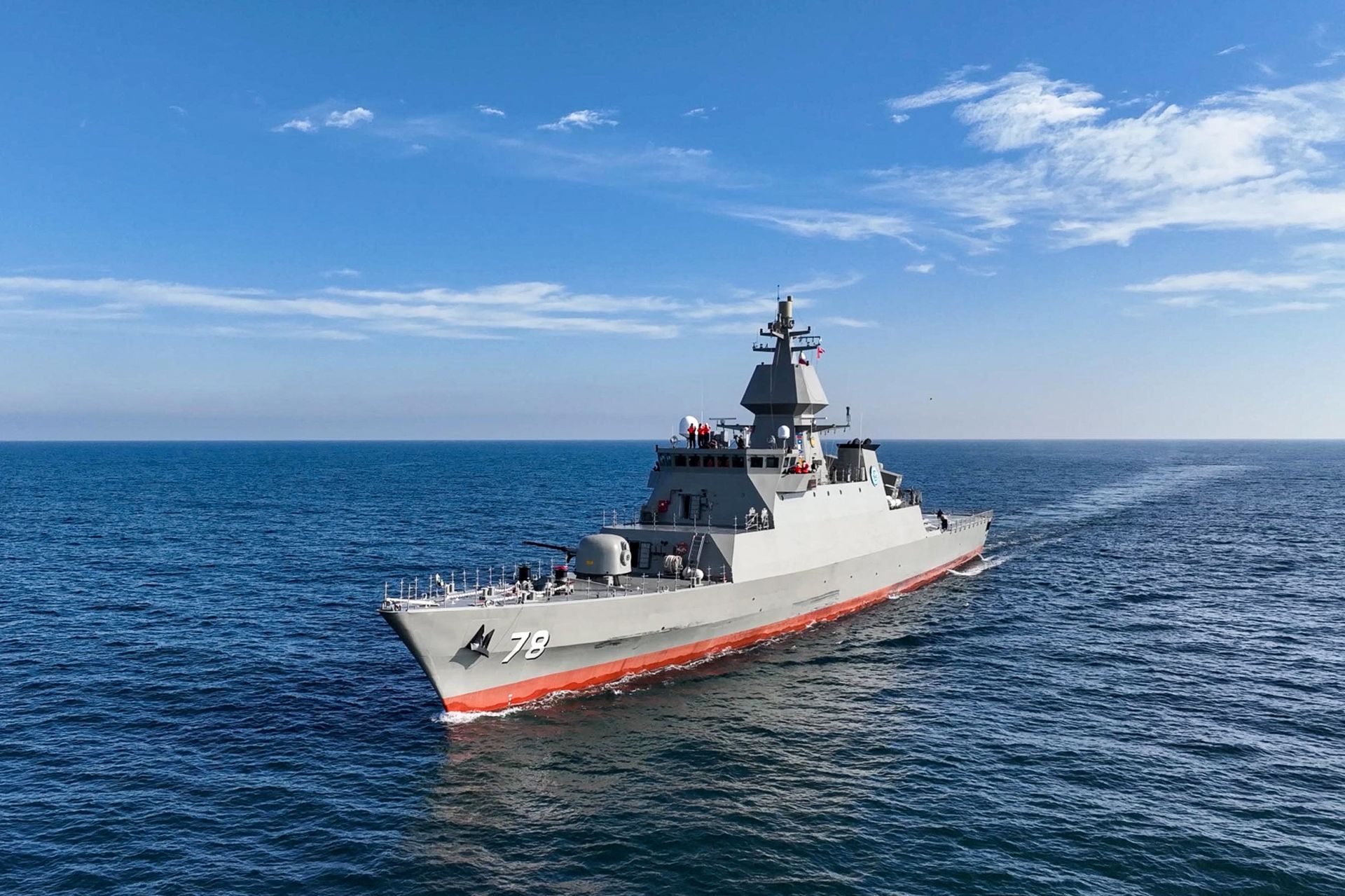
A series of maritime incidents occurred on Wednesday in and around the strategic Strait of Hormuz, at the heart of the standoff between United States and Iran, highlighting the fragility of the truce unilaterally extended by Donald Trump with Iran.
Just hours after the U.S. president announced the extension of the ceasefire, which has been in effect since April 8, the Islamic Revolutionary Guard Corps (IRGC), Iran’s ideological army, said it had intercepted two vessels attempting to pass through the Strait of Hormuz, which is subject to a dual blockade by the United States and Iran.
“Both vessels in violation were seized by IRGC naval forces and directed toward the Iranian coast,” the Guards said in a statement.
A few hours earlier, the British maritime security agency UKMTO had reported that a container ship had been struck by Iranian fire off the coast of Oman, and that a cargo vessel leaving the Strait of Hormuz had been targeted by gunfire—of unspecified origin—off the coast of Iran.
It was not immediately clear whether these were the same vessels mentioned by the IRGC. These incidents illustrate the precariousness of the truce, as the strategic Strait of Hormuz has become a central issue in the conflict triggered on February 28 by U.S.-Israeli strikes on Iran.
Donald Trump stated that Iran was “financially collapsing” as a result of the blockade of this crucial maritime route for global hydrocarbon transport. For its part, Tehran asserted that the U.S. naval blockade had no impact on the country’s ability to supply essential goods and food to its population.
Diplomatic deadlock
On the diplomatic front, the situation remains unclear, with no resumption so far of talks between the two belligerents aimed at finding a lasting end to a war that has killed thousands—mainly in Iran and Lebanon—and shaken the global economy.
Donald Trump extended the ceasefire with Iran indefinitely on Tuesday evening, just hours before its scheduled expiration, in order to give the Iranians more time to join peace negotiations under Pakistani mediation. He described the extension as lasting until “Iran presents a proposal and the discussions are concluded, one way or another.”
Washington and Tehran were expected to resume talks early in the week in Islamabad, following an initial session on April 11, but their delegations have yet to arrive, with Iran conditioning the resumption of negotiations on the lifting of the U.S. naval blockade.
Tehran had also threatened to resume strikes toward Gulf countries, further endangering global oil supplies. “If their territory and facilities are used by enemies to attack the Iranian nation, they can say goodbye to oil production in the Middle East,” the IRGC warned.
Pakistan’s Prime Minister Shehbaz Sharif said he hoped both parties would succeed in reaching a “peace agreement” during the second round of talks scheduled in Islamabad. He met Wednesday morning with the Iranian ambassador in the Pakistani capital.
Oil prices, which have surged since the outbreak of the conflict, showed no clear direction in Asian trading on Wednesday following the announcement of the ceasefire extension.
On Wednesday and Thursday, the United Kingdom is set to host military officials from around thirty countries to discuss the formation of a mission led by the United Kingdom and France aimed at protecting navigation in the Strait of Hormuz.
AFP
Read more
Comments