- Home
- Middle East
- South Korea Reviews Phased Support for Strait of Hormuz Security
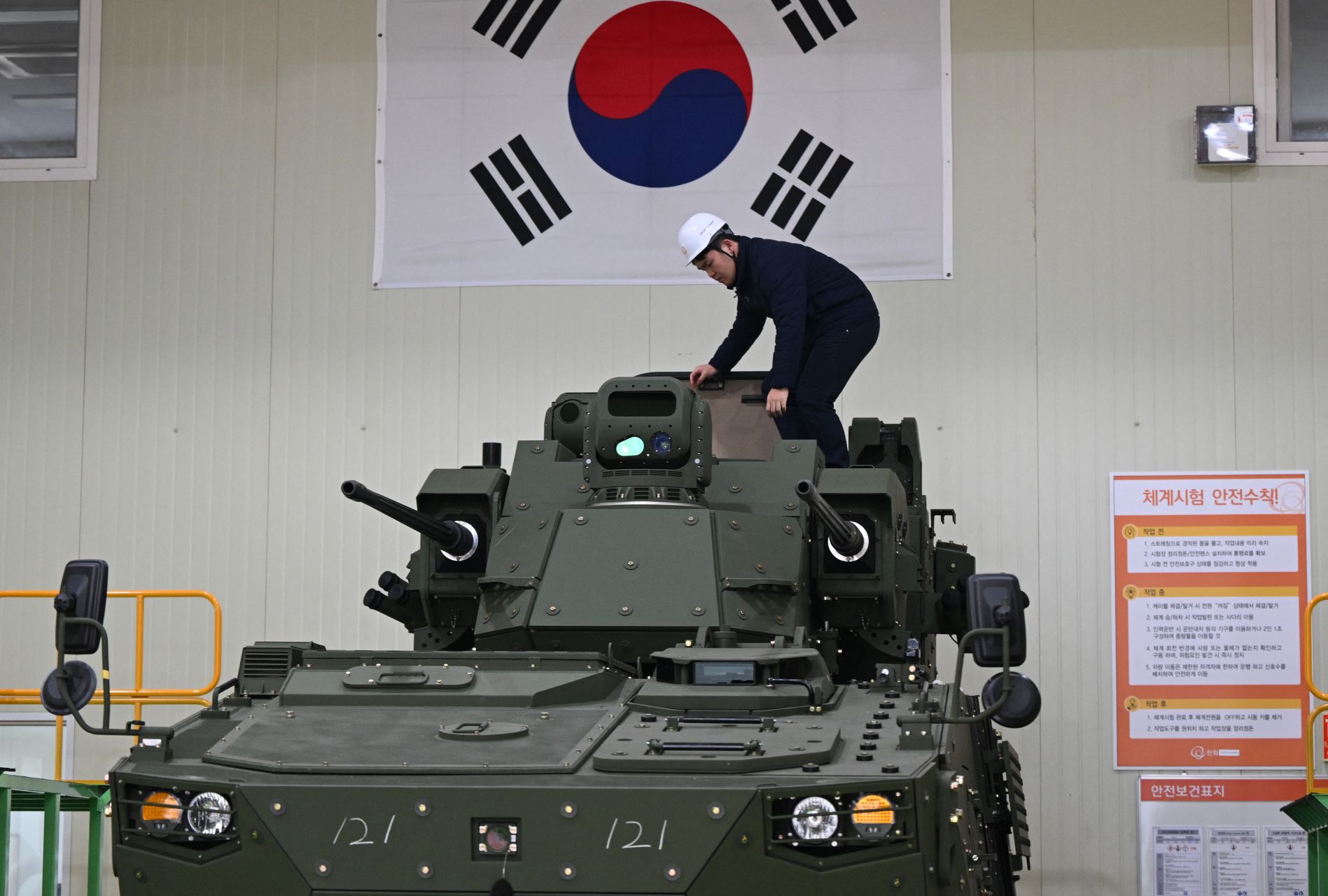
. ©JUNG YEON-JE / AFP
South Korea is considering a phased contribution to international efforts aimed at ensuring safe navigation through the Strait of Hormuz, Defense Minister Ahn Gyu-back said Wednesday, signaling support measures that would stop short of direct military involvement.
Speaking at a press conference with South Korean reporters in Washington, Ahn said he had conveyed Seoul’s position during talks with U.S. Defense Secretary Pete Hegseth on Monday.
“We said, at this level, that fundamentally we will participate as a responsible member of the international community and review ways to contribute in a phased manner,” Ahn said.
According to Ahn, potential forms of support under consideration include political backing, personnel deployments, intelligence-sharing, and the provision of military assets. However, he stressed that no detailed discussions had taken place regarding an expansion of South Korean troop participation.
“There was no deep discussion on specifically expanding our military’s participation,” he said, adding that any decision would have to comply with domestic legal procedures.
Separately, South Korea’s presidential national security adviser, Wi Sung-lac, said to reporters that Seoul was reviewing whether to join the U.S.-led Maritime Freedom Construct, a multinational initiative designed to safeguard shipping lanes through the strategically vital Strait of Hormuz.
Attack on South Korean Vessel
The consultations between the South Korean and U.S. defense chiefs came one day after Seoul condemned an attack on a South Korean-flagged vessel near the Strait of Hormuz last week.
South Korea’s presidential office strongly denounced the incident but said investigations into responsibility for the attack were still underway. Ahn said he discussed the incident with U.S. officials during his visit, noting that Seoul would determine its response only after the investigation is completed.
During Monday’s meeting, Hegseth said Washington expected allies to “stand shoulder-to-shoulder” amid mounting global security threats, citing U.S. President Donald Trump’s authorization of what he described as “Operation Epic Fury” as evidence of the administration’s resolve.
Hegseth also welcomed Seoul’s plans to increase defense spending and assume greater responsibility for security on the Korean Peninsula, describing the measures as a model of alliance burden-sharing.
Read more
Comments