- 20
- Apr.
- 2026

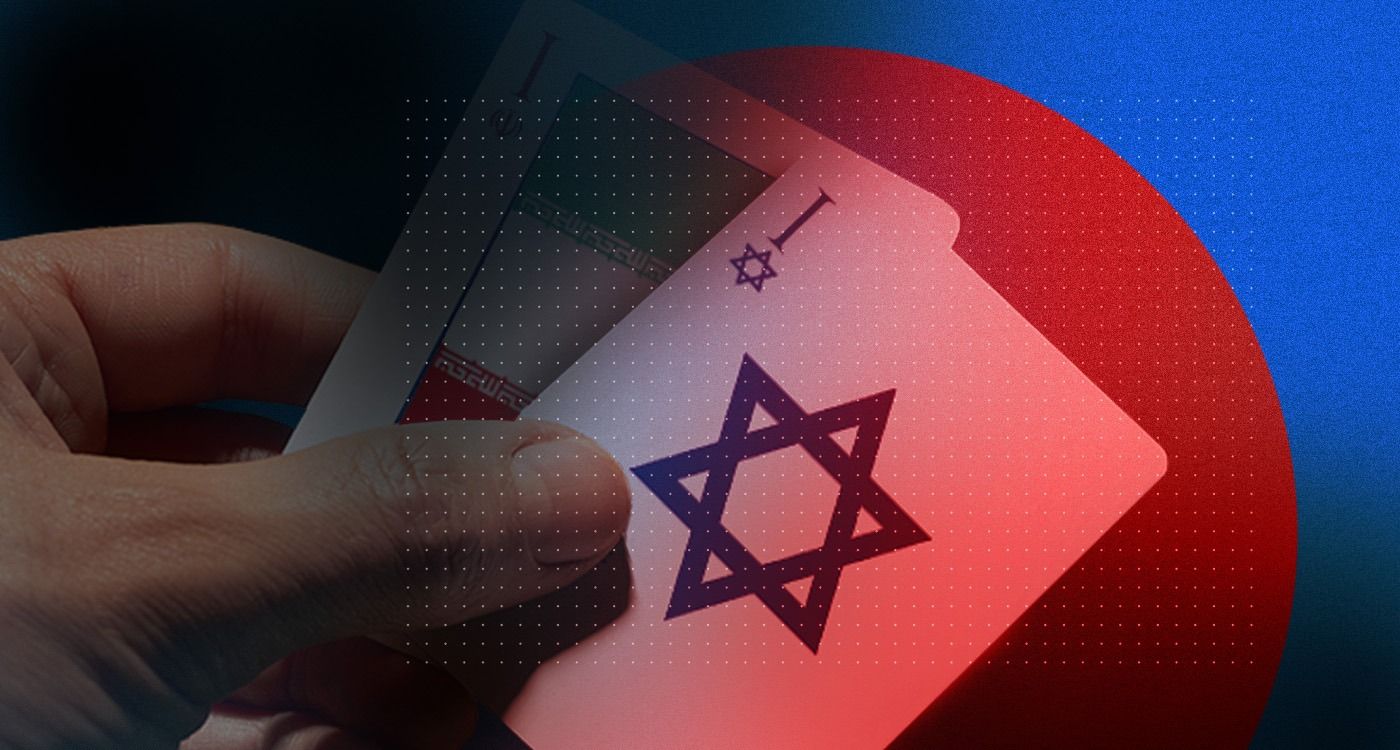
For the first time in decades, the U.S. has brokered direct talks between Lebanon and Israel, beginning with a 10-day cessation of hostilities and a commitment to negotiate in good faith. Washington says lasting calm will require the Lebanese state to reassert sovereignty over non-state arms.
President Donald Trump said the initiative had created “breathing room” between Lebanon and Israel after decades of conflict and emphasized the deal was “not in any way tied to” ongoing negotiations between Washington and Tehran.
“Separating the Lebanese track from the Iranian one means Lebanon is reclaiming its political independence,” Claremont McKenna College international relations professor Hicham Bou Nassif told This is Beirut.
Washington Institute fellow Hanin Ghaddar said that uncoupling the Lebanon-Israel diplomatic track from the U.S.-Iranian one stripped Tehran of its leverage. “Iran sought to use Lebanon as a bargaining chip, but by choosing direct talks, Lebanon has removed itself from Iran’s negotiation arsenal, giving the U.S. and Israel a new path,” she explained.
Why Now
The timing of the April 16 ceasefire announcement reflected both battlefield pressure and political opportunity. Israel’s escalating ground invasion and bombardment heightened the risk of a prolonged conflict. For Lebanon, the choice narrowed to remaining an arena for outsiders’ confrontations or stepping forward to negotiate.
Former U.S. Assistant Secretary of State David Schenker tied Washington’s renewed engagement to Beirut’s own shift in posture. “The U.S. has renewed attention in Lebanon because Lebanon decided to engage in direct talks with Israel,” he told This is Beirut.
“This time, the Lebanese government said: ‘We are a sovereign country, we can make this decision—and we don’t care if one political party, or the IRGC, opposes it.’ And then they did it,” Schenker explained.
Iran’s regional position is weakening. Its influence in Syria has eroded, while sustained Israeli military actions have diminished Hezbollah’s image as a formidable military force. “If Lebanon can get away with making a deal with Israel, the Iranian mini-empire begins to crumble—after already losing Syria, they would lose Lebanon as well,” Bou Nassif argued.
The Trump administration has adopted a “deal-first” approach, using high-level political engagement to elevate the issue. By placing Vice President J.D. Vance, Secretary of State Marco Rubio, and Chairman of the Joint Chiefs of Staff Dan Caine at the center of the process, the White House is signaling that Lebanon is no longer a secondary theater.
Satloff said the involvement of senior officials signals “a likely increase in U.S. military involvement—especially in efforts to disarm Hezbollah and support the Lebanese Armed Forces (LAF).”
The emerging diplomatic framework rests on a core principle that the Lebanese state must monopolize control over arms, posing a direct challenge to Hezbollah’s parallel military structure.
Translating that framework into reality, however, remains the central challenge. Making these provisions meaningful would require expanded LAF capacity, stronger intelligence coordination, and a credible mechanism to reassure Israel that Hezbollah will not simply reconstitute.
Winners, Losers, and Spoilers
For Lebanon, the immediate gain is diplomatic agency. Direct talks elevate the state’s standing and open the door to international support. “If there is peace with Israel, the biggest winner is Lebanon, because the state can no longer be used as a staging ground in proxy wars,” Bou Nassif said.
Israel notches a strategic win from decoupling Lebanon from Iran. Negotiations allow Jerusalem to pursue border security and Hezbollah’s rollback without waiting on broader regional bargains. “For Israel, peace with Lebanon would mean it is almost at peace with all of its neighbors—except Syria,” Bou Nassif noted.
Iran stands to lose the most. Its long-standing strategy has been to bundle regional fronts together, using Lebanon as a pressure point in negotiations with Washington and others. “Iran wanted to say: I have the Strait of Hormuz, and I have Lebanon where my proxies can fire on Israel any time I ask,” Ghaddar said to This Is Beirut.
That leverage diminishes if Lebanon operates independently. Hezbollah faces an even more direct challenge. “The biggest losers would be Hezbollah—and by extension Iran—because Hezbollah can only control Lebanon if it remains a militia; peace undermines that,” Bou Nassif argued.
In the emerging framework, Hezbollah shifts from a power broker to an obstacle, with its disarmament or marginalization becoming a condition for progress. Yet the risks are equally stark.
Hezbollah’s domestic legitimacy is rooted in its “resistance” narrative, which weakens if the state successfully negotiates and enforces a settlement with Israel. The group retains both the capability and the incentive to act as a spoiler.
The Limits of Leverage
The key question now is whether the U.S. can translate the diplomatic architecture of the April 16 ceasefire into enforcement on the ground. Lebanon is not a unitary actor, and the idea that Beirut can simply “deliver” Hezbollah risks colliding with political reality.
Ghaddar cautioned against overestimating the scale of the diplomatic development. “The ceasefire alone is not a solution—Lebanon needs confidence-building measures,” she said.
Schenker offered a sobering assessment: “Announcing talks is not action, however productive and brave. This is a baby step. All the hard work still has to be done.”
Washington retains tools—military aid, reconstruction funding, sanctions, and diplomatic cover—but their effectiveness will hinge on sustained engagement and credible conditionality. The involvement of senior U.S. officials suggests an awareness that past efforts faltered not for lack of frameworks, but for lack of follow-through.
For now, Washington is betting that by decoupling Lebanon from Iran’s orbit, it can reshape both incentives and outcomes. Whether that bet holds will depend less on the architecture of talks than on the willingness and ability of the Lebanese state to assert control where it has historically ceded it.



Comments