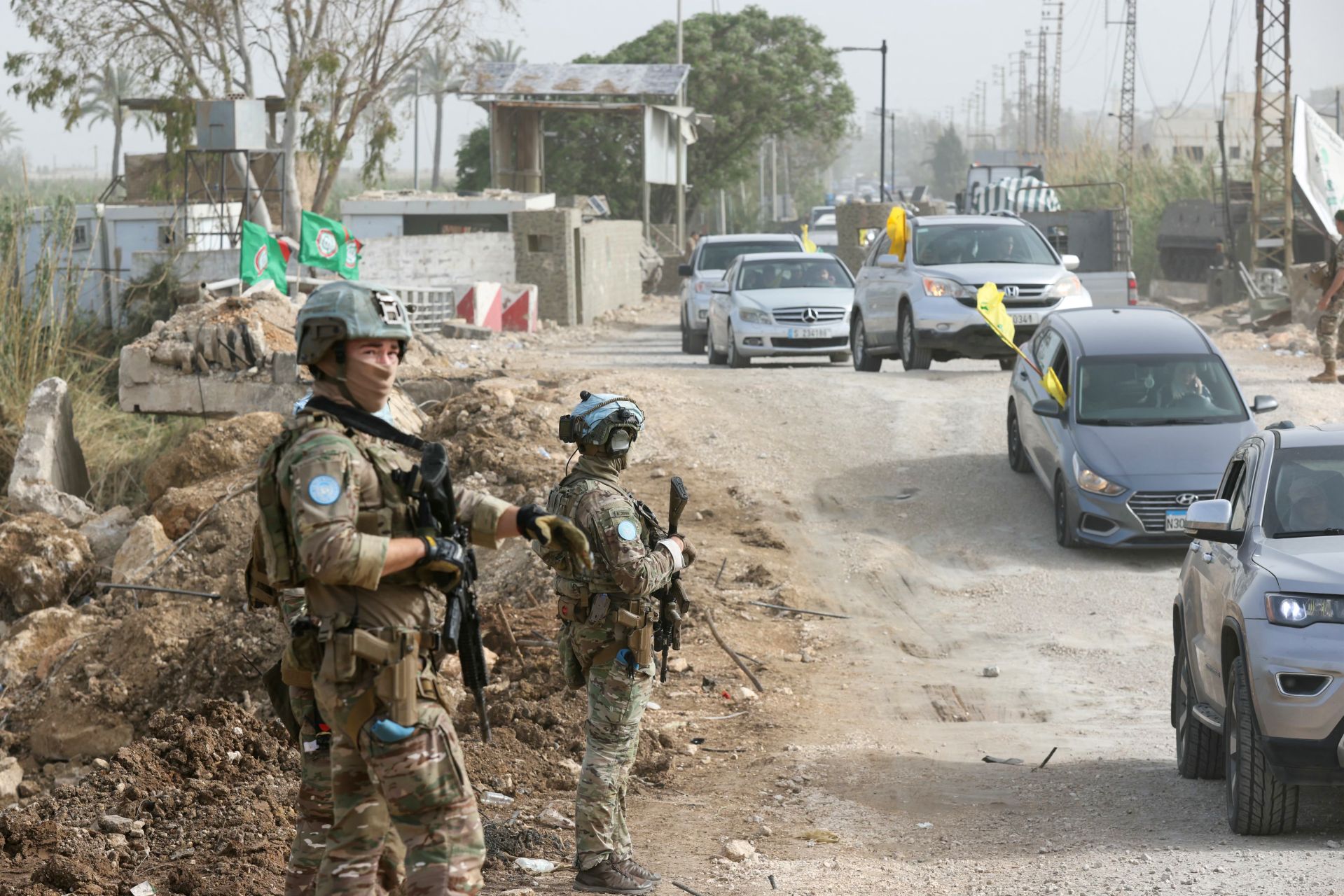
A 10-day ceasefire between Israel and Hezbollah remains formally in place, but continued military activity, warnings to civilians, and exchanges of fire are raising questions about its durability just days into its implementation.
The ceasefire, which came into effect on April 16 under U.S. mediation, allows Israel to take necessary measures in self-defense against imminent or ongoing threats, while prohibiting offensive operations against Lebanese targets.
Israel invokes right to self-defense
The Israeli military said it carried out a strike overnight targeting a rocket launcher in the Qalaouiyeh area in southern Lebanon, north of its forward defensive line. According to military spokesperson Lt. Col. Ella Waweya, the rockers were “loaded and ready for launch.”
In a separate incident, Israeli forces said they identified an armed individual who crossed what they describe as the forward defense line and approached troops, in what was deemed an immediate threat. The military said the individual was subsequently killed.
Israeli officials have framed these actions as consistent with the ceasefire terms, which preserve Israel’s right to act in self-defense.
At the same time, Israeli army Arabic-language spokesperson Avichay Adraee issued renewed warnings on Monday to residents of more than 80 villages in southern Lebanon, urging them not to return or move into areas south of a newly defined boundary referred to as the “yellow line.”
Israeli drones were also reported flying on Monday over southern Lebanon and at low altitude over Beirut, including its southern suburbs.
Hezbollah claims attack amid ceasefire
In its first announced operation since the ceasefire came into effect, Hezbollah said it carried out an attack on Sunday targeting an Israeli armored convoy in the town of Deir Seryan.
According to the group, explosive devices destroyed four Merkava tanks after being detonated in two phases. Hezbollah described the operation as a response to what it called repeated Israeli violations of the ceasefire.
Hezbollah Secretary-General Naim Qassem stated that the group would continue to respond to any breaches, emphasizing that the ceasefire must apply equally to both sides.
Israeli Defense Minister Israel Katz warned on Sunday that Israel could escalate further, threatening action “by land and air” if Lebanon does not meet its commitments.
Lebanese army expands presence
The Lebanese Army has continued to reinforce its deployment in southern Lebanon on Monday, working to reopen roads, remove earth barriers, and establish monitoring positions in sensitive areas.
Units are also engaged in repairing damaged infrastructure, particularly bridges, as part of broader efforts to restore state control and stabilize the region.
Meanwhile, Lebanese civil defense teams began search operations in the Litani River for missing persons.
The ceasefire agreement, brokered by the United States, is intended to create conditions to facilitate direct negotiations between Lebanon and Israel and to reinforce Lebanese state sovereignty, including limiting all armed activity to official security forces.

Comments