- 15
- Apr.
- 2026

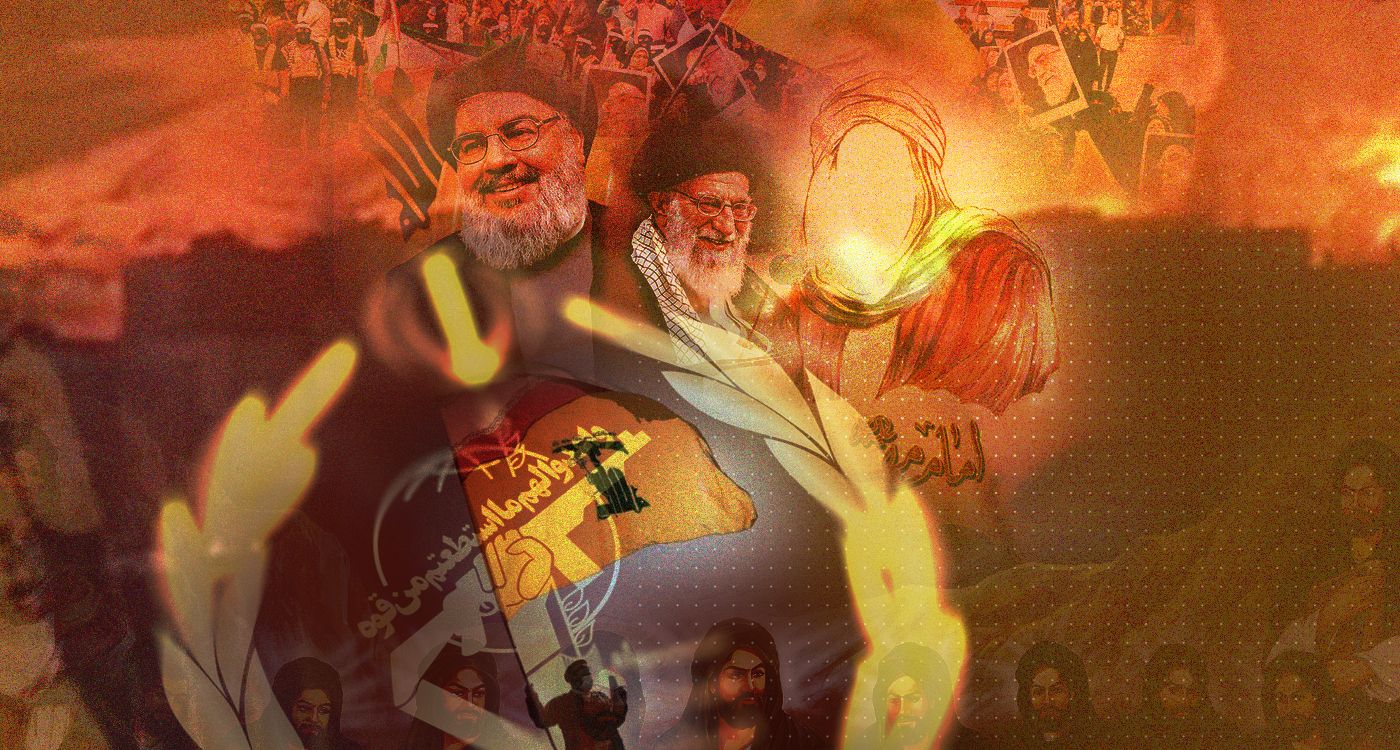
The Shia have a problem. While many Sunni-majority states, from the Gulf states to Turkey, have achieved varying degrees of governance success and economic growth, Shia-led political projects have little to show for themselves. Since the 1979 Islamic Revolution, they have been at the center of wars, terrorist networks, and state failure even as Iran sits atop some of the world’s largest energy reserves. So what, exactly, has gone wrong?
As nationalism and modernization swept across the globe in the 19th century, Sunni Arabs were divided over how to respond. The debate centered on whether Islam should adapt to modern ideas of government and progress or return to what some viewed as its 7th-century purity. This intellectual movement became known as the Arab Renaissance. At roughly the same time, Jews worldwide engaged in a parallel debate—the Haskalah, Hebrew for “enlightenment” or “reason”—about their place in the modern world.
The Sunni conversation produced secular, often military, regimes whose governance record proved disastrous. When those failed, they were replaced by Islamists who insisted “Islam is the solution.” Those efforts, too, ultimately collapsed. The Sunni states that fared better were the ones that evolved more organically with less foreign meddling, chiefly the Gulf monarchies and Turkey. The Jewish Haskalah, meanwhile, gave birth to Zionism, one of the most successful national projects of the modern era, culminating in the creation of Israel.
The Shia, by contrast, were largely absent from these debates. In Sunni-majority countries and Iraq, they were excluded from the political conversation and left on the margins. The few Shia scholars who produced serious work, such as Iraqi historian Jawad Ali and sociologist Ali al-Wardi, rarely addressed the specific political and economic challenges facing their own community. Ali wrote his doctoral dissertation on the Twelfth Shia Imam and the evolution of Shia political thought, but he published it only in German, fearing the wrath of Shia hardliners. The book was translated into Arabic only after his death.
As time passed, swelling Shia populations gravitated toward secular ideologies such as pan-Arab nationalism and communism, yet even within these movements they felt marginalized. They were primed for a national project of their own, but who would do the intellectual heavy lifting? With their intellectual ranks so thin, the vacuum was filled by a toxic alliance of Shia clerics and communists.
The clerics imported notions of Islamic government from the Egyptian Muslim Brotherhood, while the communists contributed the language of the “downtrodden” and mass politics. The grotesque hybrid that emerged was Velayat-e Faqih, the “Guardianship of the Jurist,” that anchored the Islamic Republic of Iran.
The term “Islamic Republic” is itself an oxymoron. In traditional Shia theology, the legitimate ruler, God’s shadow on Earth, is the hidden Twelfth Imam, who has been in occultation since the 9th century. In his absence, ordinary Shia were historically told to obey the clerics on religious matters and to remain loyal citizens of whatever state they lived in. In the Islamic Republic, the supreme leader simply anointed himself the Imam’s deputy and claimed divine authority. Beneath him is an elected president, hence the “republic.”
The communist elements erased borders and fused Iranian imperialism with a transnational Shia identity. The result is a structural deformity seen across countries with significant Shia populations, where cleric-commanded militias within parallel power structures often outmatch the national army.
Whether in Iran through the Islamic Revolutionary Guard Corps (IRGC) or in Lebanon through Hezbollah, this duality erodes the rule of law, subordinates the economy to ideology, and cedes foreign and defense policy to the militia, leaving the hollowed-out state to manage everything else. Successful modern states cannot function this way. In functioning states, foreign and defense policy serve the economy, while the Shia Islamist model of governance subordinates the economy to ideology.
Significant criticism of this stillborn project within Shia communities remains limited, as many self-identified Shia intellectuals function primarily as propagandists for the Iranian regime and its proxies. They do not debate the fate of the Shia community or its political organization in ways compatible with the 21st century. Instead, their goal is to accelerate martyrdom in service of a death cult invented by Ruhollah Khomeini and consolidated by his successors.
The Shia problem runs far deeper than Iran’s nuclear program, its missiles, its control of the Strait of Hormuz, or the terrorist militias it commands across the region. At its core, the crisis is one of identity. The Shia must revisit who they are, disentangle religious and mystical beliefs from the practical interests of believers, and accept their role as citizens of the countries in which they live. The Shia debate must start in earnest and its transnationalism must end.


Comments